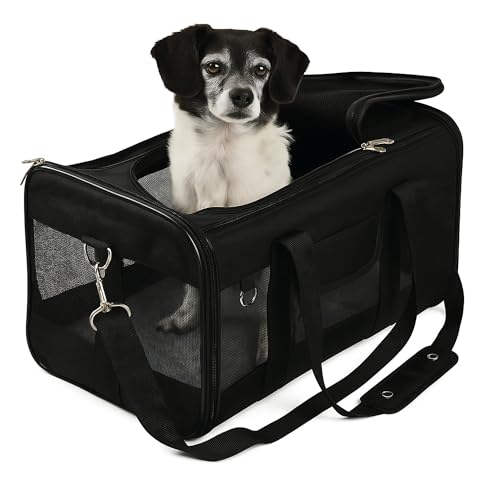
The best cat carrier bag for most people is the Sherpa Original Deluxe, a soft-sided, airline-friendly bag that folds flat and is easy to find in several sizes. If crash protection matters most, the Sleepypod Air is the premium soft-sided pick, since it is the soft carrier most often cited as independently crash-tested by the Center for Pet Safety. For short vet trips on a budget, an inexpensive expandable bag from a brand such as EliteField or Henkelion does the job.
Our top picks



As an Amazon Associate we earn from qualifying purchases at no extra cost to you.
Quick Comparison of Cat Carrier Bags
| Pick | Best for | Key specs | Price range |
|---|---|---|---|
| Sherpa Original Deluxe (medium) | Airline trips and everyday use | About 17 x 11 x 10.5 in., holds up to 16 lb, spring-wire frame, locking zippers | Mid |
| Sleepypod Air | Safety-first travel and flights | About 22 x 10.5 x 10 in., around 4.3 lb, doubles as car seat and bed | Premium |
| EliteField Soft-Sided | Budget vet visits | Several sizes, mesh sides, padded base | Budget |
| Henkelion soft carrier | Budget and TSA-style sizing | Collapsible, shoulder strap, top and front access | Budget |
| Backpack-style cat bag (class) | Hands-free walking and transit | Padded straps, ventilated window, 12 to 15 lb limit typical | Mid |
| Expandable side-panel carrier (class) | Hotel stays and long drives | Zip-out sides add 8 to 12 in. of floor space when parked | Mid |
Best Overall: Sherpa Original Deluxe
The Sherpa Original Deluxe has been a standard airline-compliant soft carrier for years. Sherpa lists several sizes, with the medium measuring about 17 by 11 by 10.5 inches and rated for pets up to about 16 pounds. A spring-wire frame helps it keep its shape under an airplane seat and it collapses when stored. Sherpa also runs a Guaranteed On Board program, which means it will refund the carrier if the airline does not accept it, per the company’s own program terms.
The main trade-off is that the bag is not crash-tested and the wire frame can bend with rough use. It is a travel and vet-visit bag, not a car safety device.
Best for Safety: Sleepypod Air
Sleepypod’s Air is the high-end soft carrier. According to the maker and to reviewers, it has gone through independent crash testing by the Center for Pet Safety, can be secured in a car using the seat belt, and is shaped to fit under many airline seats. It also converts to a car seat or a bed at home, so the cat stays accustomed to it. The price is much higher than other soft bags and its viewing windows are smaller than some competitors’, which can make shy cats calmer but anxious owners less so.
Best Budget Pick: EliteField Soft-Sided Carrier
EliteField makes inexpensive soft carriers in multiple sizes with mesh windows and a padded base. They suit short vet runs and quick errands. Expect thinner fabric and zippers than the premium bags, and inspect the stitching regularly. Check the weight limit and pick a size where the cat can stand and turn around, since small bags that cramp a cat increase stress.
Best Collapsible Budget Option: Henkelion Soft Carrier
Henkelion’s soft carriers sell at a similar budget price and emphasize top and front access, which helps with cats that dislike being lowered in. A shoulder strap and a collapsible body make it easy to keep one in a closet. As with any budget bag, treat airline compliance as something to verify rather than assume.
Best for Walking and Transit: A Backpack-Style Cat Bag
If you use buses or trains, a backpack carrier keeps your hands free. Look for padded shoulder straps, a ventilated window for airflow, a rigid base so the cat does not sag, and a clearly stated weight limit, usually 12 to 15 pounds. The downside is that a cat on your back is out of sight, so it should only be used with cats that already travel calmly.
Best for Long Stays: An Expandable Side-Panel Carrier
Expandable bags unzip to add 8 to 12 inches of floor space once parked, giving a cat room to stretch in a hotel room or at a show. They are useful if your cat will spend hours in the carrier, but do not travel with the sides open and never let a cat roam inside while the bag is moving.
How to Choose a Cat Carrier Bag
- Size: Measure your cat from nose to base of tail and add 3 to 4 inches. Inside height should let the cat sit upright without touching the roof.
- Weight limit: Choose a bag rated for at least 2 to 3 pounds more than your cat’s weight.
- Airline rules: Check your airline’s published under-seat limits, which change. A soft carrier can compress slightly, but do not count on that.
- Access: Top-loading bags are easier for cats that brace their legs at a front door.
- Zippers and clips: Look for lockable zippers. A cat can open a plain zipper with persistent paws.
- Ventilation: At least two mesh panels on opposite sides help airflow.
Decision Matrix by Situation
| Your situation | Best choice | Reason |
|---|---|---|
| Flying with an under-seat cat | Sherpa Original Deluxe or Sleepypod Air | Both are designed for under-seat use |
| Frequent car travel | Sleepypod Air | Crash-tested and belt-secured design |
| Annual vet visits only | EliteField or Henkelion | Lowest cost for low use |
| City walking or transit | Backpack-style bag | Hands-free carrying |
| Anxious cat | Top-loading bag with solid sides | Less visual stimulus and easier loading |
Cost Per Trip: A Quick Calculation
A premium carrier that costs four times as much as a budget bag looks expensive, but if it lasts eight years and you take 12 trips a year, that is 96 trips, so the extra cost works out to a small amount per trip. A budget bag replaced every two years for the same eight years costs about the same as the premium bag. The case for the cheaper bag is lower use and lower safety needs.
Getting a Cat Used to a Carrier Bag
- Leave the open bag in a living area for a week so it becomes familiar furniture.
- Place a worn T-shirt or familiar blanket inside, because the scent is calming.
- Feed treats or a meal near the entrance, then inside, so the bag predicts something good.
- Close the zipper briefly and open it again, then lengthen the time.
- Carry the bag a few steps, then reward. Build up to a car ride.
Pheromone sprays may help some cats, though results vary. Ask your veterinarian before using any calming product, especially for long trips.
Ownership Realities
- Fabric absorbs odors. Choose a bag with a removable, machine-washable liner.
- Check zippers and stitching before each trip.
- Do not leave the bag in a hot car, even briefly.
- Replace the bag if the frame is bent or the base no longer holds flat.
Frequently Asked Questions
What size carrier does my cat need?
Measure from nose to the base of the tail and add a few inches. The cat should be able to stand, turn around and lie down comfortably. For two cats, use separate carriers rather than one shared bag.
Are soft cat carriers safe for car travel?
Soft carriers vary. Only a few are crash-tested, and the Sleepypod Air is the most commonly cited example. For any bag, secure it with the seat belt and keep it off the front passenger seat if an airbag is present.
Are soft carriers allowed on airplanes?
Most airlines allow soft-sided carriers that fit under the seat, but size limits and pet fees differ by airline and route. Check the airline’s published policy before booking.
How do I stop my cat from crying in the carrier?
Gradual training, familiar blankets and a covered bag can help. If a cat is severely distressed, talk with your veterinarian about options rather than medicating on your own.
Can I use a backpack carrier for a cat?
Yes for calm cats that already tolerate carriers. Look for a rigid base, ventilation and a weight rating that matches your cat. Avoid it for cats that panic.
How do I clean a cat carrier bag?
Remove the liner and wash it per the label. Wipe the shell with a mild pet-safe cleaner, rinse and dry fully so mildew does not form.