Key takeaways
- Best Overall: Outward Hound Nina Ottosson Dog Tornado Treat Puzzle (Level 2 Intermediate)
- Best Budget Starter: Outward Hound Snoop Interactive Treat Dispensing Dog Toy, 5 inch
- Best for Boredom Without Treats: ZippyPaws Burrow Interactive Dog & Puppy Toy, Chipmunk Log
- Best Value Set: SHARLOVY Large Tough Chew Toys for Aggressive Chewers, 9-Pack Rope Toys
- Best Self-Righting Feeder: Starmark Treat Dispensing Bob-A-Lot, Large
- Best for Slowing Down Meals: Vivifying Snuffle Mat for Dogs, 26 x 16.5 inch
- Best Premium Multi-Puzzle Pick: PETSTA Dog Puzzle Toys, Treat Dispensing Enrichment Toys
The best interactive dog toys are the ones that match how your dog likes to work: a treat puzzle for thinkers, a sniff mat for noses, a burrow plush for hunters and a rope set for tuggers. If you want one answer, Outward Hound Nina Ottosson Dog Tornado is the best all-round puzzle for most dogs because it has adjustable difficulty, and Outward Hound Snoop Interactive Treat Dispensing Toy is the best starter toy for dogs that have never used a puzzle. This guide groups interactive dog toys by play style so you can pick for boredom, energy level and chewing habits rather than by packaging.
Interactive toys earn their place when they replace unstructured boredom with a job. They are not a substitute for walks, training or company, and none of them is a guarantee against destructive behavior. Dogs that chew hard, swallow pieces or have medical issues need supervision, and your vet is the right person to ask about diet changes when you use food in toys.
Top Picks at a Glance
- Best Overall: Outward Hound Nina Ottosson Dog Tornado Treat Puzzle (Level 2 Intermediate)
- Best Budget Starter: Outward Hound Snoop Interactive Treat Dispensing Dog Toy, 5 inch
- Best for Boredom Without Treats: ZippyPaws Burrow Interactive Dog & Puppy Toy, Chipmunk Log
- Best Value Set: SHARLOVY Large Tough Chew Toys for Aggressive Chewers, 9-Pack Rope Toys
- Best Self-Righting Feeder: Starmark Treat Dispensing Bob-A-Lot, Large
- Best for Slowing Down Meals: Vivifying Snuffle Mat for Dogs, 26 x 16.5 inch
- Best Premium Multi-Puzzle Pick: PETSTA Dog Puzzle Toys, Treat Dispensing Enrichment Toys
Comparison Table: Interactive Dog Toys for Boredom
| Product | Best for | Key specs (from listing) | Watch for | Price tier |
|---|---|---|---|---|
| Outward Hound Nina Ottosson Dog Tornado | Dogs ready for a challenge | 9.8 in; Level 2 Intermediate; 12 hidden treat compartments | Not for heavy chewers | Mid-range |
| Outward Hound Snoop | First-time puzzle dogs | 5 in; rolls and bounces; treat stuffer; puzzle ball and slow feeder | Small size; check fit for large breeds | Budget |
| ZippyPaws Burrow Chipmunk Log | Hunters and plush lovers | Interactive burrow toy with hidden plush; for dogs and puppies | Not for destructive chewers | Mid-range |
| SHARLOVY 9-Pack Rope Toys | Tug and light chewing | 9 rope toys; heavy duty; 5 knots; for aggressive chewers (listing) | Discard when frayed | Mid-range |
| Starmark Bob-A-Lot Large | Kibble dispensing | Treat dispensing; large dog size; self-righting wobble design | Hard plastic can be noisy | Mid-range |
| Vivifying Snuffle Mat | Scent work, slow eating | 26 x 16.5 in; sniff mat; slow feeding | Not chew-proof; hand-wash | Budget |
| PETSTA Dog Puzzle Toys | IQ training and mental stimulation | Treat-dispensing puzzle toys; sizes and piece count not listed | Check the pack contents on the maker’s page | Mid-range |
1. Outward Hound Nina Ottosson Dog Tornado: Best Interactive Dog Toy for Thinkers
- Size: 9.8 inches
- Difficulty: Level 2 Intermediate
- Compartments: 12 hidden treat spots (listing text)
- Style: spinning layers that dogs rotate to reveal treats
- Material: not listed in the title
Best for: dogs that already know a simple treat toy and are ready for a multi-step puzzle. Skip if: your dog attacks toys rather than solving them.
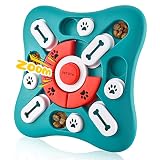
The Tornado is a tray with stacked, rotating layers. Treats sit beneath cups, and the dog nudges, lifts and spins to find them. Twelve compartments give you a lot of chances to reward effort, and because the layers can be arranged differently, the puzzle does not become rote after a week. That variety is the main reason it sits at the top of this list.
Start with the easy setup: fill a few compartments with high-value treats and let the dog see you hide them. Once your dog solves that, close more compartments. Use part of your dog’s daily kibble rather than extra treats so enrichment does not turn into extra calories. Clean the toy after sessions, because stuck food invites bacteria; check the maker’s care instructions for whether it is dishwasher-safe.
Pros: multiple compartments; adjustable difficulty; mental workout; reusable with kibble.
Cons: plastic parts are not chew-proof; needs cleaning; supervision recommended.
2. Outward Hound Snoop: Best Treat Dispensing Dog Toy for Beginners
- Size: 5 inches
- Function: rolls and bounces; treat stuffer; puzzle ball and slow feeder (listing text)
- Color: Blue (as listed)
- Material: not listed in the title
Best for: small to medium dogs and anyone finding out whether a dog likes puzzle toys. Skip if: your dog is a large breed with a strong chew habit.
The Snoop is a ball you stuff with treats or kibble, and it rolls and bounces unpredictably as the dog nudges it, so the food falls out in small amounts. That erratic movement keeps a dog engaged for longer than a simple feeder. Because it also works as a slow feeder, it can help fast eaters pace meals.
The best way to use it is on a bare floor at first, so the ball moves freely, and later on carpet if you want a calmer pace. Watch the first few sessions to make sure your dog does not try to chew through it. A small, low-cost toy like this makes sense as a trial before you invest in a larger puzzle.
Pros: beginner friendly; also works as a slow feeder; unpredictable bounce; lowest cost on this list.
Cons: small for big dogs; not intended for aggressive chewing; treat size matters.
3. ZippyPaws Burrow Chipmunk Log: Best Interactive Dog Toy for Hunters
- Format: plush burrow, a log with hidden animals inside
- Marketed for: dogs and puppies, as a boredom buster (listing text)
- Squeaker count and size: not listed in the title
Best for: dogs that love pulling things out of holes, terriers and puppies that enjoy soft toys. Skip if: your dog destroys plush toys within minutes.
Burrow toys tap into a dog’s hunting instincts. The dog sniffs out the little animals hidden inside the log, pulls them out and then wants them put back in, which makes the toy a great game of fetch-and-hide with its owner. Because the toy does not need food, it is an easy choice for dogs on strict diets.
The soft construction is the trade-off. Plush and squeakers are not designed for hard chewers. Use the toy under supervision, remove any loose stuffing or squeaker as soon as it is exposed and retire the toy when seams open. A quick wash, following the maker’s care label, keeps it fresh.
Pros: no food needed; good for puppies; encourages scent and play with you; soft on the mouth.
Cons: not for destructive chewers; seams can open; detail specs not listed.
4. SHARLOVY 9-Pack Rope Toys: Best Value Interactive Set for Tug and Chew
- Pack: 9 rope toys
- Build: heavy duty with 5 knots (listing text)
- Marketing: for aggressive chewers, large dogs
- Rope material and length: not listed in the title
Best for: tug-of-war, fetch and moderate chewing in homes with one or more large dogs. Skip if: your dog swallows string or fibers.
Interactive does not always mean a puzzle. A tug game with you is among the most engaging things you can offer, and a pack of nine means you can rotate toys and keep a few clean. Rope also supports fetch, and its texture is satisfying to chew.
Safety matters more with rope than with most toys. Dogs can swallow strands, which can cause digestive blockages. Inspect ropes before and after each session, throw away any toy that frays or sheds long threads, and never leave a dog alone with one. “Aggressive chewer” on a package is a marketing description, not a guarantee, and no toy is indestructible.
Pros: nine toys for rotation; tug and fetch use; low cost per toy; fun for multi-dog homes.
Cons: fraying and ingestion risk; knots can loosen; specifications not listed in the title.
5. Starmark Treat Dispensing Bob-A-Lot (Large): Best Self-Righting Feeder
- Type: treat-dispensing, self-righting feeder toy
- Size: Large dog version (a Small version also exists)
- Adjustability: opening can be adjusted per the maker (check page for details)
Best for: kibble-fed dogs that enjoy batting a toy around. Skip if: noise bothers you, since hard plastic on hard floors can be loud.
The Bob-A-Lot wobbles and returns upright, so it keeps dispensing as a dog nudges it. It suits food-motivated dogs, and because it holds kibble, you can serve part of a meal in it. A larger opening releases food faster for beginners, while a narrower one makes the dog work.
It works best on smooth floors and in rooms where a little noise is acceptable. Rinse it after each use, and keep the toy off carpet if your dog is learning, because friction slows the wobble.
Pros: self-righting; adjustable difficulty per the maker; holds a meal; easy to clean.
Cons: loud on hard floors; plastic is not chew-proof; the large version may be too big for small dogs.
6. Vivifying Snuffle Mat: Best Sniff Toy for Slowing Down Meals
- Size: 26 x 16.5 inches
- Function: scatter kibble or treats in the fabric strips so the dog sniffs them out
- Use: slow feeding and scent work (listing text)
Best for: fast eaters, dogs that need calm enrichment and anyone with limited space. Skip if: your dog chews fabric.
Scent work is tiring in a calm way. A dog that spends ten minutes sniffing through a snuffle mat usually settles afterward, and it is especially useful on rainy days or for dogs recovering from minor injuries when running is restricted. The mat is also one of the few interactive toys that works for senior dogs, who may prefer sniffing to pushing a hard plastic toy.
Spread a handful of kibble across the fabric, press the strips together so the food sinks in and let your dog hunt. Do not leave your dog unsupervised with the mat, and wash it by hand or per the label to prevent odors. Retire it if the fabric begins to shred.
Pros: low cost; quiet; suits fast eaters and seniors; folds for storage.
Cons: not chew-proof; needs washing; can be tangled in strips if pieces come loose.
7. PETSTA Dog Puzzle Toys: Best for Variety in Treat Games
- Type: treat-dispensing puzzle toys for IQ training and brain stimulation (listing text)
- Variants: sizes and pack contents vary; check the maker’s page
Best for: owners who want to experiment with several puzzle styles. Skip if: you need exact dimensions and material information from the title.
Puzzle toys that dispense treats vary from simple sliding trays to multi-level games. The point is to give your dog something to figure out rather than a plate of food. Start with the easiest setting, let your dog see the treat and make sure each success is quick before increasing difficulty.
Because the listing leaves out material and size, check the maker’s page, especially if you have a large dog or a heavy chewer. Remove toys when your dog finishes the puzzle, rather than leaving it out, so they remain interesting.
Pros: variety; mentally stimulating; works with kibble; good for rainy days.
Cons: specs missing in the title; plastic parts can break under heavy chewing; difficulty varies.
Also Consider
Outward Hound Nina Ottosson Treat Tumble (4.8 inch, Level 1 Easy)
A food-dispensing ball that holds about 1 cup of kibble per the listing, a gentle step for beginners.
Hyper Pet Doggie Tail Interactive Plush Automatic Dog Toy
A battery-powered plush that wiggles and barks, aimed at bored dogs; batteries are included per the listing.
Starmark Treat Dispensing Bob-A-Lot (Small)
The small-dog version of the Starmark feeder, suitable for toy and small breeds.
Barkwhiz Dog Puzzle Toy, 3 Levels
A three-level puzzle for dogs who have outgrown beginner toys, described as suitable for all breeds.
How We Chose
This guide is research-based. We did not personally use these products, and we cannot promise how your dog will respond. We began with the featured listings and added alternatives that cover the main play styles: puzzle, tug, burrow, sniff and self-righting feeders. For each product, we compared what the listing states: size, difficulty level, compartment count, pack size and claimed use. Where details were missing, such as material or dimensions, we wrote “not listed”.
We referred to manufacturer product pages and to guidance from veterinary and behavior organizations on enrichment, safe chewing and feeding. We limited each brand to two main picks and showed price as a tier (Budget, Mid-range, Premium) rather than a figure, because prices change often.
Buying Guide: How to Choose Interactive Dog Toys
Match the toy to the dog’s play style
Watch how your dog plays. Nosey dogs love sniff mats and scent games. Problem-solvers like puzzles. Hunters like burrows and plush. Tuggers want rope and a partner. Buying for the style you see keeps the toy in use longer than buying for the style you wish your dog had.
Choose a size that cannot be swallowed
A toy should be too large to fit entirely at the back of your dog’s mouth. As a rough guide, a puzzle ball should be larger than the dog’s muzzle width, and anything small enough to swallow is a choking hazard. When in doubt, go up a size.
Match difficulty to experience
Begin with easy toys that pay off quickly. If your dog gives up, the toy is too hard. If the dog solves it in thirty seconds every time, move to the next level. Outward Hound labels difficulty in levels, which makes progression simple.
Use meals, not extra treats
You can control calories by using part of the daily food ration inside toys. If a dog eats 2 cups of kibble a day, put 1/2 cup into a puzzle at lunchtime and reduce the bowl accordingly. Treats added on top of regular meals can cause weight gain. Ask your vet before changing diets.
Rotation and session length
| Dog profile | Session length | Toys per week | Suggested mix |
|---|---|---|---|
| Puppy (under 6 months) | 5 to 10 minutes | 2 to 3 | Soft burrow, easy feeder, supervised |
| Adult, medium energy | 10 to 15 minutes | 3 to 4 | One puzzle, one snuffle mat, one tug toy |
| Adult, high energy | 15 to 20 minutes, twice a day | 4 to 5 | Multi-step puzzle, feeder ball, rope set |
| Senior dog | 5 to 10 minutes | 2 to 3 | Snuffle mat, easy puzzle, soft toys |
These are starting points, not rules. Watch for stress signs such as lip licking, yawning or walking away, and stop if your dog gets frustrated.
Worked Example: Turning One Day of Meals Into Play
Here is how a household with one 45 lb adult dog eating roughly 3 cups of kibble a day could build enrichment into meals without adding calories. The numbers are an illustration only; use your own dog’s feeding chart and your vet’s advice on portions.
| Time | Portion | How it is served | Toy |
|---|---|---|---|
| Morning | 1 cup | Poured into a bowl as usual | None |
| Midday | 1/2 cup | Scattered into the fabric strips | Vivifying Snuffle Mat |
| Afternoon | 1/2 cup | Loaded into compartments, easy setup | Outward Hound Dog Tornado |
| Evening | 1 cup | Half in the bowl, half in a dispensing toy | Starmark Bob-A-Lot Large |
The total stays at 3 cups, but the dog now spends perhaps thirty to forty minutes of the day foraging rather than finishing a bowl in a minute. Tug sessions with a rope toy sit on top of that as play, not food, so they add exercise without calories. If your dog gains weight, trim the bowl portions first; the puzzle portions should stay small.
How to Clean Interactive Toys
Food residue is the main hygiene issue. Rinse plastic puzzles and feeders with warm soapy water after each use, and use a bottle brush for narrow channels. Let them dry fully before refilling. Snuffle mats and plush toys usually need hand-washing or a gentle machine cycle according to the label, and rope toys can be rinsed and air-dried. Replace any toy with cracks, stains that will not wash out or a persistent smell.
When to Stop and Call Your Vet
If your dog swallows part of a toy, vomits repeatedly, strains to defecate or seems lethargic after chewing a toy, contact your vet promptly. Keep the toy packaging so you can describe the material. Prevention is easier than treatment: choose the right size, supervise new toys and retire anything that is falling apart.
Common Mistakes
- Leaving interactive toys out all day. They lose novelty. Put them away after each session.
- Starting with a hard puzzle. Early failure leads to disinterest.
- Ignoring wear. Inspect rope, plush and plastic for cracks or fraying every time.
- Adding calories. Use daily food in toys rather than extra treats.
- Using toys as a replacement for exercise. Dogs still need walks and company.
Frequently Asked Questions
What are the best interactive dog toys?
The best interactive dog toys match your dog’s play style: treat puzzles like the Outward Hound Dog Tornado for thinkers, snuffle mats for noses, burrow plush for hunters and rope toys for tug. Start with one or two types and see which your dog prefers.
Which dog toys help with boredom?
Toys that make a dog work for food or hunt for hidden items are most effective for dog toys for boredom. Puzzle feeders, snuffle mats and burrow toys all provide mental effort, but they work best alongside exercise and training.
What are the best tough chew toys for aggressive chewers?
Look for thick, single-piece toys sized for your dog and inspect them regularly. Rope sets like the SHARLOVY 9-pack suit tug and light chewing, but no toy is indestructible, and aggressive chewers need supervision. Replace toys as soon as they show damage.
How do treat dispensing dog toys work?
They hold kibble or treats inside and release them as the dog rolls, nudges or solves the puzzle. Use part of your dog’s regular food so the toy does not add extra calories.
Are interactive dog toys safe to leave with my dog?
Not usually. Even a well-made toy can be chewed apart. Supervise sessions, especially with new toys, and put toys away afterwards unless the maker explicitly designs them for unsupervised use.
How often should I rotate dog toys?
Weekly rotation works well for most dogs. Keep three to five toys out and store the rest, then swap a couple in and out so everything feels new.
Can puppies use interactive toys?
Yes, with age-appropriate toys and supervision. Choose soft or easy feeders and short sessions, and follow the maker’s age guidance. Ask your vet about chew toys while your puppy is teething.
Which One Should You Buy?
If you only buy one toy, choose the Outward Hound Nina Ottosson Dog Tornado for a dog that enjoys solving problems, or the Outward Hound Snoop if you are not sure your dog will take to puzzles. Add a Vivifying Snuffle Mat for calm scent work and the Starmark Bob-A-Lot to turn mealtime into play. Choose the ZippyPaws Burrow for a plush-loving hunter and the SHARLOVY rope set for tug games with a strong dog, as long as you inspect them often. Use your dog’s daily food in the toys, supervise every session and retire any toy that cracks, frays or sheds pieces.
Sources
- Outward Hound (Nina Ottosson) manufacturer product pages
- Starmark Pet Products manufacturer page
- ZippyPaws and SHARLOVY product information
- American Veterinary Medical Association guidance on pet enrichment and toy safety
- ASPCA resources on dog toys and chewing
Last updated: October 2026