Key takeaways
- Clump integrity – a clump that stays solid when scooped removes the full liquid volume. A clump that crumbles leaves saturated particles behind in the box, which is where lingering ammonia smell comes from.
- Absorption rate relative to volume – multi-cat boxes get hit 10-15+ times a day combined. Litter needs to absorb fast enough that liquid doesn’t pool at the bottom of a shallow layer.
- Carbon or zeolite content – activated carbon and zeolite trap ammonia molecules rather than just absorbing moisture, and this is the difference that shows up specifically after day five.
The best cat litter for a multi-cat home is a high-performance clumping clay or a dense tofu/corn hybrid with activated carbon, used at a 3-4 inch depth with at least one more box than you have cats, because odor control past day five depends more on ammonia absorption and clump integrity than on scent additives.
In a 3-cat (or larger) household, the litter that smells fine on day one isn’t the one that matters. What matters is what’s still true on day five, day ten, and after a full scoop-and-top-off cycle without a complete dump. Below is a breakdown of what actually holds up, by litter type, with the numbers you need to plan box count, fill depth, and monthly cost.
As an Amazon Associate we earn from qualifying purchases at no extra cost to you.


What Controls Odor Past Day 5 (and What Doesn’t)
Scent additives (lavender, “fresh linen,” baking soda layers) mask ammonia for 24-48 hours, then stop working as urine saturates the granules. Past day five, odor control comes down to three mechanical factors:
- Clump integrity – a clump that stays solid when scooped removes the full liquid volume. A clump that crumbles leaves saturated particles behind in the box, which is where lingering ammonia smell comes from.
- Absorption rate relative to volume – multi-cat boxes get hit 10-15+ times a day combined. Litter needs to absorb fast enough that liquid doesn’t pool at the bottom of a shallow layer.
- Carbon or zeolite content – activated carbon and zeolite trap ammonia molecules rather than just absorbing moisture, and this is the difference that shows up specifically after day five.
Litter Types Compared: Odor, Clumping, and Cost for 2-4 Cats
| Litter Type | Odor Control Past Day 5 | Clump Durability | Recommended Depth | Avg. Monthly Cost (2 cats) | Avg. Monthly Cost (4 cats) |
|---|---|---|---|---|---|
| Premium clumping clay (carbon/zeolite blend) | Strong – carbon keeps absorbing after clay saturates | High – clumps stay solid through daily scooping | 3-4 in | $25-$35 | $45-$65 |
| Standard clumping clay (no additives) | Moderate – fades by day 4-6 | Moderate – some crumbling under heavy wet load | 3 in | $15-$22 | $28-$40 |
| Tofu/corn hybrid clumping | Good – low ammonia odor at baseline, needs daily scoop | Moderate-high, but dissolves if left wet too long | 2.5-3 in | $20-$30 | $38-$55 |
| Crystal/silica gel | Weak past day 5 – absorbs moisture but doesn’t trap ammonia well | N/A (non-clumping, needs full dump sooner) | 2 in | $30-$45 | $55-$80 |
| Non-clumping clay | Weak – odor builds fast, needs full change every 2-3 days | N/A | 2-3 in | $12-$18 | $22-$32 |
Cost ranges assume standard box sizes and typical refill cadence for each type, not premium or budget outliers.
How Many Boxes and How Deep: The Math for 2-4 Cats
The rule of thumb is n+1 boxes (number of cats plus one), but depth and placement matter as much as count:
- 2 cats: 3 boxes, 3 inches of litter each. Scoop twice daily.
- 3 cats: 4 boxes, 3-3.5 inches each. Scoop twice daily, top off every 2-3 days.
- 4 cats: 5 boxes, 3.5-4 inches each. Scoop twice daily minimum, three times if you work from home.
Depth below 2.5 inches is the single most common reason clumping litter fails in multi-cat homes – there isn’t enough dry litter underneath a clump to fully encapsulate it, so liquid seeps through to the box floor and sits there, odorless to the nose at first but turning into the day-5-and-beyond smell everyone blames on the litter brand.
Worked Example: Monthly Cost Per Cat
Take a 3-cat home using a premium carbon-clay blend across 4 boxes at 3.5 inches depth:
- Each box holds roughly 9-10 lbs of litter at that depth (standard 16×18 in box).
- Weekly top-off uses about 2-3 lbs per box to replace scooped volume = 8-12 lbs/week across 4 boxes.
- Full dump-and-refill every 3-4 weeks adds another 36-40 lbs.
- Total monthly usage: roughly 70-85 lbs.
- At $18-$22 per 20-lb bag for a premium blend, that’s $63-$94/month for the household, or about $21-$31 per cat.
Compare that to a standard clay without carbon: same volume math, but bags run $10-$14 per 20 lbs, landing around $35-$52/month total. The premium litter costs more per bag, but if it extends the full-dump interval from 2 weeks to 4 weeks, the gap narrows significantly – and the odor difference past day 5 is the part a price tag alone won’t tell you.
Refill Cadence by Litter Type
| Litter Type | Scoop Frequency | Top-Off Frequency | Full Dump Interval |
|---|---|---|---|
| Premium clumping clay | 2x daily | Every 3-4 days | 3-4 weeks |
| Standard clumping clay | 2x daily | Every 2-3 days | 2-3 weeks |
| Tofu/corn hybrid | 2x daily | Every 2-3 days | 2-3 weeks (flushable varieties still need box dumps for multi-cat volume) |
| Crystal/silica | Daily solids removal | Rarely – stir instead | 3-4 weeks, but odor often forces earlier dump |
| Non-clumping clay | Daily solids removal | N/A | 2-3 days |
Durability and Ownership Realities
- What wears out first: plastic scoops crack within 2-4 months of multi-cat use; metal or reinforced scoops last years and are worth the upgrade cost.
- Dust buildup: low-dust formulas still produce a fine film on nearby surfaces in multi-cat setups simply from volume of use – wipe box exteriors weekly.
- Common mistake: adding fresh litter on top of old without ever fully dumping. This buries ammonia-saturated bottom layers under cleaner litter, which hides odor temporarily but makes day-5-plus smell worse over time, not better.
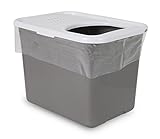
- Box material matters: uncovered, open boxes vent odor into the room faster but don’t trap it the way covered boxes do; covered boxes concentrate smell at the entrance. Neither eliminates the need for adequate depth and dump schedule.
If odor persists despite correct depth, box count, and scoop frequency, or if you notice changes in urination frequency or straining, it’s worth a check-in with a veterinarian, since litter box issues sometimes point to a health concern rather than a litter choice.
Bottom Line by Situation
- Tight budget, 2 cats: standard clumping clay at 3 inches depth, 3 boxes, dump every 2-3 weeks.
- 3-4 cats, odor is the main complaint: premium carbon or zeolite clumping clay at 3.5-4 inches, n+1 boxes, dump every 3-4 weeks.
- Dust-sensitive household or kittens: tofu/corn hybrid, same box count rules, slightly shorter dump interval.
- Low-maintenance preference, budget allows it: crystal/silica, but expect to dump sooner than the “3-4 week” marketing claim in a true multi-cat setup.