Key takeaways
- The strings should press down without excessive force, particularly in first position.
- The four pegs should turn smoothly and hold their pitch rather than suddenly slipping.
- The bow should draw an even sound without requiring extreme pressure.
- The endpin should lock securely and extend far enough for a comfortable upright posture.
- The cello should produce a clear open-string tone without persistent buzzing or rattling.
The best cellos for beginners and advanced players are properly set up instruments matched to the player’s body, usually a 1/2, 3/4, or 4/4 cello, with reliable tonewood construction, a straight neck, a well-cut bridge, and accessories that do not force expensive upgrades immediately.
Our top picks

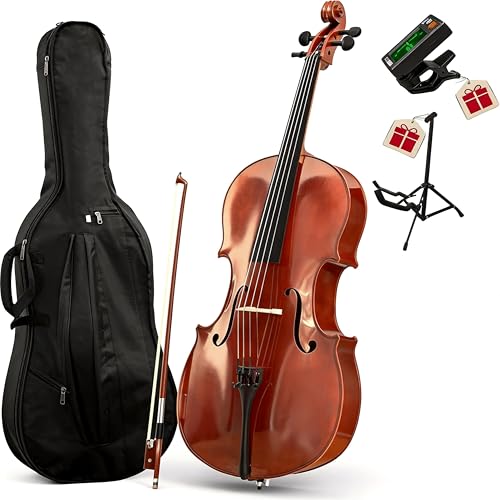

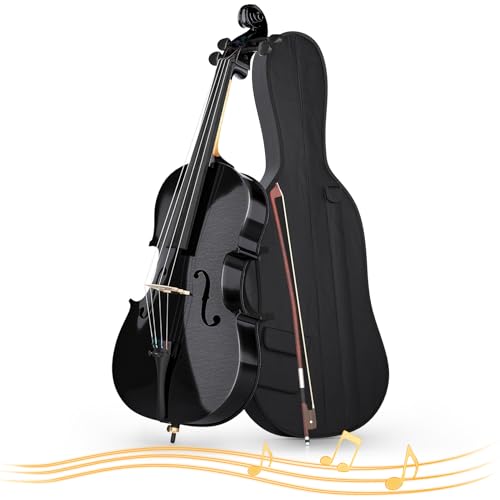
As an Amazon Associate we earn from qualifying purchases at no extra cost to you. Ratings are shown as listed on Amazon.
Quick recommendations by situation
| Player or situation | Best choice | Typical new price range | Why it fits |
|---|---|---|---|
| Young beginner needing a smaller size | Student outfit in 1/4, 1/2, or 3/4 size | $500–$1,500 | Affordable, durable, and easier to replace or exchange as the player grows |
| Adult beginner practicing several times weekly | Setup-focused 4/4 student cello | $900–$2,500 | Better response and tuning stability reduce frustration during early lessons |
| Intermediate player performing regularly | Hand-finished workshop cello | $2,000–$6,000 | More color, projection, and refinement without entering the fine-instrument market |
| Advanced player needing a primary instrument | Professional workshop or individually selected cello | $6,000–$20,000+ | Greater tonal complexity and a better chance of matching the player’s repertoire |
| Frequent travel or unstable climate | Carbon-fiber cello or robust hybrid case | $2,000–$10,000+ | Improved resistance to knocks and humidity changes, though tone and repair options vary |
Best cellos for beginners
Choose setup quality before decorative features
A low-priced cello can be a sensible first instrument, but only if its bridge, nut, pegs, fingerboard, and soundpost have been adjusted correctly. A beautifully flamed back does not compensate for strings that sit too high, pegs that slip, or a bridge cut at the wrong angle.
Reliable beginner categories include factory student cellos from established makers such as Yamaha, Eastman, and Jay Haide, along with instruments supplied and adjusted by a reputable string shop. The exact model matters less than whether a qualified technician has completed the setup and will correct problems after delivery.
Expect a basic outfit to include the cello, bow, soft or padded case, and sometimes rosin. A beginner package may still require a better bow, endpin strap, music stand, and replacement strings. A useful budget is therefore the instrument price plus roughly $150–$500 for immediate accessories and setup upgrades.
What a beginner should feel while playing
- The strings should press down without excessive force, particularly in first position.
- The four pegs should turn smoothly and hold their pitch rather than suddenly slipping.
- The bow should draw an even sound without requiring extreme pressure.
- The endpin should lock securely and extend far enough for a comfortable upright posture.
- The cello should produce a clear open-string tone without persistent buzzing or rattling.
For an adult who expects to practice for years, buying the cheapest available cello can be a false economy. If poor setup causes 30 minutes of unnecessary struggle every lesson, a moderately better instrument may save both lesson time and motivation.
Cello size: the decision that comes first
Cello sizes are not standardized as precisely as clothing sizes, so age charts are only starting points. Arm length, hand span, torso length, and playing posture matter more than age alone. A teacher or string-instrument specialist should check the fit before purchase, especially for a child.
| Cello size | Approximate player age | Approximate height range | Typical use |
|---|---|---|---|
| 1/4 | 5–7 years | 3’10″–4’4″ | Small children; confirm with a teacher |
| 1/2 | 7–9 years | 4’4″–4’10” | Growing players who find 3/4 too large |
| 3/4 | 9–12 years | 4’10″–5’3″ | Many older children and smaller adults |
| 4/4 | Teenagers and adults | About 5’3″ and above | Full-size playing length and projection |
Do not choose a smaller cello simply because it is easier to carry if the player can safely use a full-size model. Conversely, stretching to reach a large cello can create poor posture and inaccurate intonation. A correct fit should allow the knees to hold the lower bouts comfortably, the left hand to reach first position without collapsing the wrist, and the bow arm to move freely.
How construction affects tone and durability
Solid wood versus laminated wood
Most quality acoustic cellos use a solid spruce top and maple back, ribs, and neck. Spruce responds quickly and produces the vibrating top plate; maple contributes strength and a focused, projecting sound. Student instruments may use laminated wood for the back and ribs, or occasionally for more parts of the body. Lamination can improve resistance to impacts and changing humidity, but it generally offers less tonal complexity than a well-made solid-wood instrument.
Look for clean purfling, symmetrical arching, neatly finished f-holes, and no open seams. Flame in the maple is primarily visual. It can indicate attractive wood, but it is not a reliable measure of sound quality.
Traditional versus carbon-fiber construction
Carbon-fiber cellos are worth considering for musicians who travel often, perform outdoors, or live where humidity changes are difficult to control. They are usually more resistant to cracking and seam opening than wooden instruments. Their tone can be powerful and consistent, although some players prefer the complexity and flexibility of aged wood. Replacement parts and specialist repairs may also be less convenient.
For most students, a properly maintained wooden cello remains the better value. For frequent travel, a carbon-fiber body may justify its higher price by reducing climate-related risk.
Student versus professional cello: the real trade-offs
| Feature | Student model | Professional-level model |
|---|---|---|
| Construction | Factory or workshop production; more laminated parts are common | Carefully graduated solid woods and more individual handwork |
| Response | Designed for predictable, accessible response | Can offer faster response but may reveal technique more clearly |
| Tone | Focused, stable, and adequate for lessons or ensembles | Wider tonal palette, more projection, and greater complexity |
| Setup | Basic setup may need refinement | Usually receives more precise bridge, soundpost, and fingerboard work |
| Resale and repair | Lower resale value; economical repairs are important | Higher maintenance costs but stronger long-term value when documented |
A professional cello is not automatically easier to play. A powerful instrument can be less forgiving, and its sound may depend on bow speed, contact point, and left-hand accuracy. Advanced buyers should compare several instruments with their own bow and strings, ideally in a room large enough to reveal projection.
Do the included bow and case matter?
They matter, but they should not determine the cello purchase by themselves. Student outfits commonly include a pernambuco substitute, carbon-fiber, or inexpensive brazilwood bow. Carbon-fiber bows are often consistent and resilient; a good pernambuco bow can provide subtle response and color but may cost considerably more.
Inspect the bow for a straight stick, even hair, a secure frog, and a screw that turns smoothly. Bow hair is a consumable: frequent players may need a rehair approximately every 6–12 months, while occasional players may go longer. Replace hair that is stretched, dirty, or no longer grips the string with normal rosin.
A soft bag is lighter and less expensive, but a shaped hard case provides better impact protection. For public transport, choose a case with firm suspension, strong zippers, backpack straps, and room for at least two bows. A cello in a cheap case can be more vulnerable than a less expensive instrument in a well-padded one.
Ownership costs and maintenance
Budget for strings, bow rehairs, rosin, and periodic professional adjustments. A full set of cello strings can cost roughly $100–$400 or more depending on brand and material. A bridge, soundpost, or peg repair can add substantially to ownership costs, so a pre-purchase inspection is valuable for used instruments.
After playing, wipe rosin dust from the strings and varnished body with a clean, dry microfiber cloth. Never use household furniture polish, alcohol, or abrasive cleaner. Loosen the bow after every session, store the cello away from radiators and direct sunlight, and monitor indoor humidity. A practical target for a wooden cello is about 40–60% relative humidity.
A simple first-year cost calculation
Suppose a beginner buys a $1,200 cello outfit, spends $250 on setup and accessories, replaces strings once at $180, and pays $90 for one bow rehair. The first-year total is approximately $1,720. If the player practices four times per week for 50 weeks, that is 200 sessions, or about $8.60 per session before lessons. This illustrates why setup and durability often matter more than saving a few hundred dollars at checkout.
Buying checklist
- Confirm the size with a teacher or qualified technician.
- Ask who performed the setup and what adjustments are included after purchase.
- Check for open seams, cracks, warped necks, buzzing, and slipping pegs.
- Compare the cello using the same bow and, where possible, the same strings.
- Inspect case padding, suspension, handles, backpack straps, and bow storage.
- For a used professional instrument, request repair history and insurance documentation.
- Allow room in the budget for strings, maintenance, and a properly fitted endpin strap.
The best cello is the one that fits the player, responds without a fight, and remains financially practical to maintain. Beginners should prioritize dependable setup and a fair return or exchange policy; advanced players should prioritize tonal range, projection, and a careful in-person comparison over appearance or brand prestige.