Key takeaways
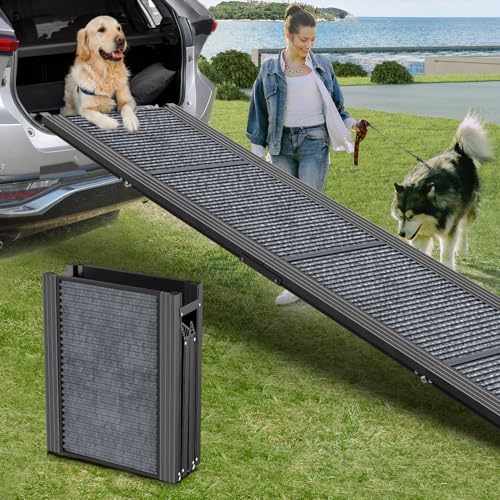
- Frequent car use: Choose a folding ramp with a non-slip surface, a secure top edge, and enough length to suit your vehicle’s entry height. PetSafe’s Happy Ride Telescoping Dog Ramp is one recognizable option to compare; it extends for use and retracts for storage.
- SUVs and taller vehicles: Prioritize a longer ramp and a broad, stable base. A short ramp may technically reach the bumper but leave your dog facing a sharp incline.
- Sofa or bed access: Look for a low indoor ramp with a broad walking surface and feet that won’t slide on your floor. A fixed or folding indoor model is usually easier to position than a car ramp.
- Small dog or tight storage: A lightweight folding ramp can be convenient, but check that its usable width and surface texture suit your dog. Small dogs still need secure footing.
- Large or hesitant dog: Favor a wider, more rigid ramp with a higher capacity than your dog’s weight. Stability and gradual training matter more than the smallest folded package.
Best Dog Ramps for Cars, Sofas, and Senior Dogs
The best dog ramp is long enough to keep the climb gentle, rated comfortably above your dog’s weight, and wide and grippy enough for confident footing; for most households, that means choosing a portable folding ramp for car trips or a sturdier, lower ramp for daily indoor use.
There isn’t one ideal ramp for every job. A ramp that fits neatly in a car may be too short and steep for an SUV, while a sofa ramp that stays in place all day may be too bulky to travel with. Compare the actual ramp length—not just its folded size—with the height your dog needs to reach.
Our top picks



As an Amazon Associate we earn from qualifying purchases at no extra cost to you. Ratings are shown as listed on Amazon.
Quick picks by situation
- Frequent car use: Choose a folding ramp with a non-slip surface, a secure top edge, and enough length to suit your vehicle’s entry height. PetSafe’s Happy Ride Telescoping Dog Ramp is one recognizable option to compare; it extends for use and retracts for storage.
- SUVs and taller vehicles: Prioritize a longer ramp and a broad, stable base. A short ramp may technically reach the bumper but leave your dog facing a sharp incline.
- Sofa or bed access: Look for a low indoor ramp with a broad walking surface and feet that won’t slide on your floor. A fixed or folding indoor model is usually easier to position than a car ramp.
- Small dog or tight storage: A lightweight folding ramp can be convenient, but check that its usable width and surface texture suit your dog. Small dogs still need secure footing.
- Large or hesitant dog: Favor a wider, more rigid ramp with a higher capacity than your dog’s weight. Stability and gradual training matter more than the smallest folded package.
Compare the measurements that affect the climb
The figures below are practical selection targets, not specifications for a particular product. Individual models vary, so confirm dimensions and capacity on the manufacturer’s current product page before buying.
| Use | Typical usable length | Useful width | Capacity target | What to prioritize |
|---|---|---|---|---|
| Low sedan entry | 60–70 in | 16–20 in | At least 1.25× dog’s weight | Secure vehicle contact and a textured surface |
| SUV or crossover | 70–87 in | 18–22 in | At least 1.25× dog’s weight | Longer reach, low flex, stable lower end |
| Sofa or low bed | 30–50 in | 14–20 in | At least 1.25× dog’s weight | Low incline, floor grip, easy indoor placement |
| Large dog, frequent use | As long as the space allows | 20 in or wider | At least 1.5× dog’s weight | Rigid construction and a broad, steady track |
Capacity is a ceiling, not a guarantee of steadiness. For example, a 60 lb dog suggests a minimum target of 75 lb at 1.25× body weight; for frequent use or a dog that shifts abruptly, a 90 lb or higher rating gives more margin. If two dogs may use the ramp together, size for their combined weight or prevent simultaneous use.
Choose ramp length by height, not by guesswork
A simple way to compare steepness is to divide the rise by the ramp’s usable length. If a car entry is 24 inches high and the ramp is 72 inches long, the rise-to-length ratio is 24:72, or 1:3. A 60-inch ramp at the same height gives 1:2.5, a steeper approach. This is a useful comparison, not a veterinary safety standard; a dog’s comfort, mobility, and confidence also matter.
Measure from the ground to the surface your dog will step onto. Then check that the ramp can reach that height while resting securely on both ends. A longer ramp is not automatically better if it flexes, cannot be supported properly, or blocks a doorway. For indoor furniture, measure the seat or mattress height and the clear floor space available for the ramp’s footprint.
What to check before buying
Grip and surface
Look for a textured, non-slip walking surface that remains secure when paws are dusty or damp. Raised ridges can provide traction, but a rough texture may feel uncomfortable to a dog with sensitive paws. Carpeted surfaces can be comfortable, though they collect hair and dirt and may take longer to dry. Avoid relying on a smooth plastic track for a dog that already slips on floors.
Stability and contact points
For car use, the top should sit securely against the vehicle without rocking or sliding. A safety strap or attachment point can add reassurance, but it does not replace correct placement. Indoors, check for non-slip feet and a frame that does not wobble when weight shifts from side to side. A ramp can have a high stated capacity yet still feel unstable if it is narrow or poorly supported.
Folding size and weight
Compare the ramp’s folded dimensions with the space in your trunk, not just the product photo. Telescoping designs can store compactly but may need to be cleaned so dirt does not interfere with sliding sections. Hinged folding models can be quicker to set up but take up more space and may have pinch points. Check the ramp’s own weight too: a design that is difficult for you to lift is less likely to be used consistently.
Match the ramp to your routine
| Your situation | Better fit | Trade-off to expect |
|---|---|---|
| Several car trips each week | Portable folding or telescoping ramp with quick, secure setup | Moving parts and hinges need regular cleaning and inspection |
| One vehicle, tall entry | Longer, rigid ramp with a stable landing at each end | More trunk space and heavier handling |
| Daily sofa access | Indoor ramp sized to the furniture, left in position | Uses floor space and may need repositioning for cleaning |
| Occasional travel, limited budget | Basic folding model that meets the required length and capacity | May be less rigid or less convenient than a premium design |
| Dog is wary of new surfaces | Wide, steady ramp with a grippy surface and gentle approach | Training takes time; a ramp is not an instant solution |
Set it up and teach your dog gradually
-
Secure the ramp first. Place it on level ground, confirm both ends are supported, and check for movement before inviting your dog over. For a vehicle, use a level parking spot and follow the ramp maker’s instructions for positioning or attachment.
-
Start with the ramp flat. Let your dog investigate it, then reward a voluntary step onto it. Keep sessions brief and calm rather than pulling or pushing the dog up.
-
Practice a few steps at a time. Guide the dog with treats or a familiar cue, rewarding steady movement. Add the real height only after the dog is comfortable walking across the ramp at ground level.
-
Recheck footing and hardware. Stop if the ramp shifts, folds unexpectedly, or becomes slippery. Reposition it before trying again.
Some dogs need a harness and close support while learning. If your dog has pain, weakness, balance problems, or a sudden change in mobility, ask a veterinarian or qualified rehabilitation professional whether a ramp is appropriate and how to introduce it.
Ownership: what wears and what to maintain
On folding ramps, hinges, latches, telescoping joints, and rubber feet are common points to inspect. On any ramp, the grip can wear smooth, the frame can loosen, and dirt or moisture can make the surface slippery. Brush off hair and grit, wipe the track with a product-safe cleaner, and let it dry fully before storage. Avoid harsh cleaners unless the manufacturer approves them.
Before each use, check for cracks, bent supports, loose fasteners, damaged straps, and worn anti-slip feet. Retire a ramp that rocks or no longer locks securely. Common mistakes include choosing by folded size alone, exceeding the rated capacity, setting the ramp on uneven ground, and assuming a dog will use it without practice.
Bottom line
For car travel, start with vehicle height and available storage space, then choose the longest stable ramp you can handle. For a sofa or bed, fit the ramp to the furniture height and room layout. For a large, senior, or uncertain dog, give extra attention to width, surface grip, rigidity, and gradual training. The best dog ramps are the ones that fit the real approach, stay secure underfoot, and are practical enough for you to use every time.