The best cat litter box for large cats is one that is long enough for the cat to turn around and squat without touching the walls, and the IRIS USA XX-Large High Sided Cat Litter Box is the strongest all-round answer we found, at 30 by 20 by 14 inches. If you prefer metal, the OneBug High-Sided Stainless Steel XL Cat Litter Box is the runner-up for owners who want an easy-to-scrub surface and tall sides. Both open-top picks suit cats that outgrow standard boxes, such as Maine Coons, Ragdolls, and heavy-boned or overweight cats.
Searching for the best litter box for large cats usually comes down to three numbers: length, wall height, and entry height. A box that is too short makes a big cat perch on the rim, and one with a high entry can be hard on a heavy or older cat’s joints. This guide lists seven boxes from the current product store, explains what their listed sizes mean in practice, and ends with sizing rules you can apply to any box. Everything here is research-based; we did not personally use these products, and any spec not found in a listing is marked “not listed”. Price is shown as a tier only.
Our top picks
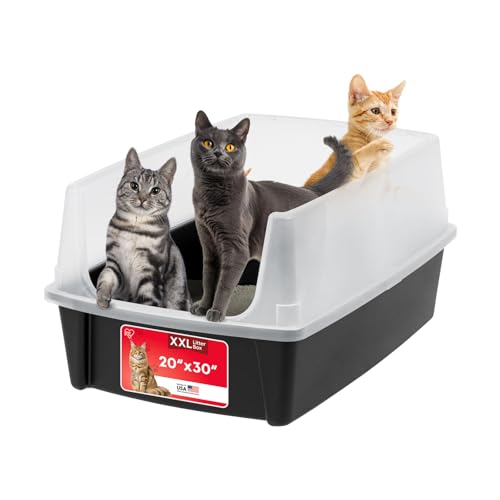 IRIS USA XX-Large High Sided Cat Litter
- Dimensions: 30"L x 20"W x 14"H (76cm x…
- XX-Large SIZE: Made for large and extra-large cat…
- Designed with a smooth interior and minimal crevices,…


As an Amazon Associate we earn from qualifying purchases at no extra cost to you.
Top Picks at a Glance
- Best Overall: IRIS USA XX-Large High Sided Cat Litter Box (30 x 20 x 14 in), the roomiest plastic option.
- Best Metal Open Box: OneBug High-Sided Stainless Steel XL Cat Litter Box, for easy cleaning and no odor-holding scratches.
- Best Premium Enclosed: Pematar XXL Stainless Steel Litter Box with Lid, for multi-cat or big-cat homes that want a cover.
- Best for Joint Comfort: Cuddpaw Jumbo Extra Large Cat Litter Box, high-sided with a low entry for seniors and heavy cats.
- Best Value Enclosed Metal: Tevila XL Enclosed Stainless Steel Litter Box, which includes a scoop, step, and mat.
- Best Budget: IRIS USA High Sided Cat Litter Box, Large, with Scatter Shield.
- Best Low-Cost Metal: Kirecoo Large High Sided Stainless Steel Cat Litter Box.
Comparison Table
| Product | Best for | Key specs (from listing) | Watch for | Price tier |
|---|---|---|---|---|
| IRIS USA XX-Large High Sided | Maine Coons, multi-cat homes | 30 x 20 x 14 in; open top; scatter shield; plastic | Large footprint; tall wall for seniors | Mid-range |
| OneBug High-Sided Stainless XL | Easy cleaning, no scratches | Stainless steel; high sides; non-stick surface | Dimensions not in short title | Mid-range |
| Pematar XXL Stainless with Lid | Big or multiple cats | Stainless steel; ABS lid; high sided | Lid cleaning; shape of entry | Premium |
| Cuddpaw Jumbo Extra Large | Seniors, kittens, large cats | Open top; high sided; low entry; anti-splash | Material and exact size not listed in short title | Mid-range to premium |
| Tevila XL Enclosed Stainless | Covered box with extras | Stainless; lid; scoop, step and mat included | Enclosed boxes trap odor for the cat | Mid-range |
| IRIS USA High Sided Large | Tight budget, one large cat | Plastic; high kick-proof sides; scatter shield | Smaller than the XX-Large | Budget |
| Kirecoo Large High Sided Stainless | Cheapest metal option | Stainless; high sides; non-stick; rust proof per listing | Size in inches not in short title | Budget |
1. IRIS USA XX-Large High Sided Cat Litter Box: Best Overall
- Size: 30 x 20 x 14 inches (the listing calls it huge and names Maine Coons)
- Design: open top with a scatter shield, high kickers
- Material: plastic; exact type not listed
- Colors: black and gray versions are listed
Best for: very large breeds, two cats sharing a box, and cats that stand and spray or dig hard. Skip if: your cat is elderly or has stiff joints, because 14 inch walls are a real step.
At 30 inches long this box exceeds most of the boxes people usually buy by about a third. A common rule is that the box should be about 1.5 times the length of the cat from nose to tail base. A Maine Coon that measures around 20 inches in body length wants a box close to 30 inches, which is exactly this size. That makes it one of the few boxes where a truly large cat can stretch, turn, and cover waste without hanging a paw over the edge.
The scatter shield is a raised lip meant to bounce kicked litter back. It helps with digging but is not magic: a cat that flings litter sideways can still send some granules over the shield. The size also means a lot of litter. A 30 by 20 inch footprint filled to three inches holds roughly 1,800 cubic inches of litter, which is why this box suits households that buy in bulk. Plan a spot first, because it will not fit in most under-sink cabinets.
Pros: long enough for big breeds; tall kick-proof walls; open top for easy scooping; mid-range tier for the size. Cons: takes floor space; tall wall can deter older cats; plastic scratches over years.
2. OneBug High-Sided Stainless Steel XL Cat Litter Box: Best Metal Open Box
- Material: stainless steel
- Design: high-sided; the listing says the design prevents urine leakage
- Surface: described as non-stick and easy to clean
- Dimensions: XL, exact inches not listed in the short title
Best for: owners who want a box that does not hold smell in scratches and wipes clean after a scoop. Skip if: your cat is nervous about the sound of a scoop on metal.
Stainless steel is a popular upgrade for large cats because a heavy animal digs harder, and hard digging is what scratches plastic. Scratches are where bacteria and odor settle, so a metal pan stays cleaner for longer. High sides reduce the chance of urine reaching the floor; a cat that backs up to the wall while peeing is the most common cause of leaks.
Check the listing for the exact interior size before you buy. The word XL is not standardized across brands, and one maker’s XL can be another’s large. As a rule of thumb, the interior should be at least 22 inches long for a big cat and 24 inches or more for a giant breed. Metal is also heavier than plastic, which helps it stay put when a cat pushes against it but makes it harder to carry to the sink.
Pros: non-porous surface; resists scratches; high walls; easy to sanitize. Cons: metal noise; cold to the touch in winter; a heavier box to lift when full.
3. Pematar XXL Stainless Steel Litter Box with Lid: Best Premium Enclosed
- Material: stainless steel body with an ABS lid (listed as premium ABS)
- Size class: XXL, intended for multiple and big cats
- Design: high sided, lidded, anti-urine leakage per listing
- Exact dimensions: not in the short title
Best for: homes with a big cat that likes privacy, or owners who want to hide the box. Skip if: your cat has a history of avoiding covered boxes.
A lid changes the experience more than a high wall. It keeps litter and smell inside, hides the box from view, and blocks spray. But some cats dislike enclosed boxes because they feel trapped, and large cats may find the lid space cramped if it is not tall enough. A good rule is a lid height that lets the cat stand fully upright. Before you commit, check the interior height in the full listing.
Because the box combines a steel base with a lid, cleaning is two jobs: the pan wipes out easily, while the lid needs a regular rinse so urine odor does not build up. Odor control is down to scooping habits, not the lid alone. Whatever the design, scoop daily.
Pros: hides the box; contains scatter and spray; metal base is easy to sanitize. Cons: premium tier; some cats avoid enclosed boxes; lid needs cleaning.
4. Cuddpaw Jumbo Extra Large Cat Litter Box: Best for Joint Comfort
- Design: open-top, high-sided, low-entry pan
- Claims: anti-splash; suited to multiple cats, kittens, and seniors per listing
- Material: not listed in the short title
- Dimensions: jumbo; inches not listed in the short title
Best for: big cats that are also older or have arthritis, where a standard high wall is hard to step over. Skip if: your cat is a high-flinging digger; low-entry cuts usually mean a lower wall at the front.
A heavy cat puts more stress on joints each time it climbs into a box. A scoop-front or low-entry design cuts the step height at the entrance while keeping tall walls around the sides and back, which is where spray lands. If your cat hesitates at the edge, circles, or goes beside the box, a lower entry is worth trying. Veterinarians commonly suggest low entries for senior cats, and talk with yours if the hesitation is new, since it can signal pain.
The trade-off is that the opening is also where litter escapes. Expect a little more scatter at the front than a fully tall-walled box and place a catch mat there.
Pros: low entry helps joints; tall sides on the other three edges; jumbo size class; suits mixed-age households. Cons: some scatter at the entry; dimensions and material need checking in the full listing.
5. Tevila XL Enclosed Stainless Steel Litter Box: Best Value Enclosed Metal
- Material: stainless steel, rustproof and leak proof per listing
- Design: enclosed with lid, high sided
- Included: scoop, step, and mat
- Colors: black and light gray listed
Best for: first-time buyers who want everything in one box. Skip if: your cat is longer than the XL class allows; for the biggest breeds look at XXL or larger.
The included step is a helpful detail. A step lowers the effective wall height for a cat that finds the entry tough. The mat gives you a ready-made scatter catcher. Together with the scoop, it avoids hidden extra costs. As with the Pematar, the enclosed shape contains smell and mess but may deter cats that dislike lids.
Pros: useful accessories included; metal pan; lid contains scatter. Cons: XL may be tight for the largest breeds; covered boxes need regular lid cleaning.
6. IRIS USA High Sided Cat Litter Box, Large: Best Budget
- Design: open top, high kick-proof sides, scatter shield
- Size: large; exact inches not in the short title (the XX-Large is listed at 30 x 20 x 14)
- Material: plastic; type not listed
Best for: one large but not giant cat on a tight budget. Skip if: your cat measures more than about 15 inches in body length, in which case the XX-Large above is more comfortable.
This is the smaller sibling of pick 1 and it shares the same scatter-shield approach. For a cat in the 12 to 15 pound range, a high-sided large pan is often enough. If you are unsure, measure your cat from nose to base of tail and compare that length to the interior length in the listing.
Pros: low cost; high sides; two-pack version also listed. Cons: not roomy enough for giants; plastic scratches over time.
7. Kirecoo Large High Sided Stainless Steel Cat Litter Box: Best Low-Cost Metal
- Material: stainless steel, described as non-stick and rust proof
- Design: high sided, solid metal
- Size: described as large; inches not in the short title
Best for: a metal box at the lowest tier, as a trial before spending on a larger one. Skip if: your cat is giant; large in this listing may be smaller than an XL in another.
If you are not sure a metal box suits your cat, this is the lowest-risk way to find out. A cat that accepts metal and hates plastic scratches is a good candidate to move up to the XL or XXL versions above.
Pros: metal at a low tier; high walls; non-stick surface. Cons: size may not fit very large cats; fewer included extras.
Also Consider
- EGMEHOAD XXXL Stainless Steel Cat Litter Box: listed at 28 x 20 x 6 inches, extra long but with a low wall; good for sprawling cats that do not spray.
- Vealind Large Cat Litter Box High Sided Entry Pan: listed at 50 x 40 x 22 cm (about 20 x 16 x 9 inches); a plastic option for cats that fit a large, not giant, box.
- ICYAIR XXL Stainless Steel Litter Box with Lid: listed at 28 inches long by 20 inches wide; an enclosed alternative if the Pematar is out of stock.
How We Chose
This guide is research-based. We did not personally use these products. We searched the current product store for extra large and high-sided litter boxes, compared listing dimensions where they were given, and checked sizing advice from veterinary behavior sources and manufacturer pages. We limited each brand to two picks and left out any box whose size could not be confirmed. Where the short title lacks dimensions we say so rather than guess. Price tiers are general ranges. If a box does not fit your cat, the best fix is a longer one, not a taller one.
Buying Guide
Measure your cat first
Measure from the nose to the base of the tail. Multiply by 1.5 for a target interior length. A 16 inch cat wants a box about 24 inches long; a 20 inch Maine Coon wants about 30. Width should be at least the cat’s body length, roughly 18 to 20 inches for big breeds. Most standard boxes are 18 to 22 inches, which is why large cats often perch on the rim.
Choose wall height by behavior
Cats that dig and fling need walls of 10 to 14 inches. Cats that stand to pee need tall rear walls. Seniors and heavy cats need a low entry of about 3 to 5 inches. Boxes that mix a low front and high back, such as pick 4, balance both.
Open or enclosed
Open-top boxes give the cat a view and better airflow, and are the usual first choice. Enclosed boxes hide mess and smell but can trap odor inside for the cat. If you try a lid, remove it first and let the cat adapt for a few days.
Plastic or stainless steel
Plastic costs less and is lighter. Steel resists scratches and odor but costs more and is noisier. For a big digger, steel pays back in cleaning time.
Litter depth and quantity
Most cats prefer two to three inches of litter. In a 30 by 20 inch box that is more than a standard bag, so budget for the extra litter and a bigger scoop.
Common Mistakes to Avoid
- Buying by the word “large” instead of by interior length.
- Choosing very tall walls for a senior cat that cannot climb them.
- Forgetting a catch mat at the entry.
- Skipping a gradual introduction to a new box type; place the new one next to the old one for a week.
- Ignoring a sudden change in litter habits; ask your veterinarian, since it can be a medical sign.
Setup, Placement and Litter Math for a Big Box
Worked example: footprint and litter volume
Take the IRIS USA XX-Large at 30 by 20 inches. The floor area is 600 square inches, about 4.2 square feet. A standard 22 by 16 inch box is 352 square inches, so the big box has roughly 70 percent more floor. At a litter depth of three inches that is about 1,800 cubic inches of litter, against roughly 1,050 for the standard box. Litter is sold by weight, not volume, so check the bag size: a heavy clay litter fills the big box with far fewer pounds than a light plant-based one. If you scoop daily and refresh on a schedule, plan on a full change every few weeks, adjusting for the number of cats and the type of litter.
Where to put a large box
Choose a quiet corner with two exits so a cat cannot be cornered by another pet. Avoid spots next to a loud washing machine. Leave at least one cat length of free floor in front of the entry, and put the catch mat there. If the box lives in a bathroom, check that the door can still close with the box in place, and that the room stays ventilated. A box in a closet needs the door propped open, since a cat that cannot get in will find another spot.
Introducing a new box to a big cat
Put the new box beside the old one for at least a week and keep both clean. Use the same litter in both, then retire the old one once you see the cat using the new one every day. If the cat ignores it, try lowering the litter depth in the new box first, since some cats dislike a very deep bed. Keep an eye on weight and mobility too: a large cat that suddenly struggles with a box it used before may be telling you about joint pain, and your veterinarian can help.
Cleaning routine that suits metal and plastic
Scoop at least once a day. Every one to four weeks, depending on the litter and the number of cats, empty the box, wash it with hot water and mild unscented soap, rinse, and dry fully. Avoid bleach mixtures or strongly scented cleaners, which can put cats off. Stainless steel can take a hot scrub and dries fast; plastic should be replaced when scratches hold smell even after washing.
Frequently Asked Questions
What size litter box does a large cat need?
Aim for an interior length of about 1.5 times the cat’s nose-to-tail-base length, which is often 24 to 30 inches for big breeds. The IRIS USA XX-Large at 30 inches long is aimed at this group.
Are stainless steel litter boxes better for big cats?
They resist scratches and odor better than plastic and are easy to sanitize, which suits heavy diggers. They cost more and can be noisy.
Do large cats like covered litter boxes?
It varies. Some enjoy privacy, while others dislike the smell and tight space. Make sure the lid is tall enough for the cat to stand fully, and offer an open box alongside until you know.
How many boxes does a large cat need?
A common guideline is one box per cat plus one extra, placed in different spots. Large cats in a multi-cat home often benefit from more than the minimum.
Why does my big cat pee over the edge?
It is usually a box that is too short or low. A longer box with taller rear walls solves most cases. If it started suddenly, check with your veterinarian.
Is a low entry or a high wall better for an older large cat?
A low entry with tall sides on the other edges is the best mix, because it reduces the step in while still stopping spray.
How much litter should I put in?
Two to three inches for most litters. Check the label of your litter for the maker’s depth guidance.
Which One Should You Buy?
Pick the IRIS USA XX-Large if you have a giant breed and want an open box. Pick the OneBug stainless box if you want metal. Choose the Pematar or Tevila if your cat likes a cover, and the Cuddpaw if your large cat is aging. For a tight budget, the IRIS USA Large or the Kirecoo metal box gets you started. Whatever you choose, measure first, scoop daily, and give your cat a week to adjust.
Sources
- IRIS USA product pages
- Manufacturer listings for OneBug, Pematar, Cuddpaw, Tevila, and Kirecoo
- American Association of Feline Practitioners environmental needs guidance
- Cornell Feline Health Center litter box information
Last updated: October 2026