Key takeaways
- Scooping: Lift off the full lid, scoop clumps and solids, level the litter. The wide open base without corners that trap waste makes this fast.
- Lid maintenance: Shake lid litter back into the box every 1-2 days. Wipe the lid underside and grooves weekly, because urine mist and dust collect there and cause odor if ignored.
- Full change: Dump, wash with warm water and mild unscented soap, dry completely, and refill every 2-4 weeks for one cat. Top-entry lids trap humidity, so incomplete drying leads to lingering smell.
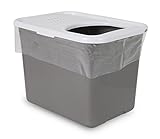
The petmate top entry litter pan is worth buying if your main problems are litter kicked over high walls and litter tracked across the floor, but it is not the best choice for very large cats over 14-15 pounds or for homes that need maximum odor containment. It is a simple, low-cost top-entry pan with moderately high walls, a textured lid for catching litter, and easy-to-clean polypropylene plastic, which makes daily scooping faster but requires full litter changes and lid wiping to stay hygienic.
As an Amazon Associate we earn from qualifying purchases at no extra cost to you.

Who Should Buy It – and Who Should Skip It
This pan solves a specific set of problems. Use this decision matrix to see if your situation matches what a basic top-entry pan does well in 2026.
| Your Situation | Verdict on Petmate Top Entry | Why |
|---|---|---|
| Small to average cat (6-12 lb), agile jumper | Good fit | Entry hole and interior depth are comfortable, tracking drops noticeably |
| Large or long cat (14 lb+, Maine Coon, Ragdoll mix) | Often too tight | Turning room is limited; look for an XL top-entry or large open high-sided pan |
| Kitten, senior, arthritic, or mobility-limited cat | Skip it | Jumping in and out of the top can cause misses or avoidance; choose a low front-entry pan |
| Apartment, bathroom corner, or laundry nook | Good fit | Square footprint tucks into corners better than round hooded boxes |
| Dog that raids the litter box | Helpful deterrent | Top entry blocks most small to medium dogs, though not a substitute for a baby gate |
| You want enclosed odor control | Not enough | Open top hole vents odor; consider a hooded box with charcoal filter plus frequent scooping |
If you have one young adult cat, limited floor space, and litter scatter is your top complaint, this design is a practical upgrade from a standard open pan. If you have a senior cat, a giant breed, or multiple large cats sharing one box, size becomes the deciding factor.
Dimensions and Real-World Fit
Listed dimensions only tell part of the story. Wall height controls scatter, floor footprint controls placement, and the size of the top opening controls whether your cat can enter, turn, and squat comfortably.
| Spec | Petmate Top Entry Litter Pan | IRIS USA Top Entry Litter Box with Scoop | Modkat Top Entry Litter Box |
|---|---|---|---|
| Exterior L x W x H | 20.4 x 15.3 x 8.1 inches | 20.5 x 16.1 x 11.6 inches with lid | 17.3 x 13.5 x 16 inches with lid |
| Interior floor space, approx. | 18.5 x 13.5 inches / 250 sq in | 18.8 x 14.2 inches / 267 sq in | 15.8 x 12 inches / 190 sq in |
| Top entry opening | 9.0-inch diameter round | 9.5-inch diameter round | 11.5 x 8-inch oval |
| Wall height | 8.1 inches all around | 6.5-inch base + tall lid | 16-inch seamless walls |
| Empty weight | 2.6 lbs | 3.8 lbs with lid and scoop | 5.5 lbs |
| Material | Polypropylene plastic, snap-on lid | Polypropylene plastic, snap-on lid | ABS plastic base, three-piece design with liner |
| Litter capacity at 3-inch depth | 12-14 lbs clumping litter | 13-15 lbs clumping litter | 8-10 lbs clumping litter |
| General market price range | Budget tier | Budget to lower-mid tier | Premium tier |
The Petmate sits in the middle: lower and lighter than tall-sided premium top-entry boxes, but more contained than a basic open pan. The 8.1-inch wall is high enough to block most standing pee spray and vigorous kicking, while the grooved lid acts as a landing pad that knocks litter off paws before the cat jumps to the floor.
For placement, allow more than the 20.4 x 15.3-inch footprint. You need about 24 x 22 inches of clear floor to let the cat jump up and off without hitting a wall or toilet, plus room for you to lift the lid straight up for scooping.
Fit Check: Will a Large Cat Be Comfortable?
Use this quick calculation before you buy, because top-entry comfort is about turning room, not just body weight.
Step 1: Measure your cat from nose to base of tail while standing. Add 4 inches. That is the minimum comfortable interior length. Example: a 17-inch-long cat needs at least 21 inches of interior length to turn easily.
Step 2: Compare to the Petmate interior of about 18.5 inches long. A cat up to about 14-15 inches nose-to-tail base, typically 6-12 pounds, will have enough room. A 17-20-inch cat, common in Maine Coons and large males, will feel cramped and may perch on the edge or avoid the box.
Step 3: Check jump ability. The lid sits about 8 inches off the floor. Most healthy adult cats clear it easily, but kittens under 5-6 months, seniors with arthritis, and cats recovering from injury often hesitate. If your cat does not readily jump onto counters or cat trees, do not choose top entry.
For two cats, litter box guidelines generally recommend one box per cat plus one extra. A single Petmate Top Entry is suitable as one of those boxes for average-sized cats, not as the sole box for two large cats.
Litter Tracking and Cleaning: What Changes Day to Day
The main benefit is less scatter. Litter kicked sideways hits the 8-inch wall and falls back in. Litter stuck to paws drops onto the lid grooves when the cat exits, rather than onto your floor. It does not eliminate tracking, especially with fine-grain or lightweight litter, but most owners see fewer litter trails outside the box compared to a low open pan.
The trade-off is a two-part cleaning routine:
- Scooping: Lift off the full lid, scoop clumps and solids, level the litter. The wide open base without corners that trap waste makes this fast.
- Lid maintenance: Shake lid litter back into the box every 1-2 days. Wipe the lid underside and grooves weekly, because urine mist and dust collect there and cause odor if ignored.
- Full change: Dump, wash with warm water and mild unscented soap, dry completely, and refill every 2-4 weeks for one cat. Top-entry lids trap humidity, so incomplete drying leads to lingering smell.
Clumping clay or clumping plant-based litter at 2.5-3.5 inches deep works best. Do not overfill past 4 inches. Deep litter sticks to the lid, spills when you remove it, and makes the interior feel smaller for large cats.
How to Set It Up to Reduce Misses
Place the pan on a hard, washable floor with the entry hole facing open room, not a wall. Fill with your cat’s current litter to avoid rejection. For the first week, leave the lid slightly ajar or off for a few hours per day so hesitant cats learn the new entry. If you see perching, half-in peeing, or scratching at the outside, the box is likely too small or the entry feels insecure – switch to a larger or front-entry design rather than forcing the transition.
Plastic Durability and Ownership Realities
The pan is made from lightweight polypropylene, the same type of plastic used in most budget litter boxes. It is stain-resistant when new, flexible enough to resist cracking if bumped, and light enough to carry to the trash for dumping.
What wears first is not usually a crack. It is micro-scratches on the floor from scooping, followed by odor retention in those scratches after 9-18 months of daily use. The snap tabs on the lid can also loosen if you lift the box by the lid when full. Lift from the base, not the lid rim.
Common mistakes that shorten its life:
- Using harsh bleach, abrasive pads, or scented cleaners that leave residue and make cats avoid the box
- Metal scoops scraped aggressively across a dry floor, which gouges the plastic
- Skipping liners but also skipping the full wash, allowing urine to sit in corners
- Placing it in direct sun or next to a heater, which warps thin plastic lids over time
There are no filters, motors, liners, or proprietary consumables to replace, which keeps long-term cost low. Your only recurring cost is litter itself. With 12-14 pounds per fill and regular scooping, one cat typically needs a top-up bag every 3-5 weeks depending on litter type and waste volume.
For general hygiene questions, especially if your cat suddenly avoids the box, strains, or changes litter habits, treat that as a health signal and consult a veterinarian rather than changing boxes alone.
Bottom Line: Should You Buy It?
Buy the petmate top entry litter pan if you have an agile, average-sized cat, want less kicked and tracked litter in a small space, and prefer a light, inexpensive pan with no extra parts. Skip it if your cat is very large, elderly, has limited mobility, or if you need strong odor enclosure for a shared living space. In those cases, a larger high-sided front-entry pan or a taller premium top-entry box will fit better and require less retraining.
Frequently Asked Questions
Does it control odor well?
Modestly. Solid waste odor drops if you scoop daily, but the open top hole lets ammonia and litter dust vent. It helps to scoop twice daily, keep litter at 3 inches, and wash the lid monthly.
Can kittens use a top-entry pan?
Most kittens under 5-6 months struggle with the jump and the 9-inch opening. Start with a low-sided kitten pan and transition to top entry once the kitten jumps confidently.
What litter works best in it?
Medium-grain clumping litter tracks less and falls off the lid easily. Very fine or ultra-lightweight litters stick to paws and cling to the lid grooves, increasing dust around the box.