The best enrichment toy for a dog home alone is the KONG Wobbler if you want one dependable, dishwasher-friendly feeder, with the Outward Hound Nina Ottosson Tornado as the runner-up for dogs that need an actual puzzle to solve. The Wobbler turns a meal into a slow, rolling search that lasts, while the Tornado makes a dog lift and spin layers to reach hidden treats. Everything below is built around one question: what keeps a dog busy and safe while nobody is watching?
Being left alone is hard for plenty of dogs, and a toy cannot fix every case. Enrichment helps with boredom, restlessness and the mid-morning slump that leads to chewed baseboards. It does not treat true separation anxiety. If your dog pants, paces, drools, howls or tries to escape the moment you pick up your keys, talk to your veterinarian or a certified trainer before assuming a puzzle will solve it. With that in mind, here are seven picks across budget, mid-range and premium tiers, plus four more to consider, and a buying guide that explains how to match a toy to your dog and your daily routine.
Our top picks

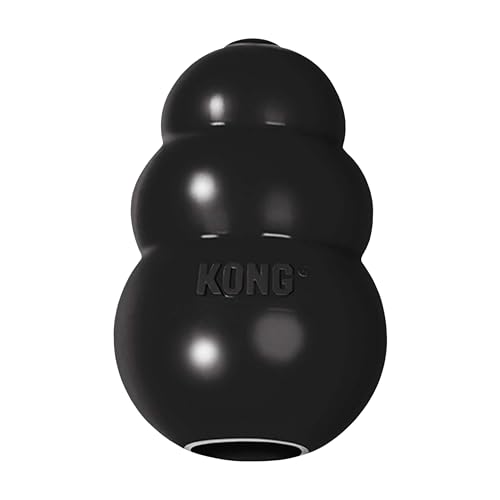 KONG Extreme Dog Toy
- Instinctual Needs: The KONG Extreme black rubber toy…
- Enticing Chew Toy for Dogs: This unique toy…
- Treat-Filling Capabilities: The hollow interior allows for stuffing…

As an Amazon Associate we earn from qualifying purchases at no extra cost to you.
Top Picks at a Glance
- Best Overall: KONG Wobbler, a treat-dispensing feeder for medium and large dogs.
- Best for Problem Solvers: Outward Hound Nina Ottosson Tornado, a Level 2 spinning puzzle with 12 hidden compartments.
- Best Budget Starter: Outward Hound Nina Ottosson Treat Tumble, a Level 1 ball that holds up to 1 cup of kibble.
- Best Value Puzzle: PETSTA Dog Puzzle Toys, a treat-dispensing puzzle sold for IQ training and brain stimulation.
- Best Scent Game: Vivifying Snuffle Mat, 26 x 16.5 inches, for slowing meals and encouraging sniffing.
- Best Easy Feeder: Starmark Bob-A-Lot, sold in small and large versions, for dogs that like to push and paw.
- Best Multi-Level Challenge: Barkwhiz Dog Puzzle Toy, with three difficulty levels.
Quick Comparison Table
| Product | Best for | Key specs | Watch for | Price tier |
|---|---|---|---|---|
| KONG Wobbler | Daily meal-time enrichment | Large: about 7 x 6.5 in, holds about 1 cup; top-rack dishwasher safe | Noisy on hard floors | Premium |
| Outward Hound Tornado | Smart, persistent dogs | 9.8 in, Level 2, 12 hidden compartments | Loose parts; needs a learning phase | Mid-range |
| Outward Hound Treat Tumble | Beginners, puppies | 4.8 in, Level 1, holds 1 cup kibble | Quickly solved by experts | Budget |
| PETSTA Dog Puzzle Toys | Low-cost puzzle practice | Treat dispensing; dimensions not listed | Plastic parts; check chew habits | Mid-range |
| Vivifying Snuffle Mat | Sniffers, fast eaters | 26 x 16.5 in fabric mat | Chewers may shred fabric | Mid-range |
| Starmark Bob-A-Lot | Pushers that eat kibble | Treat-dispensing feeder; small and large; capacity not listed | Size choice matters | Mid-range |
| Barkwhiz Dog Puzzle Toy | Dogs that outgrow easy puzzles | 3 difficulty levels; all breeds; size not listed | Needs manual resetting | Mid-range |
1. KONG Wobbler: Best Overall for Daily Alone Time
- Interactive treat-dispensing feeder for medium and large dogs.
- Large size is about 7 x 6.5 inches and holds roughly 1 cup of kibble, according to retailer specifications; a small size holds about half a cup.
- KONG lists the Large for dogs of roughly 30 to 65 pounds and the Small for dogs up to about 20 pounds.
- The top screws off the base for filling and cleaning; KONG states it is top-shelf dishwasher safe.
- Weighted bottom lets it wobble upright after your dog knocks it.
Best for: dogs fed on kibble who can eat breakfast out of a toy. Skip if: your dog is a determined chewer who will try to destroy hard plastic, or you live in an apartment where rattling on tile will bother neighbors.
The Wobbler works because it pairs a very simple mechanism with a very reliable motivator, which is food. The dog nudges it, kibble falls out of a hole, and the toy rights itself. That loop can run for a good while depending on how much you load and how determined your dog is. Because the mechanism is not a puzzle with parts, there is nothing to lose, nothing to reset, and little for a bored dog to dismantle.
Treat it as a replacement for the food bowl, not an extra. Measure the day’s kibble, put the morning portion in, and set it down as you head out. That avoids adding calories, which matters for dogs that are already on a weight plan. The size choice matters too: a dog too small for the Large will struggle to tip it, and a big dog with a Small will finish in a couple of minutes.
In practice, the Wobbler is also the easiest toy on this list to build a routine around. You fill it, you put it down, you leave, and when you come home it goes in the dishwasher. A routine like that is what makes enrichment sustainable on a busy workday, and sustainability is the real difference between a toy that gets used daily and one that ends up in a drawer.
Pros: dishwasher-friendly, no fiddly parts, adjustable difficulty through the opening setting, trusted brand, works with ordinary kibble. Cons: can be loud on hard floors; not designed for sticky fillings; dogs that pick it up and throw it can get frustrated.
2. Outward Hound Nina Ottosson Tornado: Best for Problem Solvers
- Level 2 (Intermediate) treat puzzle, about 9.8 inches across.
- 12 hidden treat compartments across rotating layers.
- Dog lifts or spins layers to uncover treats and kibble.
- Sits flat on the floor while the dog works it.
Best for: curious, food-driven dogs that like to use nose and paws. Skip if: your dog loses interest quickly and pushes puzzles around rather than solving them, or you want something fully chew-proof.
The Tornado is a genuine puzzle rather than a feeder. A dog has to move the cones, which asks for a sequence of deliberate actions, and each success reveals a reward. That is closer to the mental workout many people picture when they search for enrichment for a dog home alone. For many dogs, ten minutes of real problem solving is as tiring as a short walk.
The trade-off is supervision during the learning phase. Introduce it while you are home, show your dog how to lift a layer, then repeat. Once your dog understands the idea, you can leave it with a smaller, easier portion and keep a harder one for the weekend. Because it uses loose cones, chewing is a concern: if you see your dog biting the plastic, put the puzzle away for solo time and use it only when you are present.
A good pattern is to load only half the compartments when you first leave it alone. A dog that finishes quickly may chew out of boredom, and a partial load keeps the first reward fast and the later ones harder to find. As confidence grows, fill more compartments or cover them with different layers.
Pros: real brain work, 12 compartments for pacing, widely used brand line with a level system. Cons: loose parts; not a chew-proof toy; some dogs lose interest once they have solved it.
3. Outward Hound Nina Ottosson Treat Tumble: Best Budget Starter
- Level 1 (Easy) food-dispensing ball, about 4.8 inches.
- Holds roughly 1 cup of kibble, per the listing.
- Rolls and tumbles to release food.
- Simple two-piece construction.
Best for: new puzzle users, young dogs, and anyone who wants to learn whether their dog enjoys feeders. Skip if: your dog is a heavy chewer or already a puzzle expert.
The Treat Tumble is the least intimidating toy here. A dog that has only ever eaten from a bowl will quickly figure out that rolling the ball drops food. That early success builds confidence, which matters because dogs that fail at a hard puzzle often walk away. If your dog has never used a food toy, start here for a few days, then move up to the Tornado or the Wobbler.
Because it is a ball, it will roll across the floor and bump furniture, which some dogs find exciting and some owners find annoying. Place it on a rug or in a carpeted room if noise is an issue. Also check the opening setting before each use: if food comes out too easily, tighten it, and if your dog gives up, loosen it.
Pros: low cost, easy to understand, a good first step. Cons: little long-term challenge, will not satisfy a determined chewer.
4. PETSTA Dog Puzzle Toys: Best Value Puzzle
- Treat-dispensing dog puzzle marketed for IQ training and brain stimulation.
- Designed so treats or kibble can be hidden inside.
- Intended for interactive mental stimulation.
- Exact dimensions and capacity: not listed in the title.
Best for: owners who want to try puzzle feeders without buying into a name-brand line. Skip if: you want published difficulty levels or manufacturer support.
PETSTA fills the gap between a basic ball and a full puzzle system. It gives your dog something to figure out without a big outlay. Because the listing does not publish dimensions or a difficulty scale, treat it as a trial: watch your dog during the first few sessions, note whether it is solved in minutes or hours, and decide whether to scale up.
As with any plastic puzzle, the safety rule is simple. If your dog chews pieces off, retire it from alone time. Rinse it by hand after wet foods and let it dry fully before the next fill.
Pros: approachable cost, brain-focused design, easy to try. Cons: limited published specs, unknown long-term durability.
5. Vivifying Snuffle Mat: Best Scent Game
- Fabric foraging mat about 26 x 16.5 inches.
- Strips and pockets hide dry kibble and treats.
- Encourages sniffing and slows fast eaters.
- Folds flat for storage.
Best for: dogs that love to sniff, fast eaters, and calm dogs that need a settling activity. Skip if: your dog shreds fabric or swallows pieces.
A snuffle mat taps natural foraging. The dog works its nose through strips of fleece to find scattered food, which tends to be calming rather than frantic. It is also the easiest enrichment to adjust: stuff it tightly for a long task, loosely for a quick snack. At 26 x 16.5 inches, it is big enough for a medium or large dog to work without it sliding around the room.
Because it is fabric, it needs more caution than a rubber toy. Give it only when you are around until you are sure your dog does not eat the strips. Shake it out after use and wash it following the listing instructions; moisture left in a mat can smell sour and attract pests.
Pros: gentle on teeth, slows eating, compact, adjustable. Cons: not for chewers, needs washing, scatters crumbs.
6. Starmark Bob-A-Lot: Best Easy Feeder
- Treat-dispensing interactive feeder sold in small and large versions.
- Bobs and rolls to release kibble as the dog pushes it.
- Simple design without internal puzzle parts.
- Capacity differs by size and is not listed in the title.
Best for: dogs that learn by pushing and pawing. Skip if: you need a published capacity, or your dog is a determined destroyer.
The Bob-A-Lot sits between the Wobbler and the Treat Tumble. It encourages a dog to knock a weighted body around, but without the multi-step logic of a puzzle. For a dog with a short attention span, that is a feature, not a flaw. The reward arrives quickly enough to keep them engaged.
Choose the size by your dog’s mouth and body rather than by weight alone. A large breed with the small version can pick it up and carry it, which defeats the purpose.
Pros: easy for beginners, straightforward, two size options. Cons: limited difficulty, little published detail on capacity.
7. Barkwhiz Dog Puzzle Toy: Best Multi-Level Challenge
- Three difficulty levels in a single puzzle.
- Marketed for boredom and smart dogs.
- Sold for all breeds.
- Dimensions: not listed in the title.
Best for: dogs that master easy puzzles quickly. Skip if: you want something you can leave with a chewer.
A single puzzle that grows with your dog saves money and prevents the “solved in a minute” problem. Start on level 1, move to level 2 once your dog is consistently quick, and use level 3 for a weekend challenge. Rotating difficulty is one of the simplest ways to keep a toy interesting for months.
Pros: adjustable challenge, good for clever dogs. Cons: pieces need resetting by hand, not chew-proof.
Also Consider
- DR CATCH Dog Puzzle: an inexpensive treat puzzle sold for IQ training and mental enrichment. Specs beyond the title are not listed, so treat it as a low-cost experiment.
- KADTC Dog Chess Puzzle Toy: a 3-level puzzle in a large size, aimed at smart dogs that outgrow simple toys. It sits at the higher end of puzzle pricing.
- BSISUERM Adjustable Treat Dispensing Ball: a slow-feeder ball that lets you widen or narrow the opening to tune difficulty.
- PET ARENA Adjustable Snuffle Mat: a second snuffle option with an adjustable layout, useful if you want a different feel from the Vivifying mat.
How We Chose
We did not physically try these products, and we are not claiming to. This list is based on research: manufacturer product pages and spec sheets, retailer listing details, the stated sizes and levels on each item, and what independent pet publications and training organizations say about puzzle feeders and foraging. Where a spec was missing from the listing, we wrote “not listed” instead of guessing.
We limited the list to two products per brand, kept to items that are sold today, and covered three price tiers so there is something for a first-time puzzle user and a seasoned problem solver. We also favored toys that work with ordinary kibble, because that is what most households already have on hand. Finally, we weighed safety for solo time: simple designs with few loose parts rank higher for dogs left alone, while multi-piece puzzles are positioned as supervised or weekend toys.
Buying Guide
Match the toy to the way your dog plays
Dogs fall into rough styles. Sniffers prefer mats and scatter games. Pushers prefer wobblers and balls. Thinkers prefer puzzles with layers or sliding parts. Chewers prefer thick rubber they can grip. Watch how your dog eats and plays for a few days, then choose the style that fits. A mismatch is the most common reason a toy sits untouched. If your dog already tears apart plush toys within minutes, skip fabric mats and multi-piece puzzles for solo time and look at rubber feeders instead.
Check the size against your dog’s mouth
For a ball or feeder, the toy should be too big to swallow and too large to fit entirely in the mouth. As a rough guide, the smallest dimension should be longer than the distance from your dog’s nose to the back of the jaw. The KONG Wobbler is sold in two sizes for exactly this reason, with the Large aimed at roughly 30 to 65 pounds. When your dog falls between sizes, go larger for anything that rolls or can be carried.
Plan the calories
Put food from the day’s ration into the toy rather than adding extras. If you use treats, count them. A typical enrichment session uses a quarter to half of a medium dog’s meal, but your veterinarian can give the right feeding amount for your own dog. Dogs on a weight plan are the best candidates for feeders, because eating more slowly can turn a two-minute meal into a twenty-minute activity without adding anything to the bowl.
Decide what is safe to leave alone
Rubber and hard plastic feeders with no loose parts are better for solo time. Fabric mats and multi-piece puzzles are better with supervision until you know your dog does not chew or swallow pieces. Inspect toys after each use and throw out anything cracked, split or torn. Never leave a toy that has lost a piece, because small fragments are a choking and blockage risk.
Rotate, do not pile up
Leaving five toys on the floor reduces the value of every one. Keep two or three in rotation and swap them every few days. A toy that appears only when you leave becomes something to look forward to rather than a signal that the door is about to close. If your dog gets excited about the toy before you leave, that is a good sign the association is positive.
Think about the whole day, not just the toy
An enrichment toy fits best into a routine: a walk or play session, then a calm feeding from the toy, then rest. If a dog is bursting with unspent energy, no puzzle will compete with the urge to move. Pair the toy with exercise before you leave, and where possible arrange a midday break from a neighbor, walker or family member for long workdays.
Common Mistakes to Avoid
- Starting with a puzzle that is too hard. If your dog fails, they quit. Begin easy and raise the level slowly.
- Using enrichment as a substitute for exercise. A tired dog settles better; a puzzle is the finishing touch, not the workout.
- Leaving an unfamiliar toy unsupervised on day one.
- Forgetting to clean. Food residue spoils, and spoiled food can upset a dog’s stomach.
- Expecting a toy to treat separation anxiety.
- Giving the same toy every day with the same fill. Variety keeps interest high.
Frequently Asked Questions
What is the best enrichment toy for a dog home alone?
A durable treat-dispensing feeder such as the KONG Wobbler is a strong all-round choice because it has no loose parts and lasts through a meal. Dogs that like puzzles may prefer the Outward Hound Tornado, but it is better used with some supervision.
How long should an enrichment toy keep my dog busy?
Most feeders and puzzles occupy a dog for roughly ten to thirty minutes, depending on the dog and the fill. A snuffle mat can stretch longer if it is densely filled. Do not expect any single toy to fill an entire workday.
Are puzzle toys safe to leave with my dog?
Simple, sturdy feeders with no small parts are generally better for unsupervised time. Check for damage after every use and take away anything your dog has chewed into pieces. If you are unsure, ask your veterinarian.
Will an enrichment toy fix separation anxiety?
No. Toys can help with boredom, but separation anxiety needs a plan from a veterinarian or a certified trainer. Signs include heavy panting, drooling, destruction around doors, and howling that starts as you leave.
Can I use wet food or peanut butter in these toys?
It depends on the toy. Some feeders are made for dry kibble and others for soft fillings. Check the manufacturer’s guidance for each product, and avoid ingredients unsafe for dogs, such as anything containing xylitol.
How often should I wash enrichment toys?
Wash after any use with wet or sticky food, and at least weekly for kibble-only use. The KONG Wobbler’s maker lists it as top-rack dishwasher safe. Other toys should be washed by hand with mild soap and dried completely.
What size should I buy?
Choose the size by your dog’s mouth and weight, using the manufacturer’s range. When in doubt, pick the larger size for a ball or feeder so it cannot be swallowed.
Which One Should You Buy?
If you want a single dependable purchase, buy the KONG Wobbler in the right size. If your dog loves a challenge, add the Outward Hound Tornado for supervised sessions and weekend work. If you are not sure your dog will care about food toys, start with the Treat Tumble or a snuffle mat and move up from there. Whatever you choose, introduce it while you are home, keep the portions inside the daily ration, and retire anything that gets chewed apart.
Sources
- KONG Company product page for the Wobbler
- Outward Hound Nina Ottosson product pages
- Starmark Pet Products product pages
- American Kennel Club training and enrichment articles
- ASPCA guidance on separation anxiety
Last updated: October 2026