Key takeaways
- Best Overall: Tehoao Low Entry Small Litter Box for Kittens
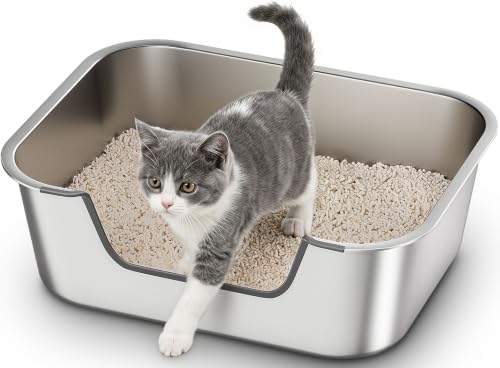
- Best Stainless Steel: Amibud Low Entry Stainless Steel Litter Box
- Best Budget Basic Pan: Petmate Basic Open Plastic Cat Litter Pan, Small
- Best Multi-Box Set: Koparion 5-Piece Kitten Litter Boxes with Scooper
- Best for Travel and Foster Setups: chuyouan Collapsible Kitten Litter Box
- Best Metal Box With Some Height: Tevila Small Stainless Steel Litter Box with Scoop
- Best Grow-With-Me Box: KittyGoHere 2.0 Easy Entry Litter Box
The best low entry litter box for a newly adopted kitten is a shallow, open-top pan with an entry lip of roughly two to three inches or less, and the Tehoao Low Entry Small Litter Box is our top pick, with the Amibud Low Entry Stainless Steel Litter Box as the runner-up for people who prefer metal. A small kitten needs to climb in without a struggle, so a box with tall sides, a hood or a top entry can turn a new adoption into a house-training headache. The seven boxes below cover plastic, stainless steel, collapsible and larger “grow with me” options, and the guide explains how to set up the first week so your kitten learns quickly.
This guide is research-based. We did not personally use these litter boxes; we compared the sizes and features in the listings and the general guidance from cat-care organizations, and we write “not listed” where a detail could not be confirmed. Every kitten is different, so if your kitten is very young, has trouble using the box, or shows signs of illness, ask your veterinarian.
Our top picks


As an Amazon Associate we earn from qualifying purchases at no extra cost to you.
Top Picks at a Glance
- Best Overall: Tehoao Low Entry Small Litter Box for Kittens
- Best Stainless Steel: Amibud Low Entry Stainless Steel Litter Box
- Best Budget Basic Pan: Petmate Basic Open Plastic Cat Litter Pan, Small
- Best Multi-Box Set: Koparion 5-Piece Kitten Litter Boxes with Scooper
- Best for Travel and Foster Setups: chuyouan Collapsible Kitten Litter Box
- Best Metal Box With Some Height: Tevila Small Stainless Steel Litter Box with Scoop
- Best Grow-With-Me Box: KittyGoHere 2.0 Easy Entry Litter Box
Comparison Table
| Product | Best for | Key specs (per listing) | Watch for | Price tier |
|---|---|---|---|---|
| Tehoao Low Entry Small | First weeks at home | Plastic, open top, low entry, anti-splash high sides at the back | Plastic can hold odor over time | Budget |
| Amibud Stainless Low Entry | Easy cleaning | Stainless steel, shallow, low entry for kittens and small cats | Dimensions not in the headline | Budget |
| Petmate Basic Open Pan, Small | Tight budgets | 14 x 10.5 x 3.5 inches, open pan | Very small, outgrown fast | Budget |
| Koparion 5-Piece Set | Multi-room setups, litter training | 1.57 inch low entry, scooper, portable shallow pans | Thin plastic, short lifespan | Budget |
| chuyouan Collapsible | Travel, vet visits, fosters | 17.7 x 13.4 x 5 inches, collapsible, low entry | Less sturdy than rigid pans | Budget |
| Tevila Stainless with Scoop | Metal fans who want sides | 17.32 x 13.39 x 7.87 inches, stainless steel, scoop | 7.87 inch height may be tall for the tiniest kittens | Budget |
| KittyGoHere 2.0 | Kittens that will grow | Large open top, low entrance, two entrances | Large, needs floor space | Mid-range |
What “Low Entry” Means for a Kitten
Low entry means the lowest point you step over to get inside the box. For a newly adopted kitten, that lip matters more than the overall box size. A kitten of eight weeks is only a few inches tall at the shoulder and has limited jumping strength. Many cat-care guides suggest an entry of about two to three inches or lower for very young kittens, then raising the challenge as the kitten grows. Use that as a rule of thumb, not a guarantee, and watch your own kitten: if it hesitates, scrabbles or perches on the edge, the lip is too tall.
Worked example: sizing a box over the first six months
| Kitten age | Suggested entry height | Suggested box length | What to do |
|---|---|---|---|
| 8 to 12 weeks | About 1.5 to 3 inches | About 14 to 18 inches | Use a shallow pan; keep it near where the kitten sleeps and plays |
| 3 to 5 months | About 3 to 5 inches | About 16 to 20 inches | Move to a medium box with a low entrance or cut-out |
| 5 to 8 months | Up to 5 to 7 inches | About 18 to 24 inches | Switch to an adult-size box; keep one low-entry box if you have a second cat |
The numbers are guidelines. A good adult litter box is often described as about one and a half times the length of the cat from nose to base of the tail, so a growing kitten will outgrow a tiny pan sooner than you expect. If you do not want to buy two or three boxes, a large open-top box with a low entrance, such as the KittyGoHere 2.0, can cover more than one stage.
Materials: plastic versus stainless steel
Plastic boxes are lightweight, cheap and come in many shapes, but they can scratch and absorb odors over time. Stainless steel boxes resist scratching, are easy to wipe clean and do not hold odors the way scratched plastic can, but they are heavier and can make noise when a kitten scratches litter. Both work; choose based on cleaning habits and budget. No material can eliminate odor on its own: scooping daily and washing the box regularly matters more than the material.
1. Tehoao Low Entry Small Litter Box for Kittens: Best Overall
- Material: plastic
- Design: open top, low entry, small size for kittens
- Sides: anti-splash high sides at the back and sides per the listing
- Exact dimensions: not listed in the headline
- Cleaning: wipes clean, scoop use depends on litter
Best for: the first month at home, when the kitten needs a box it can enter without effort. Skip if: you want a box that will last into adulthood.
The Tehoao box is built for exactly the use case in this guide: a small kitten with short legs. A low front entry makes it easy to step in, while higher sides at the back and sides help keep litter from flicking out when the kitten digs. That combination is the sweet spot for a first box.
The open top means you can see whether your kitten has used the box and you can clean it quickly. It also means no hood to hold in smells, so scoop at least once a day and do a full wash each week or two. If your kitten likes to scatter litter, a mat under the box helps.
Plastic keeps this model in the budget tier, which is helpful because you will likely replace it within a few months as the kitten grows.
Pros:
- Low entry designed for kittens
- Anti-splash sides
- Budget tier
- Open top for easy cleaning
Cons:
- Outgrown within months
- Plastic can retain odor if scratched
2. Amibud Low Entry Stainless Steel Litter Box: Best Stainless Steel
- Material: stainless steel
- Design: shallow, low entry for kittens and small cats
- Finish: described as easy to access and clean
- Dimensions: not listed in the headline, check the page
- Non-slip base: not listed
Best for: owners who prefer metal for hygiene and durability. Skip if: your kitten startles easily at the sound of scratching on metal.
Amibud offers several stainless steel low-entry boxes in different sizes, including versions for kittens, small cats and seniors. The kitten version is shallow and uses a metal pan that is easy to rinse. Stainless steel does not scratch as easily as plastic, so it holds up to years of scooping and washing.
Two practical notes: metal boxes are heavier and can slide on smooth floors, so put the box on a mat. And scooping can make scraping sounds, which most cats get used to, but a skittish kitten may need time. If your kitten refuses a metal box, put a small amount of its previous litter in it to make the box smell familiar, and try again after a few days.
It sits in the budget tier, a good price for metal. Because dimensions are not in the headline, check the listing for length and depth before ordering.
Pros:
- Stainless steel resists scratches and is easy to clean
- Low entry for kittens
- Budget tier
Cons:
- Heavier, can slide on smooth floors
- Scraping noise when scooping
3. Petmate Basic Open Plastic Cat Litter Pan, Small: Best Budget Basic Pan
- Size: 14 x 10.5 x 3.5 inches per the listing
- Material: plastic
- Design: open pan, multidirectional
- Entry height: about 3.5 inches overall depth, so the lip is low
- Color: gray
Best for: a cheap, very shallow starter pan for a tiny kitten. Skip if: you want anti-splash sides.
Sometimes the simplest option is best. The Petmate basic pan is a small, shallow tray with a 3.5-inch depth, which works for very young kittens learning where to go. It costs little, which makes it practical as a second box for another room.
The trade-off is size. At 14 inches long, a kitten will outgrow it quickly, and with no raised sides, litter will scatter. Treat it as a short-term training pan or a spare in a second room, not a long-term answer.
Pros:
- Very shallow and simple
- Low cost
- Easy to wash
Cons:
- Small and outgrown soon
- No anti-splash sides
4. Koparion 5-Piece Kitten Litter Boxes with Scooper: Best Multi-Box Set
- Pieces: 5 small litter boxes plus a scooper
- Entry: 1.57 inch low entry per the listing
- Design: portable, shallow, open
- Material: plastic, thickness not listed
- Use: multiple rooms, travel, litter training
Best for: kitten-proofing a whole home with a box in each room. Skip if: you want one sturdy box.
New kittens can be forgetful. Putting a small box in each area where the kitten spends time reduces accidents, and a five-pack makes that cheap. The 1.57-inch low entry is the lowest figure in this guide, which is helpful for very young or weak kittens.
Because the boxes are light and thin, expect them to flex and to wear faster than rigid pans. Use them for the first couple of months, then consolidate into one or two larger boxes as the kitten becomes reliable. They can also double as spare travel boxes or temporary foster boxes.
Pros:
- Lowest listed entry height
- Multiple boxes for multiple rooms
- Scooper included
Cons:
- Lightweight plastic wears faster
- Small size
5. chuyouan Collapsible Kitten Litter Box: Best for Travel and Fosters
- Size: 17.7 x 13.4 x 5 inches per the listing
- Design: collapsible, shallow, low entry
- Use: kitten and small cat, travel
- Material: not listed in the headline
- Weight: not listed
Best for: vet trips, car rides and temporary setups. Skip if: you need a rigid box for daily home use.
Newly adopted kittens often travel: home from the shelter, to the vet for vaccinations, to a friend’s place. A collapsible box folds flat when not in use and opens into a shallow tray at 5 inches deep, which suits a small kitten. At 17.7 inches long, it is also longer than the tiny trays, so it gives a kitten room to turn.
It is less sturdy than a rigid box. A confident digger may tip or bend the walls, so use it for travel or as a secondary box rather than the main station.
Pros:
- Folds flat for storage
- Longer than basic starter pans
- Budget tier
Cons:
- Less rigid
- Not ideal as the only box
6. Tevila Small Stainless Steel Litter Box with Scoop: Best Metal Box With Some Height
- Size: 17.32 x 13.39 x 7.87 inches per the listing
- Material: stainless steel
- Includes: scoop
- Entry: described as small pan; entry height not listed
- Color: light gray
Best for: kittens from about three months who are comfortable stepping into a taller box. Skip if: your kitten is under eight weeks or very small.
The Tevila box is metal with higher sides. At 7.87 inches overall height, it keeps litter in better than shallow pans, which is great for energetic diggers. The catch is that the entry height is not listed, so make sure there is a lower section or add a step. Many owners place a small, sturdy step or a flat tile at the front for the first weeks.
If you choose this one for a very young kitten, watch how it handles the climb. If it struggles, switch to a shallower box for now and use the Tevila later.
Pros:
- Stainless steel and scoop included
- Higher sides reduce scatter
- Budget tier
Cons:
- Entry height not listed
- Too tall for very young kittens without a step
7. KittyGoHere 2.0 Easy Entry Litter Box: Best Grow-With-Me Box
- Size: large (Misty Gray, large option per the listing)
- Design: open top, low entrance, two entrances
- Material: plastic, lightweight
- Marketed for: seniors and cats with mobility needs, which also suits kittens
- Exact dimensions: not listed in the headline
Best for: households that want one box to last from kitten to adult. Skip if: you have a small apartment.
KittyGoHere is known for low entrance boxes designed for older cats, and that same low entry works for kittens. Two entrances give a shy kitten an escape route, which can make the box feel less like a trap. The large size gives an adult cat room, so you may only need to buy one box.
The trade-off is space and price. It is bigger than a starter pan and sits in the mid-range tier. For a tiny kitten, a large box can feel like a big open space, but cats often prefer a roomy box once they grow.
Pros:
- Low entrance with two entry points
- Large size lasts into adulthood
- Lightweight
Cons:
- Takes floor space
- Mid-range price tier
Also Consider
Jotesnew Small Stainless Steel Litter Box with Scoop
A small metal box with an open top, about 17.2 by 13.2 by 7.7 inches per the listing. Similar to the Tevila, with the same caution about entry height for very young kittens.
TomteNisse Foldable Cat Litter Box
A foldable, height-adjustable open-air box with anti-splash sides and a scoop. Handy for owners who want to adjust the wall height as the kitten grows.
Qiuma Stainless Steel Low Entry Litter Box
A metal low-entry box marketed for senior or injured cats, which also works for young kittens. A good choice if you plan to keep it for an older cat later.
Kitty Sift Disposable Litter Box
A disposable box for travel or temporary setups. Not a long-term solution, but practical for a vet visit or a first night in a new place.
How We Chose
This guide is research-based. We did not personally use these boxes. We searched the store catalog for low-entry and kitten-sized litter boxes, kept those currently sold and relevant to young kittens, and compared each against its listing details. We looked at stated dimensions, entry height, material, anti-splash features and whether the product is suited to growing kittens. We also reviewed general guidance from veterinary and cat-care organizations on litter box size, placement and introduction.
We limited each brand to two entries, included both plastic and stainless steel, and wrote “not listed” for any detail we could not confirm. Prices are tiers because they change often.
Buying Guide
Entry height first
Choose a box with an entry lip of about two to three inches or lower for kittens under three months. If you only find a taller box, add a small ramp or a flat step. Watch your kitten the first time it uses the box; if it hesitates or hops awkwardly, pick a lower option.
Size and number of boxes
A common guideline is one box per cat plus one extra, and for a kitten, one box on each level of the home it can reach. Start with a small box in the kitten’s main living area, then add more as it explores. The box should be long enough for the kitten to turn around and scratch without stepping out.
Open top versus hooded
Open-top boxes are easier for a kitten to enter and for you to monitor. Hooded boxes control scatter and smell but can be intimidating or harder for a tiny kitten to use. For newly adopted kittens, open is usually the better starting point. You can introduce a hooded box later.
Material and cleaning
Stainless steel is scratch-resistant and easy to wipe, plastic is lighter and cheaper. Whichever you choose, scoop at least once a day and wash the box with mild, unscented soap regularly. Avoid strong-smelling cleaners, as cats are sensitive to scents.
Litter and placement
Use the litter the shelter or breeder used for the first days, then change gradually if you prefer something else. Ask your veterinarian about litter type for very young kittens, because some young kittens may nibble litter. Place the box in a quiet, easy-to-reach spot away from food and water bowls.
First-Week Setup Checklist
- Show the kitten the box right after meals, naps and play sessions.
- Keep the box in a low-traffic place that the kitten can reach without stairs.
- Do not move the box around during the first weeks.
- Praise calmly if the kitten uses the box, and clean accidents with a pet-safe cleaner.
- Scoop daily so the box stays inviting.
- If the kitten avoids the box, strains, or has changes in stool or urine, contact your veterinarian.
Common Mistakes to Avoid
- Choosing a hooded or top-entry box for a very small kitten.
- Buying only one box for a large home or multiple floors.
- Switching litter brands suddenly in the first days.
- Placing the box next to the food bowl or a noisy appliance.
- Scolding the kitten for accidents, which can make it fear the box.
Frequently Asked Questions
What is the best litter box for a new kitten?
A shallow, open-top box with a low entry, such as the Tehoao low entry box or Amibud stainless low entry box, suits most new kittens. Choose one with an entry of about two to three inches or lower, and add more boxes as the kitten explores.
How low should a kitten litter box entry be?
For kittens under about three months, aim for an entry of roughly two to three inches or lower. If your kitten struggles, go lower or add a step. As it grows, you can raise the entry height.
When should I switch to a bigger litter box?
Switch when the kitten cannot turn around easily or starts standing outside the box to go. This is often between three and six months. A large low-entry box can serve both stages.
Should a kitten use a covered litter box?
Most kittens do better with an open-top box at first. Covered boxes can be harder to enter and feel enclosed. If you prefer a hood, introduce it later and keep an open box available.
Is stainless steel better than plastic for kittens?
Neither is always better. Stainless steel resists scratches and cleans easily, while plastic is lighter and cheaper. Choose based on your cleaning routine and your kitten’s reaction.
How many litter boxes does a kitten need?
Start with one in the main room and add one for each area your kitten spends time in. The usual guideline for adult cats is one box per cat plus one extra.
What if my kitten will not use the litter box?
Check the entry height, location and cleanliness first, and keep the box quiet and consistent. If the problem continues, or the kitten seems uncomfortable or strains, consult your veterinarian.
Which One Should You Buy?
For most new kitten owners, buy the Tehoao low entry box as the primary starter and add a cheap Petmate or Koparion pan as a second station in another room. If you prefer metal, the Amibud stainless low entry box is the better long-lasting choice. Keep the chuyouan collapsible box for vet visits and travel. If you want a single box to last into adulthood, the KittyGoHere 2.0 saves you from buying twice. Whatever you choose, keep the entry low, scoop daily, and talk to your veterinarian if anything about your kitten’s litter habits seems off.
Sources
- Tehoao, Amibud and Koparion product pages for the listed litter boxes
- Petmate and KittyGoHere product pages
- Veterinary guidance on litter box setup for kittens from cat-care organizations
- Cornell Feline Health Center general advice on litter box management
- American Society for the Prevention of Cruelty to Animals litter box guidance
Last updated: October 2026