Key takeaways
- Powder-coated steel: The most common balance of price and durability. Reject any cage with chips, rust, bubbling, or peeling coating.
- Stainless steel: Long-lasting and easier to inspect, but substantially more expensive and heavier.
- Untreated wood: Useful for perches and accessories, but not ideal as the primary cage structure because it absorbs moisture and is easy to damage.
- Plastic: Practical for trays, feeder parts, and guards, but chewing birds may destroy thin plastic quickly.
The best bird cages are the largest safe enclosure your room and budget can accommodate, with bar spacing matched to the bird’s head size, non-toxic materials, several access points, and a removable grate and tray that make daily cleaning practical.
Our top picks
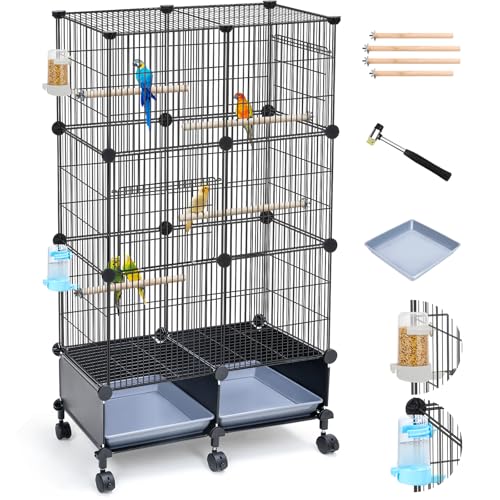

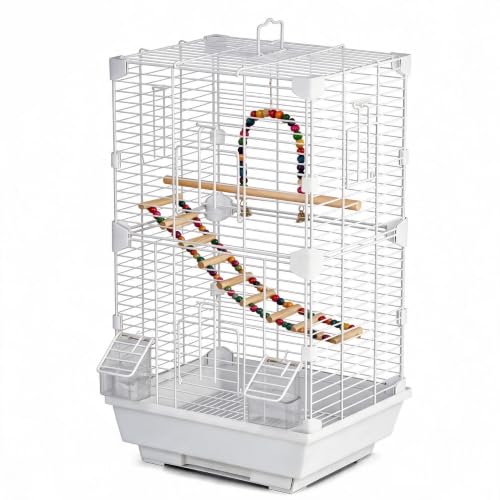

As an Amazon Associate we earn from qualifying purchases at no extra cost to you. Ratings are shown as listed on Amazon.
Quick picks by bird, room, and routine
| Situation | Recommended cage type | Target interior size | Bar spacing | Why it fits |
|---|---|---|---|---|
| Budgie, finch, or canary | Wide flight cage | At least 30 × 18 × 18 in | 1/4–1/2 in | Horizontal width supports short flights; narrow bars prevent escapes and injuries. |
| Cockatiel or small conure | Medium flight cage | At least 32 × 20 × 20 in | 1/2–5/8 in | Provides room for climbing, wing movement, and varied perches. |
| Green-cheek conure or similar bird | Sturdy medium-to-large cage | At least 32 × 23 × 23 in | 1/2–5/8 in | Needs stronger construction and enough depth for active play. |
| African grey or Amazon parrot | Heavy-duty parrot cage | At least 36 × 24 × 24 in | 3/4–1 in | Stronger bars, locks, and welds resist powerful chewing. |
| Macaw or similarly large parrot | Extra-large, heavy-duty cage | At least 48 × 36 × 36 in | 1–1 1/2 in | Requires substantial space, thicker wire, and highly secure doors. |
These are practical starting points, not universal minimums. A cage should allow your bird to stretch both wings without touching the bars, move between perches without squeezing past toys, and spend time outside the cage when safely supervised. Larger is usually better if the bar spacing, construction, and room placement remain appropriate.
How the main cage choices compare
Wide flight cages
For budgies, finches, and canaries, width is often more useful than extra height. A tall, narrow cage may look spacious while offering little uninterrupted flying room. Choose a rectangular model with multiple horizontal perches, a large front door, and enough clearance to keep food dishes away from droppings.
These cages are commonly made from powder-coated steel. They are relatively affordable, often costing about $80–$250 depending on size and construction. The trade-off is that thin coatings and light welds may deteriorate sooner if the cage is repeatedly soaked, scrubbed with harsh chemicals, or exposed to a bird that persistently chews the bars.
Medium cages for cockatiels and conures
A medium flight cage is the most versatile choice for many companion birds. Look for a width and depth of at least 20 inches where possible, rather than choosing a cage based only on its listed exterior height. Playtops can add useful enrichment space, but they do not replace interior living area.
For cockatiels and conures, inspect the door mechanism carefully. A bird that can reach a simple sliding latch may learn to open it. Spring-loaded clips or locking hardware are preferable, provided they cannot trap toes or beaks. Conures can also damage weak welds and exposed coating, so a sturdier cage is worth considering even when a lighter model has similar dimensions.
Heavy-duty parrot cages
Large parrots need more than a larger footprint. They need thicker bars, secure welds, robust casters, and doors that cannot be manipulated from inside. Stainless steel is the premium material for durability and corrosion resistance, but it can cost several times more than powder-coated steel. A heavy-duty powder-coated cage can be a sensible middle option when the finish is intact and the manufacturer specifies bird-safe materials.
For destructive chewers, avoid decorative components, exposed raw metal, peeling finish, and ornamental gaps. Inspect every weld and corner before purchase. A cage that is technically large enough but quickly becomes damaged is not a good long-term value.
Bar spacing: the safety measurement that matters most
Choose bar spacing so the bird cannot place its head between two bars. As a broad guide, use 1/4–1/2 inch spacing for very small birds, 1/2–5/8 inch for cockatiels and many small conures, 3/4–1 inch for medium parrots, and 1–1 1/2 inches for very large parrots.
Species and individual size vary, so use the smaller safe spacing when uncertain. Also check the bar orientation. Horizontal bars make climbing easier for parrots, while closely spaced vertical bars may be more suitable for some smaller birds. Bars should be sturdy enough that they do not flex noticeably when pressed.
Never assume a cage is safe because its product label names a bird species. Measure the actual spacing, including at doors, corners, feeder openings, and the bottom grille. Openings in those areas are common escape points.
Materials, finishes, and ownership costs
- Powder-coated steel: The most common balance of price and durability. Reject any cage with chips, rust, bubbling, or peeling coating.
- Stainless steel: Long-lasting and easier to inspect, but substantially more expensive and heavier.
- Untreated wood: Useful for perches and accessories, but not ideal as the primary cage structure because it absorbs moisture and is easy to damage.
- Plastic: Practical for trays, feeder parts, and guards, but chewing birds may destroy thin plastic quickly.
Budget for consumables as well as the cage. Paper liners, replacement perches, food cups, toy parts, and occasional replacement trays add to ownership costs. A low-cost cage with a difficult-to-remove tray may also cost more in time and cleaning supplies over several years.
Cleaning access: compare the details, not just the size
The easiest cages to maintain usually have a removable metal grate above a slide-out tray, large doors for reaching every corner, and feeder doors that let you change food without opening the main entrance. A separate seed guard can reduce floor scatter, but it should not create narrow spaces where feet or toes can become caught.
Consider this simple time calculation: if a poorly designed cage adds 5 minutes to daily cleaning, that is about 30 hours over a year. A cage costing $50 more may be the better purchase if its tray, grate, and doors save even a few minutes each day.
A practical cleaning routine
- Daily: Replace the paper liner, remove wet or soiled material, wash food and water dishes, and check for damaged coating, loose bars, or broken hardware.
- Weekly: Wash the tray and grate with hot water and a bird-safe cleaning method, then rinse and dry them completely before reassembly.
- Monthly: Clean corners, caster areas, door tracks, and seams; rotate or replace heavily worn perches and toy components.
- After cleaning: Make sure no cleaner residue remains and that the enclosure is fully dry. Avoid fumes, aerosol products, and strongly scented chemicals around birds.
Do not use a bare wire floor as the bird’s regular standing surface. The grate should separate the bird from waste while still allowing inspection and cleaning. Provide comfortable, appropriately sized perches rather than expecting the bird to stand on the grate.
Fit the cage to the room
Measure the intended location before ordering. Record the available width, depth, ceiling clearance, doorway width, and elevator or stair restrictions. Add space for doors to open fully and for you to stand in front of the cage while cleaning.
Leave a stable buffer from radiators, cooking areas, direct drafts, and heavy foot traffic. The cage should sit on a level surface or lockable stand. Rolling casters are useful for cleaning, but lock them once the cage is positioned; a large parrot can shift an unsecured cage or rattle it against a wall.
For a small room, a rectangular cage with a larger footprint and moderate height is generally more useful than a narrow tower. If space is limited, prioritize interior width and safe out-of-cage exercise rather than decorative roofs, storage shelves, or an oversized playtop.
Common buying mistakes
- Choosing by exterior dimensions while ignoring the usable interior space occupied by grates, dividers, and playtops.
- Buying a cage with bar spacing intended for a smaller bird.
- Assuming a removable tray means the whole cage is easy to clean when the grate cannot be removed.
- Installing too many large toys and perches, leaving no clear wing-movement area.
- Using household cleaners, nonstick fumes, or fragranced products near the cage.
- Keeping a chewed or rusting cage in service because the damage appears cosmetic.
Final buying checklist
Before choosing among the best bird cages, confirm the interior dimensions, measure bar spacing, check the finish and welds, test every door and latch, inspect the grate and tray removal path, and verify that the assembled cage will fit through the room’s doors. Choose the largest sturdy model that leaves enough space for safe placement and daily access. If your bird has unusual size, mobility, chewing, or behavioral needs, ask an avian veterinarian or qualified bird-care professional to review the setup.