Key takeaways
- Small cat, occasional short outings: A compact pack can be easier to carry and store. Prioritize a firm floor and a tether over decorative windows.
- Average cat, frequent walks or transit: Look for a structured everyday model with a flat base, several well-distributed mesh panels, and padded shoulder straps. A sternum strap can help stabilize the load.
- Long-bodied or broad cat: Choose by floor length and width first. Your cat should be able to turn around and settle naturally; don’t rely on a generous weight rating to make a narrow cabin suitable.
- Travel with waiting periods: An expandable design can add resting room when you are stationary. Keep it closed while moving if the expanded section could snag, collapse, or expose your cat.
- Limited storage at home: A collapsible soft-sided model takes less room, but check whether it holds its shape when worn. A backpack that caves inward can reduce both comfort and usable space.
Best Cat Backpacks for Comfortable, Secure Adventures
The best cat backpacks match your cat’s measured body to a stable interior—not just a published weight limit—and provide enough ventilation, a secure tether, and support for the kind of trip you take. For most cats, a structured backpack with a wide base and several mesh panels is a better starting point than a soft, bubble-front design; larger cats need extra floor space even if they fall under the stated weight limit.
Compare the main backpack styles
Dimensions and weight limits vary by model and may change between versions. The figures below are practical comparison targets, not specifications for a particular brand. Check the current manufacturer listing before buying, especially if a backpack includes an expandable panel or has been redesigned.
Our top picks


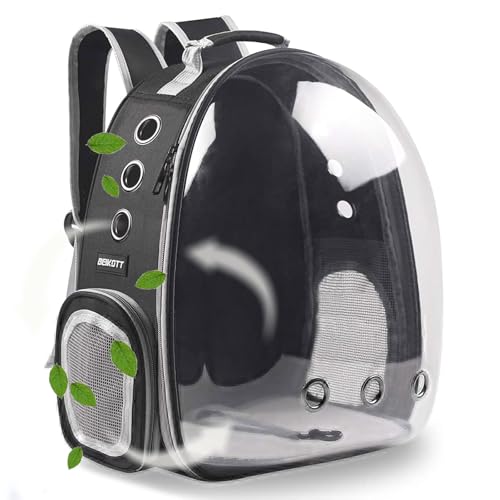
As an Amazon Associate we earn from qualifying purchases at no extra cost to you. Ratings are shown as listed on Amazon.
| Backpack type | Useful interior target (L × W × H) | Typical stated weight range | Ventilation and support | Best fit |
|---|---|---|---|---|
| Compact soft-sided pack | 15 × 10 × 16 in | Up to about 10 lb | Mesh panels; moderate structure | Small cats and brief outings |
| Structured everyday pack | 17 × 11 × 17 in | About 15–20 lb | Multiple mesh panels; reinforced base | Most average-size cats and regular walks |
| Expandable backpack | About 17 × 11 × 17 in closed; extra floor area when expanded | Often about 15–20 lb | Mesh ventilation; added resting space at stops | Longer waits or trips where expansion is safe |
| Large-frame backpack | 18 × 12 × 18 in or larger | Varies; some list 20 lb or more | Rigid or semi-rigid frame; broad base | Long-bodied cats that need room to reposition |
These size categories are comparison benchmarks, not a guarantee that every cat within a listed weight range will fit. Interior measurements matter more than exterior dimensions: thick padding, seams, and sloping walls can reduce usable space. A claimed 20-pound capacity describes a load limit, not necessarily a comfortable fit for a 20-pound cat.
Choose by cat size and trip
- Small cat, occasional short outings: A compact pack can be easier to carry and store. Prioritize a firm floor and a tether over decorative windows.
- Average cat, frequent walks or transit: Look for a structured everyday model with a flat base, several well-distributed mesh panels, and padded shoulder straps. A sternum strap can help stabilize the load.
- Long-bodied or broad cat: Choose by floor length and width first. Your cat should be able to turn around and settle naturally; don’t rely on a generous weight rating to make a narrow cabin suitable.
- Travel with waiting periods: An expandable design can add resting room when you are stationary. Keep it closed while moving if the expanded section could snag, collapse, or expose your cat.
- Limited storage at home: A collapsible soft-sided model takes less room, but check whether it holds its shape when worn. A backpack that caves inward can reduce both comfort and usable space.
Measure for fit before you buy
Measure your cat while standing naturally. Record body length from the chest to the base of the tail, shoulder height, and width at the broadest part of the body. Compare those measurements with the backpack’s interior floor and height—not its outside shell. Leave room for a natural turn and a relaxed curled position. Cats vary in posture, so a few inches of clearance on a product page do not replace checking the cabin’s shape and usable floor area.
For example, a cat with a 16-inch body length may not fit comfortably in a backpack advertised as 17 inches long if the interior floor is only 15 inches because of curved walls. The workable measurement is the flat area where the cat can actually sit or lie. If the brand does not publish interior dimensions, ask for them or choose a model with a clear return policy.
Check ventilation, security, and carrier support
Mesh on multiple sides lets air circulate more effectively than a single small opening. Look for mesh that is securely attached and fine enough to resist claws, plus zippers that can be fastened against an accidental nudge. A leash tether inside can help prevent a cat from jumping out when the opening is unzipped, but it should attach to a well-fitted harness—not a collar—and should not be left so short that it restricts movement.
“Carrier support” has two useful meanings. First, the backpack itself needs structural support: a reinforced floor and frame help it stay upright rather than sag against the cat. Second, if you want the backpack to work alongside a separate carrier, confirm the dimensions and intended use. Most backpacks are carriers in their own right; they are not designed to hold a hard carrier inside. For car travel, use a restraint or carrier system appropriate to the vehicle and follow the carrier maker’s instructions. A backpack should not be assumed to provide crash protection.
What to check beyond the product page
- Loaded carrying weight: Add your cat’s weight to the backpack’s empty weight. A 4-pound pack carrying a 12-pound cat becomes a 16-pound load before treats or water.
- Base stability: A narrow or flexible bottom can tip when set down. Check for a removable insert, reinforced panel, or stated frame construction.
- Cleaning: A removable, washable pad is easier to maintain than a fixed padded floor. Confirm which parts can be washed and whether the frame must be removed first.
- Wear points: Zipper seams, mesh edges, straps, and the floor insert typically deserve the closest inspection. Stop using the pack if mesh tears, stitching loosens, or a buckle no longer locks securely.
- Storage and access: Pockets are useful for small supplies, but keep weight balanced and avoid placing hard objects where they press into the cat’s cabin.
Clean up hair and debris after outings, and let the carrier dry fully before storing it. Follow the manufacturer’s care directions; harsh cleaners or machine washing can damage coatings, mesh, or frame components. Avoid overloading pockets or treating the published maximum as a comfortable everyday target.
A simple fitting routine
- Assemble the backpack and check that the base, zippers, mesh, and tether are intact.
- Place a familiar blanket or washable pad inside, then leave the open backpack at home for your cat to investigate.
- Once your cat enters voluntarily, secure the opening and lift the pack briefly while stationary. Check whether the base stays level and the cat can settle without being pressed against the walls.
- Build up to short, quiet outings. If your cat shows persistent distress, stop and let them exit in a secure indoor area; don’t force longer trips to “get them used to it.”
Price ranges for cat backpacks vary widely by materials, frame, and features. Basic soft-sided options are generally at the lower end of the market, while structured, expandable, or larger models tend to cost more. Paying extra for a bubble window alone is less useful than getting the right interior dimensions, reliable seams, and a stable base.