Key takeaways
- 28.6 to 30 inches: Short-scale basses feel compact and are often easier for beginners, younger players, and guitarists making the transition to bass. They usually have a rounder attack and slightly softer tension with the same tuning and string gauge.
- 32 inches: Medium scale offers a useful compromise between compact handling and traditional bass response.
- 34 inches: The standard long scale used by most Precision, Jazz, and modern four-string basses. It provides familiar fret spacing, firm tension, and a balanced all-purpose tone.
- 35 inches: Extra-long scale is common on five-string instruments. The longer speaking length can help the low B string feel clearer and less floppy, although it increases reach.
Best Bass Guitars for Every Playing Style
The best bass guitars are the ones whose scale length, neck shape, pickup layout, weight, and acoustic character suit the way you actually play: a short-scale bass favors comfort and compact spaces, a Precision Bass offers dependable simplicity, a Jazz Bass adds tonal flexibility, and an active five-string is the better tool for extended-range or modern low-end work.
Quick Picks by Playing Situation
| Playing situation | Best choice | Why it fits | Typical price range in 2026 |
|---|---|---|---|
| First bass on a limited budget | Yamaha TRBX174 or Squier Affinity Precision Bass | Affordable construction, familiar controls, and straightforward setup | $250–$400 |
| Classic rock, punk, and recording | Fender Player II Precision Bass | Split-coil punch, simple operation, and strong midrange focus | $700–$900 |
| Funk, pop, and versatile gigging | Fender Player II Jazz Bass | Two single-coil pickups provide wider tonal control and articulation | $700–$900 |
| Small hands or frequent seated practice | Ibanez GSRM20 Mikro or Squier Classic Vibe ’60s Mustang Bass | Shorter 28.6- to 30-inch scale reduces reach and string tension | $200–$500 |
| Modern metal, gospel, or low tunings | Ibanez SR305E or Yamaha TRBX305 | Five strings, active electronics, and a tighter platform for extended range | $350–$600 |
| Slap, aggressive attack, and cutting presence | Sterling by Music Man StingRay Ray4 | One humbucker and active preamp deliver a focused, forceful sound | $400–$550 |
Prices are broad market ranges rather than fixed quotes. Finish, region, sales, and included accessories can change the final cost.
Our top picks


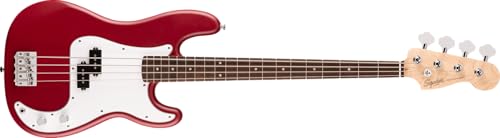
As an Amazon Associate we earn from qualifying purchases at no extra cost to you. Ratings are shown as listed on Amazon.
Scale Length: The Most Important Fit Decision
Scale length is the distance from the nut to the bridge. It affects fret spacing, string tension, tone, and the physical effort needed to fret notes.
- 28.6 to 30 inches: Short-scale basses feel compact and are often easier for beginners, younger players, and guitarists making the transition to bass. They usually have a rounder attack and slightly softer tension with the same tuning and string gauge.
- 32 inches: Medium scale offers a useful compromise between compact handling and traditional bass response.
- 34 inches: The standard long scale used by most Precision, Jazz, and modern four-string basses. It provides familiar fret spacing, firm tension, and a balanced all-purpose tone.
- 35 inches: Extra-long scale is common on five-string instruments. The longer speaking length can help the low B string feel clearer and less floppy, although it increases reach.
A short scale is not automatically a beginner instrument. Players with larger hands may prefer the stable tension and familiar spacing of a 34-inch bass, while experienced players often choose short scale for its distinctive response. If you switch between tunings, check whether the manufacturer recommends a particular string gauge and setup.
Pickup Layouts and the Sounds They Encourage
Split-coil Precision layout
The two-part split-coil pickup associated with the Precision Bass produces strong fundamental notes and pronounced mids. It is forgiving when your right-hand dynamics are still developing and sits well in rock, punk, country, indie, and many recording arrangements. Its main limitation is a narrower range of basic sounds compared with a two-pickup design.
Dual Jazz single-coil layout
A Jazz Bass uses two narrow single-coil pickups. Blending the bridge pickup toward maximum adds bite and definition; favoring the neck pickup gives a fuller, smoother sound. This layout is especially useful for funk, pop, R&B, fusion, and players who need several usable tones without changing instruments. Single-coil designs can produce more electrical hum in noisy environments, particularly with one pickup turned down.
Single humbucker layout
A bridge- or central-position humbucker, as found on the Sterling StingRay Ray4, gives a concentrated attack and strong upper-mid presence. It is a natural match for slap, rock, pop, and players who want an assertive sound with fewer controls to manage. A humbucker generally rejects more noise than a traditional single-coil pickup.
Soapbar and multi-pickup layouts
Soapbar pickups are rectangular and can be voiced in many ways. A bass such as the Ibanez SR305E may combine two soapbars with active electronics and multiple switching options. This offers flexibility for modern styles, but more controls can slow down decision-making for a first-time player. Try to value useful control layout over the largest possible list of settings.
Neck Comfort, Weight, and Balance
Neck dimensions matter more than a brand name on the headstock. Precision-style necks often feel broad and substantial, while Jazz-style necks tend to feel narrower at the nut. Ibanez SR models are known for slim, fast-feeling neck profiles, which can appeal to guitarists and players who move rapidly across the fretboard.
Typical four-string bass weights fall between about 7 and 10 pounds, while many five-strings range from 8 to 11 pounds. Actual weight varies by wood, hardware, finish, and individual instrument. A lighter bass may be more comfortable for rehearsals and long performances, but extreme lightness can make neck dive more likely if the body does not balance well.
Test balance with a strap, not only while sitting. The instrument should remain reasonably stable when you briefly remove your fretting hand. A wide, padded strap can distribute pressure, but it cannot fully correct a bass that constantly pulls the neck toward the floor.
Tonewoods: Useful Clues, Not Sound Guarantees
Common bass bodies use alder, basswood, ash, mahogany, or poplar, while necks commonly use maple and fingerboards may use maple, rosewood-type woods, or engineered materials. These choices affect weight, appearance, and construction, but pickups, strings, setup, amplification, and playing technique usually make a more obvious difference in the final amplified sound.
- Alder: A balanced, familiar choice used in many traditional-style instruments.
- Ash: Often associated with pronounced grain and a lively, open response, though individual pieces vary.
- Basswood: Usually light and neutral, making it common on comfortable modern instruments.
- Mahogany: Often adds body and can produce a heavier instrument depending on the design.
- Maple necks: Stiff, common, and available with many different profile shapes and finishes.
Choose the neck profile and total weight first. A beautifully figured body will not compensate for hand fatigue or uncomfortable balance.
Head-to-Head: Precision Bass or Jazz Bass?
Choose a Precision-style bass if you want a strong default sound, simple controls, and reliable results in a dense band mix. The split-coil design is also a sensible first instrument because there are fewer variables to troubleshoot.
Choose a Jazz-style bass if you need tonal range, enjoy shaping sound from the instrument, or regularly move between fingerstyle, pick, and slap techniques. Its narrower-feeling neck is not universally better; some players prefer the wider support of a Precision neck.
For a first purchase, the Fender Player II Precision Bass and Fender Player II Jazz Bass sit in a higher midrange category, while Squier Affinity and Classic Vibe versions offer less expensive routes to the same broad designs. The Yamaha TRBX174 is another practical choice when you want a split pickup and a bridge pickup in one affordable instrument.
Four-String or Five-String?
Buy a four-string unless you have a clear reason to need the lower range. It is lighter, has a narrower neck, uses simpler string muting, and makes common beginner lessons easier to follow. Standard tuning is E-A-D-G.
A five-string adds a low B below the usual E string. That is useful for gospel, modern metal, film music, pop arrangements, and players who want fewer position shifts. However, the wider neck demands more left-hand reach, and the low B requires careful muting so unused notes do not ring. A 35-inch scale can make the low string feel firmer, but it is not essential for every player.
Ownership Costs and Maintenance
A bass is relatively inexpensive to maintain, but the recurring costs are easy to overlook. A practical first-year budget might look like this:
| Item | Typical cost | Usual timing |
|---|---|---|
| Replacement string set | $20–$45 | Every 2–12 months, depending on use and preference |
| Professional setup | $60–$120 | After purchase if needed, then when relief, action, or intonation changes |
| Instrument cable | $15–$50 | Replace when noisy, intermittent, or physically damaged |
| Padded gig bag | $40–$120 | One-time purchase; upgrade for frequent transport |
If you practice three times weekly for a year, that is roughly 156 sessions. Spending $35 on one string change used for six months works out to about $0.22 per practice session, before setup and amplification costs. The calculation is useful because strings are a modest ownership expense compared with the cost of buying the wrong instrument and replacing it.
Wipe strings and the bridge area after playing, especially if your hands sweat. Store the bass in a stable indoor environment, avoid leaving it in a hot car, and inspect the neck and tuning regularly. The first parts likely to wear are strings, fret surfaces, jack sockets, pots, and strap buttons. Do not over-tighten truss-rod adjustments; if the neck has severe buzzing, high action, or visible movement, use a qualified repair technician.
Final Buying Checklist
- Decide whether 30, 32, 34, or 35 inches suits your reach and tuning.
- Choose four strings for simplicity or five for a specific low-range requirement.
- Compare neck width and profile, not only body shape.
- Check weight and strap balance while standing.
- Pick Precision, Jazz, humbucker, or soapbar pickups according to your usual styles.
- Inspect fret ends, tuning stability, bridge alignment, and noisy controls.
- Reserve part of the budget for a setup, reliable cable, strap, and replacement strings.
For most new players, a well-set-up 34-inch four-string with a Precision or Jazz pickup layout is the safest starting point. Choose a short-scale model when comfort and reach are the deciding factors, and move to an active five-string only when your music clearly benefits from its added range and electronics.