Key takeaways
- Dog barriers sized for a pickup truck back seat: a 56 inch mesh divider made for trucks and a tension-fit metal barrier, compared on width, mounting and listing specs.
A pickup cab is wider than a car cabin, and that single fact breaks most dog barriers: a divider sized for a sedan leaves gaps at the sides of a crew cab that a determined dog treats as a doorway. This guide is filtered for the truck back seat specifically, meaning a barrier that sits behind the front seats, keeps the dog on the rear bench, and is wide enough, or adjustable enough, to close a truck-width gap.
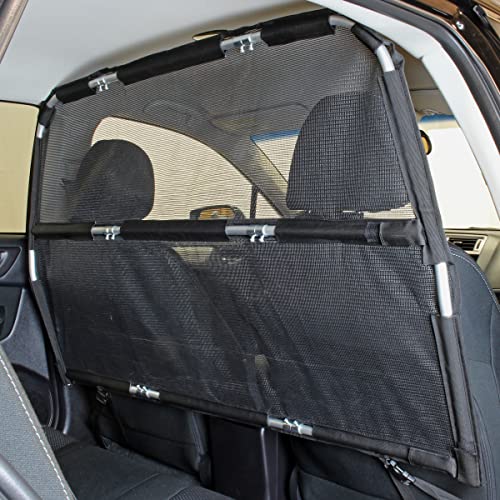

The two picks take different approaches. One is a 56-inch mesh divider whose listing names trucks outright; the other is a tension-mounted metal barrier whose maker states it adjusts to fit backseat areas. Both are judged on their listing dimensions and mounting style, nothing else.
Quick Picks
As an Amazon Associate we earn from qualifying purchases.
| Product | Best for | Key spec from title |
|---|---|---|
| Bushwhacker Deluxe Dog Barrier 56″ | Full-size truck cabs | 56″ wide, for trucks, large SUVs, full-sized sedans |
| PetSafe Happy Ride Metal Dog Barrier | Trucks needing a rigid, adjustable barrier | Adjusts 32-49 in wide, 33-57 in tall |
How to Choose
Measure the cab width at headrest height first
Barrier fit is decided by one measurement: the interior width of the cab just below the front headrests, where the barrier will sit. Truck cabs vary more than car cabins, and a crew cab can be several inches wider than a regular cab from the same maker. The Bushwhacker listing is explicit about the method and the threshold: measure below the headrests, and if the width is less than 56 inches, its 56-inch barrier fits. Take the measurement before you shop, then choose a barrier whose stated width covers it without leaving a dog-sized gap at either side.
Mesh screen or metal bars is a dog-dependent choice
A mesh screen barrier, like the Bushwhacker, blocks the gap with a scratch-resistant fabric panel in a rigid frame: it stops a dog physically, lets air from the rear vents reach the back seat, and cannot be climbed through bar by bar. A tubular metal barrier, like the PetSafe, uses adjustable horizontal bars, which keep the rear view open and suit calmer dogs that respect a visible boundary. A strong, pushy dog leans on mesh and tests frames; a dog that paws and climbs may work at bar spacing. Match the construction to the dog’s history, not to the product photo.
Mounting style decides what the barrier does to your truck
Headrest-mounted barriers strap to the front seat headrest posts and usually anchor at the seat frame or seat belt mount as well, so they move with the seats and need headrests with exposed posts. Tension-mounted barriers press between floor and roof and need no headrests at all, which suits trucks with fixed or absent rear headrests, but they occupy the cargo-style vertical space behind the seats. Check your truck before choosing: split-bench front seats with adjustable headrests take either style, while integrated headrests rule out strap mounting entirely.
A barrier is a divider, not a restraint
Neither type of barrier in this guide is a crash-tested restraint, and listings sell them as dividers that keep a dog out of the front seats and off the driver’s lap. That is a real safety gain, since a loose dog in the cab is a distraction and a projectile risk, but it is not the same as securing the dog itself. Pair the barrier with a harness and seat belt tether on the back seat if you want the dog held in place as well as kept back, and never rely on a barrier alone in a truck that tows or brakes hard with loads.
The 2 Best Options
Bushwhacker Deluxe Dog Barrier 56″
The Bushwhacker Deluxe is the truck-first pick because its listing says so: a 56-inch wide mesh screen barrier made for trucks, large SUVs and full-sized sedans, designed as a backseat divider that mounts behind the front seats. The scratch and tear resistant mesh is framed by lightweight metal tubing, so the panel stays upright and sealed at the edges while still passing air through to the back seat. It attaches at the front headrests with a lower anchor at the seat frame or seat belt mount. The maker also offers a 50-inch version for narrower cabs, which makes measuring first doubly worthwhile.
Specs
- Brand: Bushwhacker
- Model: Deluxe Dog Barrier, 56 inch
- Width: 56 inches
- Material: Scratch-resistant mesh screen, metal tubing frame
- Fit (listing): Trucks, large SUVs, full-sized sedans
- Position: Backseat divider behind front seats
Best for: Full-size and crew cab trucks where a car-width barrier leaves side gaps.
Watch out for: Fixed 56 inch width; cabs wider than that at headrest height need a different solution.
ASIN: B0076BE458
PetSafe Happy Ride Metal Dog Barrier
PetSafe’s Happy Ride is the rigid alternative: a tubular metal barrier that mounts by tension between the floor and the roof, with no tools and no dependence on headrest posts. PetSafe states it adjusts from 32 to 49 inches wide and 33 to 57 inches tall, and that the design fits backseat or cargo areas, with rubberized caps to stop slipping and a rattle-free design for the road. It breaks down into an included storage pouch between trips. In a truck, it suits a regular cab or a back seat area where headrest mounting is impossible, though its 49-inch maximum width is the number to check against a wide crew cab.
Specs
- Brand: PetSafe
- Model: Happy Ride Metal Dog Barrier (62409)
- Adjustable width: 32-49 inches
- Adjustable height: 33-57 inches
- Mounting: Tension fit, no tools required
- Includes: Storage pouch
Best for: Trucks without usable headrest posts, and owners who remove the barrier between trips.
Watch out for: Maximum width is 49 inches, narrower than a full-size crew cab at headrest height.
ASIN: B00JZHRYFI
Which One Fits Your Situation
You drive a full-size crew cab truck
Choose the Bushwhacker 56. Width is the whole game in a crew cab, and this is the barrier in the pair actually built and listed for trucks at 56 inches across. Measure below the headrests as the listing instructs; if your cab comes in under that width, the mesh panel closes the gap completely, including the corners a tubular barrier can leave open. The mesh also suits the dog that rides along daily, since air still reaches the back seat.
Your truck has no exposed headrest posts
Choose the PetSafe Happy Ride. Tension mounting sidesteps the headrest problem entirely, pressing between floor and roof behind the seats, and it sets up without tools when you need it and stores in its pouch when you do not. Confirm your cab’s width at the mounting point falls inside its 32 to 49 inch range and the height inside 33 to 57 inches; in a regular cab or behind a bench seat, those numbers usually land comfortably.
Your dog is strong, pushy or an escape artist
Start with the Bushwhacker, and anchor it at both the headrests and the lower seat mount as the design intends. A framed mesh panel presents no bars to climb and no single strap as the only defense, and the full-width coverage removes the side gaps that escape artists find first. If your dog defeats fabric barriers by chewing, neither pick here is chew-proof; look at heavy steel wire barriers instead, and treat this guide’s pair as the right answer for dogs that push rather than chew.
You switch the barrier between two trucks
The PetSafe is the one to move: it needs no straps threaded through headrests, sets up by tension in minutes, and packs into its storage pouch in the garage between swaps. Check both trucks against its 32 to 49 inch width and 33 to 57 inch height ranges before committing, because a barrier that fits the smaller cab may fall short in the bigger one, and a shared barrier that only fits one truck is just a barrier for that truck.
Common Mistakes
- Guessing cab width instead of measuring at headrest height before ordering.
- Buying a car or SUV barrier for a crew cab and discovering the side gaps on the first trip.
- Treating a barrier as a safety restraint; it divides the cab but does not secure the dog.
- Mounting a headrest barrier in a truck whose headrests are integrated and have no posts.
- Ignoring rear air vents: a solid panel can leave the back seat hot on long drives.
Frequently Asked Questions
How wide is a truck back seat, and which barrier covers it?
Widths vary by cab style, which is why both listings here are judged on stated dimensions. Full-size crew cabs are the widest common case, and the Bushwhacker listing’s own guidance is to measure just below the headrests: under 56 inches and its barrier fits. The PetSafe adjusts up to 49 inches wide, which suits narrower cabs and regular-cab trucks. There is no universal truck width, so the tape measure, not the truck’s badge, decides.
Will a barrier work with a split bench or captain’s chairs?
Headrest-mounted barriers need headrest posts on the front seats, which most split benches and captain’s chairs have, though a wide center gap between captain’s chairs can let a small dog through below the barrier. Tension-mounted barriers like the PetSafe do not care about seat style at all. Whichever you choose, check the gap under and between the front seats after fitting, because that is where determined dogs actually test the installation.
Does a dog barrier block air conditioning to the back seat?
A mesh screen barrier passes air through its panel, which is one reason the Bushwhacker design suits trucks whose rear vents sit behind the front seats. A tubular metal barrier blocks almost nothing. The design to avoid in a hot climate is a solid fabric or plastic divider with no mesh, especially in a crew cab where the back seat is far from the dash vents and the dog rides for long stretches.
Is a barrier enough to keep my dog safe in a crash?
No, and no listing here claims otherwise. A barrier keeps the dog out of the front seats, which reduces driver distraction and stops the dog reaching the pedals or wheel, but it does not restrain the dog’s body in a collision. For crash protection, add a properly fitted harness attached to a seat belt or LATCH point on the back seat, and think of the barrier and the harness as two separate purchases doing two separate jobs.
More from Amazon
Programs that pair well with the guide above. Offers and eligibility are set by Amazon and may change.
Set up recurring deliveries of everyday items on eligible products. Terms and savings are set by Amazon.
Explore Subscribe & SaveFree shipping on eligible items, Prime Video and more. Eligible new members can start with a free trial.
Start a Prime free trialAudiobooks and podcasts to listen to on the go. Eligible new members can start with a free trial.
Try Audible freeRead from a large library of eBooks and audiobooks on any device. Check Amazon for current plans.
Explore Kindle UnlimitedAs an Amazon Associate we earn from qualifying purchases.