Our Short List of 3
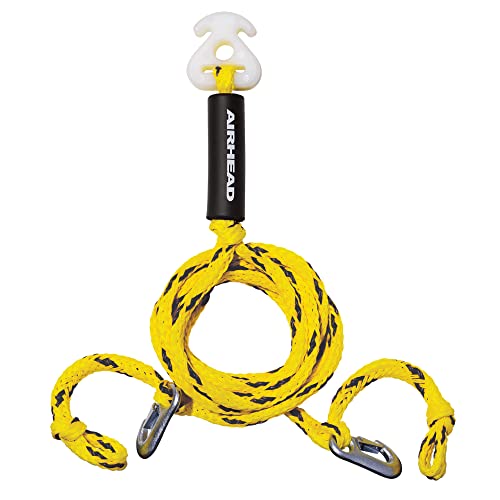
- Best for: Most family boats without a pylon that tow one to four riders.
- Rope length: 16 ft
- Construction: 16-strand nylon rope
- Break strength: 4,100 lb
- Float: 6-inch float included

- Best for: Boaters who want a complete, ready-to-rig kit at the standard strength rating.
- Rope length: 16 ft
- Rope: 9/16-inch, 16-strand braided rope
- Tensile strength: 4,100 lb
- Hook opening: 3/4 inch

- Best for: Larger multi-rider tubes where the extra strength margin matters.
- Rope length: 16 ft
- Break strength: 5,000 lb
- Design: self-centering pulley system
- Rider range: 1 to 4 riders
All 3 Picks at a Glance
| Product | Specs | Action |
|---|---|---|
| 1. Airhead Heavy Duty Tow Harness AHTH-8HD |
| Check price on Amazon |
| 2. Swonder Boat Tow Harness 4K16 |
| Check price on Amazon |
| 3. ASVAEVAS Self Centering Boat Tow Harness |
| Check price on Amazon |
Key takeaways
- Compare boat tow harnesses for tubing by rope length, break strength and connector type, with verified picks for boats with and without a tow pylon.
A quick clarification before the picks: on this site the word harness usually means dog gear, but this guide is about something different. A tow harness for tubing is a bridle that clips to the two stern eyes of a boat and floats a central tow point behind the transom, so a towable tube, skis or a wakeboard can be pulled safely when the boat has no pylon or tower.
The three harnesses below cover the main setups: a classic snap-hook bridle from an established watersports brand, a self-centering model with a pulley, and a heavier-rated option for larger multi-rider tubes. Each one is a genuine boat tow harness with its length, strength rating and hardware stated on the listing.
Quick Picks
As an Amazon Associate we earn from qualifying purchases.
| Product | Best for | Key spec from title |
|---|---|---|
| Airhead Heavy Duty Tow Harness AHTH-8HD | Most boats without a pylon | 16 ft rope, 4,100 lb break strength |
| Swonder Boat Tow Harness 4K16 | Self-centering tow point | 16 ft, 4,100 lb tensile strength |
| ASVAEVAS Self Centering Boat Tow Harness | Heavier multi-rider tubes | 16 ft, 5,000 lb break strength |
How to Choose
Match the harness to your boat’s tow points
A tow harness exists to solve one problem: many boats have no raised tow point, only two transom eyes set low and wide apart. The bridle clips to both eyes and splits the load between them, which protects the transom and keeps the rope centered behind the boat. Check that your boat actually has two sturdy stern eyes before ordering, and measure the span between them. Most harnesses in this class use a 16-foot rope, which suits typical runabouts and pontoons. If your boat already has a pylon or tower, a harness adds little, because the raised point already keeps the rope clear of the wake and the outboard.
Read the break strength, not the marketing
Break strength is the load at which the rope or webbing fails, and it should comfortably exceed the drag of your tube plus riders. Harnesses rated around 4,100 pounds are built for tubes carrying up to four riders, which covers the large majority of family setups. A 5,000-pound rating adds margin for the biggest multi-rider tubes and heavier starts. Treat rider count claims on their own with suspicion: a rating printed on the listing, tied to a stated rope construction such as 16-strand braided nylon, is far more meaningful than a headline promise. When in doubt, choose the higher-rated harness rather than the cheaper one.
Self-centering pulleys versus fixed floats
A basic harness has a float and a fixed connector at its center, and the tow rope attaches there. That works, but the tube tends to swing on a fixed arc and the rope can dip toward the water in turns. A self-centering design adds a pulley that travels along the bridle, so the tow point slides toward whichever side the tube is pulling from. The result is steadier tracking, less rope slack in corners and fewer jerky starts. The trade-off is one more moving part to rinse and inspect. Occasional tubers on calm water rarely miss the pulley; families who tow every weekend usually notice the difference quickly.
Hooks, floats and rope construction
Hardware decides how pleasant a harness is to use daily. Snap hooks with a wide opening clip onto transom eyes quickly, even with wet hands, and a quick-connector at the center lets you swap between a tube rope and a ski rope without re-rigging. A foam float at the center keeps the connection up out of the prop wash and visible, which matters when you are idling back to a fallen rider. For the rope itself, braided multi-strand nylon is the standard: it resists abrasion against the transom, tolerates constant wetting, and has enough give to soften the shock when a tube crosses the wake.
The 3 Best Options
1. Airhead Heavy Duty Tow Harness AHTH-8HD
- Best for: Most family boats without a pylon that tow one to four riders.
- Rope length: 16 ft
- Construction: 16-strand nylon rope
- Break strength: 4,100 lb
- Float: 6-inch float included
Most family boats without a pylon that tow one to four riders.
The fixed center point does not slide, so the tube swings on a wider arc in turns than with a pulley model.
Airhead is one of the longest-running names in towables, and this heavy-duty harness is the straightforward choice for a boat with two transom eyes and no pylon. The 16-foot, 16-strand rope carries a 4,100-pound break strength rating, which the listing ties to tubes, skis and wakeboards carrying one to four riders. A 6-inch float keeps the center connection riding on the surface, and the Kwik-Connect fitting speeds up rope changes at the dock. The snap hooks open three quarters of an inch, wide enough for most stern eyes. Nothing here is exotic, and that is the appeal: proven hardware, honest ratings, no setup surprises.
Watch out for: The fixed center point does not slide, so the tube swings on a wider arc in turns than with a pulley model.
2. Swonder Boat Tow Harness 4K16
- Best for: Boaters who want a complete, ready-to-rig kit at the standard strength rating.
- Rope length: 16 ft
- Rope: 9/16-inch, 16-strand braided rope
- Tensile strength: 4,100 lb
- Hook opening: 3/4 inch
Boaters who want a complete, ready-to-rig kit at the standard strength rating.
The listing gives fewer long-term durability details than the Airhead, so rinse and inspect the braid regularly.
The Swonder 4K16 is built around the same job but adds the convenience details newer brands compete on. Its 16-foot rope is a 9/16-inch, 16-strand braid rated at 4,100 pounds of tensile strength, and the kit includes the floats and a quick connector so the harness is ready to clip on out of the box. The listing positions it squarely at boats without a pylon or tower that still want a centered, floating tow point for tubing. Hooks open three quarters of an inch to match common transom eyes. For buyers who want the self-centering style setup at the common strength rating, this is the balanced pick of the three.
Watch out for: The listing gives fewer long-term durability details than the Airhead, so rinse and inspect the braid regularly.
3. ASVAEVAS Self Centering Boat Tow Harness
- Best for: Larger multi-rider tubes where the extra strength margin matters.
- Rope length: 16 ft
- Break strength: 5,000 lb
- Design: self-centering pulley system
- Rider range: 1 to 4 riders
Larger multi-rider tubes where the extra strength margin matters.
Brand history is short compared with Airhead, and the listing states fewer construction details, so verify the specs on the page.
This is the pick when the tube is big and the crew is heavy. The ASVAEVAS harness is rated to a 5,000-pound break strength, the highest figure in this group, and the listing specifies it for tubes carrying one to four riders. A self-centering pulley forms the middle of the bridle, letting the tow point travel as the tube moves, which keeps starts smoother and reduces the side-to-side snap that a fixed point can produce. The 16-foot length matches the other harnesses here, and the hooks are sized large for quick clipping onto stern eyes. It is the least established brand here, so verify the listing details before ordering.
Watch out for: Brand history is short compared with Airhead, and the listing states fewer construction details, so verify the specs on the page.
Which One Fits Your Situation
You tow the kids on a family runabout
The Airhead AHTH-8HD fits this routine best. Its rating covers up to four riders, the float keeps the connection visible when you circle back, and the Kwik-Connect makes it easy to swap ropes between tubing and skiing sessions. It is the set-and-forget option for a boat that tows a few weekends each summer.
Your boat has no pylon and the tube wanders
Look at the Swonder 4K16. The included floats and quick connector simplify the whole rig, and the centered tow point keeps the rope out of the prop wash on boats that only offer low transom eyes. It suits owners upgrading from a single-point rope who want steadier tracking without changing boats.
You pull a big three- or four-person tube
Choose the ASVAEVAS self-centering harness. The 5,000-pound rating gives the most headroom for heavy starts, and the traveling pulley softens the sideways pull when a loaded tube crosses the wake. The extra margin is worth more than brand familiarity once the tube gets genuinely large.
You split time between tubing and water skiing
Any of the three works, because all are listed for skis and wakeboards as well as tubes, but the quick-connector models save real time at the stern. Pick the Airhead or the Swonder, keep both ropes coiled by the transom, and you can change activities in under a minute.
Common Mistakes
- Clipping the harness to a single center eye or a cleat instead of both transom eyes, which overloads one fitting and lets the rope wander.
- Buying by rider count alone and ignoring the printed break strength, even though two harnesses with the same rider claim can carry very different ratings.
- Letting the center connection sink near the prop while idling back to a fallen rider; the float only helps if it is rigged at the center as designed.
- Leaving the rope kinked in a locker all winter, which weakens braided nylon; rinse, dry and coil it loosely after each trip.
- Using a tow harness with a pylon or tower anyway, adding slack and hardware that the raised tow point already makes unnecessary.
Frequently Asked Questions
Can I use a tow harness if my boat has an outboard motor?
Yes, and that is one of its main purposes. The bridle holds the tow point centered behind the transom and the float keeps the connection on the surface, which helps the rope stay clear of the outboard and the prop wash. Keep the engine off or in neutral when anyone is in the water near the stern, as with any towing setup.
How long should a tubing tow harness be?
Sixteen feet is the standard length in this class, and all three harnesses in this guide use it. That length spans typical transom-eye spacing and leaves the tow point far enough behind the boat for the main tow rope to run cleanly. Very wide boats may need a longer bridle, so measure your eye spacing before ordering.
What is the difference between break strength and tensile strength?
On these listings the two terms describe essentially the same idea: the maximum load the rope withstands before failing. Manufacturers are not consistent about which word they print, so compare the numbers and the rope construction rather than the label. A 4,100-pound figure appears on both types of listing in this guide and reflects the same class of harness.
Does a self-centering pulley really change the ride?
It changes the geometry rather than the power. Because the tow point slides along the bridle, the tube tracks more naturally through turns and the rope stays taut more of the time, which riders feel as fewer sudden jerks. It will not make a slow boat faster, but for frequent towing the smoother tracking is noticeable.
More from Amazon
Programs that pair well with the guide above. Offers and eligibility are set by Amazon and may change.
Set up recurring deliveries of everyday items on eligible products. Terms and savings are set by Amazon.
Explore Subscribe & SaveFree shipping on eligible items, Prime Video and more. Eligible new members can start with a free trial.
Start a Prime free trialAudiobooks and podcasts to listen to on the go. Eligible new members can start with a free trial.
Try Audible freeRead from a large library of eBooks and audiobooks on any device. Check Amazon for current plans.
Explore Kindle UnlimitedAs an Amazon Associate we earn from qualifying purchases.