Key takeaways
- The best grappa glasses for Italian spirits are tulip-shaped glasses with a 90–150 ml bowl, a narrowing rim, a medium-height stem, and thin-to-medium glass: the Riedel Vinum Grappa glass is the strongest dedicated choice, while a small tulip wine glass…
The best grappa glasses for Italian spirits are tulip-shaped glasses with a 90–150 ml bowl, a narrowing rim, a medium-height stem, and thin-to-medium glass: the Riedel Vinum Grappa glass is the strongest dedicated choice, while a small tulip wine glass offers the best value and a copita-style glass is best for concentrated aromas.
Our top picks
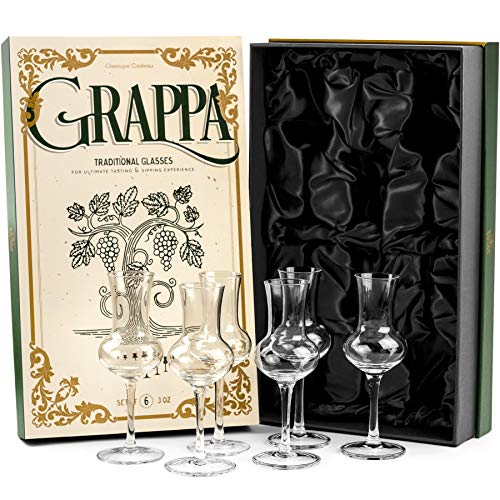

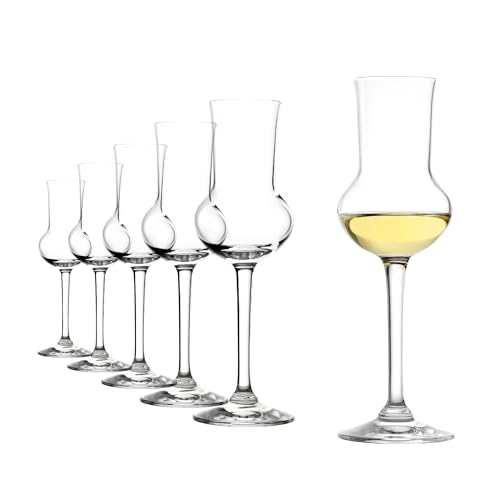

As an Amazon Associate we earn from qualifying purchases at no extra cost to you. Ratings are shown as listed on Amazon.
Quick picks by drinking situation
| Situation | Best glass type | Useful capacity | Why it fits |
|---|---|---|---|
| Frequent grappa tasting | Dedicated tulip grappa glass | 90–120 ml | Balances aroma concentration, control and repeatable comparison |
| After-dinner serving | Small tulip wine glass | 120–180 ml | Versatile, easy to replace and comfortable for a modest pour |
| Very aromatic aged grappa | Narrow copita or tasting glass | 100–150 ml | Directs volatile aromas toward the nose and limits rapid evaporation |
| Large gatherings | Thick-rimmed stemmed spirits glass | 150–220 ml | More resistant to knocks and simpler to replace as a set |
| Small cupboard or occasional use | One universal white-wine glass | 180–250 ml | Does double duty for grappa, wine and other aromatic spirits |
What makes a grappa glass effective?
Grappa is a grape pomace spirit, but its aroma varies widely. Young grappa may be clean, floral and sharp, while aged or aromatic versions can show vanilla, dried fruit, spice, herbs and toasted notes. The glass should therefore concentrate aroma without making the alcohol smell dominate.
Bowl shape
A rounded bowl that narrows toward the rim is the most useful all-purpose shape. The wider lower section provides room for aromas to collect, while the narrower opening channels them upward. A completely straight-sided shot glass exposes the spirit to less air and gives the nose little help. A very large brandy balloon can do the opposite: it provides too much surface area and may make high-proof alcohol feel more prominent.
Look for a bowl that is visibly wider below the midpoint than at the rim. A slight inward curve is enough; the glass does not need to resemble a large cognac snifter. For young grappa, choose a moderate bowl. For aged, barrel-finished or highly aromatic grappa, a somewhat fuller bowl can reveal more layered scents.
Rim design
The rim should be thinner than the body but not so delicate that normal washing becomes stressful. A fine, inward-tapered rim helps place aromas at the nose and directs the liquid toward the front and sides of the tongue. This can make the spirit seem more precise than it does from a broad, heavy tumbler.
A rolled or visibly thick rim is durable, but it can feel blunt and may deliver a larger stream of spirit. That is not automatically bad for casual use, especially if several guests will handle the glasses. For tasting, however, a thin, even rim is usually the better priority than decorative engraving or an oversized bowl.
Stem height
A medium stem, roughly 5–8 cm below the bowl, gives enough separation from your hand to reduce warming while remaining stable. An extremely short stem behaves more like a stemless glass: fingerprints accumulate on the bowl and hand heat reaches the grappa faster. An exceptionally tall stem may look elegant but is more vulnerable in a crowded dining area.
For regular home use, stability matters more than maximum height. Choose a foot broad enough that the glass does not feel top-heavy when empty. If you plan to carry a serving tray, a medium-height stem and a foot around 6–8 cm wide are practical targets.
Glass thickness
Thin glass improves the drinking experience because it leaves less material between the spirit and your lips. It also tends to be lighter and more responsive in the hand. The trade-off is fragility, particularly at the rim and stem.
Medium-thin glass is the best compromise for most households. Thick glass makes a glass more tolerant of accidental knocks, but it can feel clumsy and may dull the precise arrival of a small sip. Avoid selecting solely by weight: a heavy base can provide stability while the rim remains relatively fine.
Serving capacity
Capacity is not the same as a recommended pour. A 120 ml glass should not be filled to the top; grappa needs empty space for aromas. A practical serving is often 20–30 ml, with the bowl no more than about one-fifth full. In a 150 ml glass, a 25 ml pour occupies roughly 17% of the nominal capacity, leaving ample headspace.
That calculation matters because an oversized glass encourages oversized pours. If a 700 ml bottle costs $35 and produces 28 pours at 25 ml, the liquid cost is about $1.25 per serving. At 40 ml, it produces only 17 full pours, raising the bottle cost to about $2.06 per serving. A smaller, properly shaped glass can support better portion control without making the drink feel meager.
Best grappa glasses for Italian spirits: head-to-head
Riedel Vinum Grappa Glass — best dedicated option
The Riedel Vinum Grappa glass is designed specifically for grappa and is the clearest choice when aroma is the main priority. Its tulip profile, stemmed format and relatively focused opening suit neat pours and structured tasting. It is a good match for someone who buys several grappas, compares young and aged styles, or wants a dedicated after-dinner glass.
Its limitation is specialization: the shape is less useful than a standard wine glass for serving other drinks, and delicate stemware requires more careful cleaning and storage. Expect dedicated grappa glasses from established stemware brands to sit broadly in the mid-range to premium market, often around $15–$35 per glass depending on the set and retailer.
Small tulip white-wine glass — best value
A small white-wine glass with a 120–180 ml bowl is the most sensible purchase for occasional drinkers. It provides the essential features—a rounded lower bowl, narrowing rim and adequate stem—without requiring a glass made specifically for grappa. It can also serve aromatic whites, dessert wines and some liqueurs.
Choose a model with a modest bowl rather than a large restaurant-style wine glass. Brands such as Spiegelau, Schott Zwiesel and Luigi Bormioli offer stemware lines with shapes that can work well for this purpose, although the exact bowl profile varies by collection. This category is often available from roughly $6–$18 per glass.
Copita-style tasting glass — best for aroma-focused comparison
A copita has a small bowl, a narrow opening and a stem. It is commonly associated with spirit tasting and is particularly useful when comparing several samples. The restricted rim keeps the aromatic stream concentrated, while the small capacity encourages controlled pours.
Copitas can make high-proof alcohol feel intense if the spirit is swirled aggressively. Let the grappa rest briefly, then smell gently rather than pushing your nose deeply into the bowl. This type is best for analytical tasting, not necessarily for a relaxed large pour.
Stemless tumbler — best for durability, not aroma
A compact stemless spirits tumbler is stable, easy to store and less likely to break at the stem. It is a reasonable choice for outdoor dining or households where glasses are frequently knocked over. However, it usually has a wider opening and less separation from hand heat, so it is not the top choice for revealing delicate floral or herbal aromas.
If you choose one, select a tumbler with a slightly narrowed upper wall, a 90–180 ml capacity and a fine enough rim for comfortable sipping. Avoid very broad lowballs intended for ice or cocktails; their geometry is designed for dilution and mixing rather than aroma concentration.
A practical buying decision matrix
| Your priority | Recommended specification | Best match | Compromise |
|---|---|---|---|
| Lowest cost | 120–180 ml bowl, medium-thin rim | Small tulip white-wine glass | Less specialized aroma delivery |
| Maximum aroma detail | 90–150 ml bowl, narrow rim, thin glass | Copita or dedicated grappa glass | More delicate and less versatile |
| Frequent entertaining | 150–220 ml capacity, medium-thick stem and rim | Durable stemmed spirits glass | Heavier mouthfeel |
| Limited storage | One versatile 180–250 ml tulip glass | Universal white-wine glass | May be larger than necessary for a 20 ml pour |
| Serious side-by-side tasting | Several identical 100–150 ml glasses | Matching copitas or grappa glasses | Requires more cupboard space |
How to serve grappa in the right glass
- Use a clean, dry glass. Detergent residue can mask fruit and floral aromas. Rinse thoroughly and let the glass air-dry or dry it with a lint-free cloth.
- Pour 20–30 ml. Keep the liquid below the widest part of the bowl so there is room for aroma to collect.
- Check the temperature. Cool serving can make young grappa feel crisper, but very cold storage suppresses aroma. Slightly cool or cool room temperature is a useful starting point.
- Wait briefly before swirling. Allowing the pour to rest for a minute can soften the first alcohol impression. Swirl gently only once or twice.
- Smell from above the rim. Start with the glass below the nose, then bring it closer. This reveals fruit, flowers, spice and wood without overwhelming the senses.
- Clean promptly. Rinse soon after use, wash with mild unscented detergent, and store glasses upright by the bowl only if the rim is protected from dust. Do not twist the bowl against the stem while drying.
Durability and ownership realities
The rim and stem usually fail before the bowl. Stacking stemmed glasses, forcing them into a crowded cabinet, or holding the bowl while twisting the base during washing puts stress on the narrowest points. Hand-washing is the safest option for very thin or premium glasses, even when a manufacturer labels a collection dishwasher-safe.
Dishwasher heat and repeated detergent exposure can gradually cloud some glassware, while contact with metal racks can chip the rim. If convenience matters more than minimum weight, choose a dishwasher-safe, lead-free crystal or glass model with a medium-thin rim rather than ultra-light tasting stemware. Keep two or four identical glasses instead of mixing shapes when comparing grappas; different bowls can change the aroma enough to confuse the comparison.
Final recommendation
Choose the Riedel Vinum Grappa glass if you want a dedicated, aroma-focused glass for regular Italian spirit tasting. Choose a small tulip white-wine glass if you want the best balance of price, versatility and performance. Choose a copita for structured comparisons, and a sturdier stemmed or stemless glass when durability and easy replacement matter more than maximum aromatic detail.