Our Short List of 3

- Best for: Homeowners who want a compact, low-maintenance compressor for occasional inflation, brad nailing, and cleaning jobs around the house and garage.
- Best for: Homeowners who tackle longer nailing and repair sessions and want more stored air and faster recovery than a one- or two-gallon model provides.
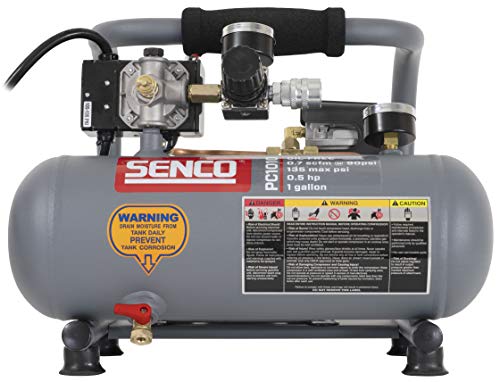
- Best for: Finish and trim work indoors, where quiet operation, light weight, and easy carrying matter more than a large air reserve.
All 3 Picks at a Glance
| Product | Specs | Action |
|---|---|---|
| CRAFTSMAN 2 Gallon Portable Air Compressor, 1/3 HP Oil-Free, Max 125 PSI, Hot Dog, Model CMXECXA0200243 |
| Check price on Amazon |
| DEWALT D55151 Twin Hot Dog Compressor, 4-Gallon Twin-Stack Tank |
| Check price on Amazon |
| SENCO PC1010 1/2-Horsepower 1-Gallon Finish and Trim Hot Dog Air Compressor |
| Check price on Amazon |
Key takeaways
- Find the best hot dog air compressors for home maintenance projects, with tank size, CFM, noise and portability guidance for inflation and brad nailing.
A hot dog air compressor has a long, horizontal tank that sits low to the ground, with the motor and pump mounted on top. That shape is why many homeowners choose one for home maintenance projects. It fits on a garage shelf, slides under a workbench, and carries easily to a bedroom, driveway, or garden shed. For the intermittent jobs that fill a typical home list, that compact footprint matters as much as the air it delivers.
The best models match the way home work actually happens: short bursts for a brad nailer, a few minutes of tyre inflation, and a quick blow-out of dust from a vent or filter, followed by a return to storage. A well-matched model recovers quickly, runs quietly enough for indoor use, and needs little upkeep. This guide explains tank size, airflow, noise, and pump type, then looks at three models for different patterns: a compact two-gallon unit, a quiet one-gallon finish model, and a four-gallon twin-stack model for longer sessions.
Disclosure: As an Amazon Associate, we earn from qualifying purchases.
How to Choose Hot Dog Air Compressors for Home Maintenance Projects
Tank Size and Stored Air
Tank size sets how much air you have before the motor runs again. A one-gallon tank suits a handful of brad nails or a bicycle tyre, but cycles often. A two-gallon tank gives a more comfortable reserve for a room of trim or a set of car tyres. A four-gallon twin-stack tank suits longer nailing sessions and repeated inflation. Think in bursts: nailers, staplers, and inflation tools use air in short pulses, while sanders and spray guns need far more sustained airflow than a small hot dog compressor is designed to supply.
Airflow, Pressure, and Recovery
Maximum pressure, in PSI, is the ceiling the tank can reach. Airflow, in cubic feet per minute (CFM) at a stated pressure such as 90 PSI, shows how quickly the pump refills the tank. Look first at CFM at 90 PSI, the range where most nailers operate. Around 0.5 CFM at 90 PSI handles light nailing and inflation with pauses for recovery. Around 3.2 CFM at 100 PSI recovers much faster and supports longer runs of trim work without a nail, wait, nail, wait rhythm.
Noise, Weight, and Storage
Noise matters at home. A model rated around 68 dBA is quiet enough for many indoor jobs, while louder units are better kept in a garage or outdoors with a longer hose. Weight matters too: a unit around 20 pounds can be carried one-handed, while a unit over 50 pounds is a two-handed lift. Measure storage before you buy. The horizontal tank is long rather than tall, so check length against the shelf or cupboard where it will live. A model that fits neatly is more likely to be used.
Oil-Free Versus Oil-Lubricated Pumps
Oil-free pumps need no oil changes: drain the tank, keep the intake clean, and store the unit dry. That suits occasional use, where a compressor may sit unused for weeks. Oil-lubricated pumps need periodic oil checks and changes, but lubrication can support longer service life under heavier use. For a compressor used a few times a month, oil-free simplicity is often the better fit. For weekly use, the maintenance of an oil-lubricated pump may be worthwhile.
Fittings and Maintenance
Look for a regulator and gauges that let you set working pressure separately from tank pressure, a drain valve that is easy to reach, and standard quick-connect fittings for the hoses and tools you already own. Some models include a coiled hose, inflation needles, a blow gun, or a tyre chuck. Drain condensation after use, keep the intake clear of dust, and check hoses for leaks, because a small leak forces the motor to cycle more often.
Our Top Picks
These three models cover light and occasional work, quiet finish work, and longer sessions with more reserve air.
CRAFTSMAN 2 Gallon Portable Air Compressor, 1/3 HP Oil-Free, Max 125 PSI, Hot Dog, Model CMXECXA0200243
- Best for: Homeowners who want a compact, low-maintenance compressor for occasional inflation, brad nailing, and cleaning jobs around the house and garage.
Homeowners who want a compact, low-maintenance compressor for occasional inflation, brad nailing, and cleaning jobs around the house and garage.
This CRAFTSMAN model is a compact two-gallon hot dog compressor with a 1/3 HP oil-free pump, a maximum pressure of 125 PSI, and 0.5 CFM at 90 PSI. The horizontal tank gives a useful reserve for tyre inflation, brad nailing, and light blowing jobs without taking up the floor space of a larger unit. The oil-free pump keeps maintenance simple, with no oil to check or change.
Pros:
– Two-gallon horizontal tank fits easily on a shelf or under a bench
– Oil-free pump needs no oil changes
– 125 PSI maximum pressure suits common home tools
– Compact size makes it easy to carry between rooms
Cons:
– 0.5 CFM at 90 PSI means recovery pauses during longer nailing runs
– Two-gallon reserve is limited for extended continuous work
– Included accessories vary by listing, so check what is in the box
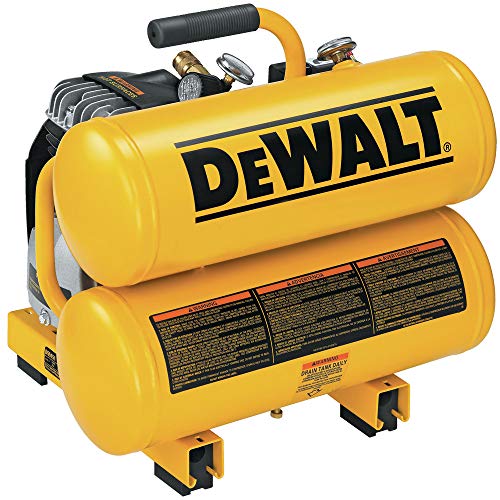
DEWALT D55151 Twin Hot Dog Compressor, 4-Gallon Twin-Stack Tank
- Best for: Homeowners who tackle longer nailing and repair sessions and want more stored air and faster recovery than a one- or two-gallon model provides.
Homeowners who tackle longer nailing and repair sessions and want more stored air and faster recovery than a one- or two-gallon model provides.
The DEWALT D55151 uses a four-gallon twin-stack tank, with two horizontal tanks stacked together, and delivers 3.2 CFM at 100 PSI. Its oil-lubricated pump is designed for durability, and the unit includes overload protection and a regulator. At around 53 pounds, it is heavier than the compact models here, but the extra capacity and faster recovery suit longer sessions, including trim work and repeated inflation.
Pros:
– Four-gallon twin-stack tank provides a larger air reserve
– 3.2 CFM at 100 PSI supports faster recovery during nailing
– Oil-lubricated pump with a cast-iron cylinder is built for durable use
– Overload protection helps protect the motor
Cons:
– Heavier than compact hot dog models, so it is less suited to carrying up stairs
– Oil-lubricated pump needs periodic oil checks and changes
– Larger footprint needs more storage space than a single-tank model
SENCO PC1010 1/2-Horsepower 1-Gallon Finish and Trim Hot Dog Air Compressor
- Best for: Finish and trim work indoors, where quiet operation, light weight, and easy carrying matter more than a large air reserve.
Finish and trim work indoors, where quiet operation, light weight, and easy carrying matter more than a large air reserve.
The SENCO PC1010 is a one-gallon hot dog compressor with a 1/2 HP motor, a maximum pressure of 135 PSI, and a stated noise level of 68 dBA. It weighs around 20 pounds and is designed for finish and trim work, delivering 20 to 44 drives per minute with a brad nailer, according to the manufacturer. Its small size and quiet operation make it easy to carry into a room for indoor trim, cabinet, and hobby work.
Pros:
– Around 20 pounds, so it is easy to carry from room to room
– 68 dBA operation is quieter than many larger compressors
– 135 PSI maximum pressure suits finish nailers and staplers
– Compact one-gallon tank stores easily in a small space
Cons:
– One-gallon tank cycles frequently during longer jobs
– Limited reserve for inflating large tyres or running air-hungry tools
– Best suited to intermittent nailing rather than sustained airflow work
Home Maintenance Considerations
A compressor bought for one task often serves several: inflating car and bicycle tyres, nailing trim, blowing dust from a computer or vent, and stapling fabric during upholstery repair. Choosing a model that handles that range gives better value over time. Hose length also changes how you work. A longer hose lets you leave the compressor in a garage or hallway and carry only the tool into a bedroom, which reduces noise in the work area. Wear eye protection when blowing dust, keep the air stream away from skin and eyes, set the regulator to the pressure your tool needs, and drain the tank after use.
Frequently Asked Questions
What is a hot dog air compressor?
A hot dog air compressor is a portable compressor with a long, horizontal tank that resembles a hot dog in shape. The tank sits low, the motor and pump sit on top, and the unit is designed to be carried and stored easily. Twin-stack versions use two horizontal tanks stacked together for more capacity in a similar footprint.
What size hot dog compressor do I need for home maintenance?
For light, occasional work such as tyre inflation and a few brad nails, a one- or two-gallon model is usually enough. For longer trim sessions or repeated inflation, a four-gallon twin-stack model gives more reserve air and faster recovery. Match the size to how long your typical session lasts.
Can a hot dog compressor run a brad nailer?
Yes, brad nailers are one of the best matches for a hot dog compressor, because they use air in short bursts. A one-gallon model can drive a finish nailer for intermittent work, while a two- or four-gallon model supports longer runs with fewer pauses. Check the nailer manual for its recommended operating pressure.
Is an oil-free or oil-lubricated compressor better for home use?
Oil-free models are simpler to own, with no oil to check or change, and suit occasional use. Oil-lubricated models need periodic oil care but can offer longer service life under frequent use. For a compressor used a few times a month, oil-free simplicity is often the better fit.
How loud is a hot dog air compressor?
Noise varies by model, from around 68 dBA for quiet finish-and-trim units to noticeably louder levels for larger, faster pumps. If you plan to work indoors, prioritise a quieter model and use a longer hose so the compressor can sit farther from the work area.
Conclusion
The best hot dog air compressor for home maintenance projects fits the way you actually work: the right tank for your session length, enough airflow to keep a nailer moving, quiet enough for indoor use, and light enough to carry and store without a struggle. A compact two-gallon oil-free model suits occasional inflation and nailing. A quiet one-gallon model suits indoor trim work. A four-gallon twin-stack model suits longer sessions and more demanding home repairs.
More from Amazon
Programs that pair well with the guide above. Offers and eligibility are set by Amazon and may change.
Set up recurring deliveries of everyday items on eligible products. Terms and savings are set by Amazon.
Explore Subscribe & SaveFree shipping on eligible items, Prime Video and more. Eligible new members can start with a free trial.
Start a Prime free trialAudiobooks and podcasts to listen to on the go. Eligible new members can start with a free trial.
Try Audible freeRead from a large library of eBooks and audiobooks on any device. Check Amazon for current plans.
Explore Kindle UnlimitedAs an Amazon Associate we earn from qualifying purchases.