Key takeaways
- Powerlifting knurl: deep and sharp, usually with center knurl.
- Weightlifting knurl: secure but smoother, usually without center knurl.
- Multipurpose knurl: moderate depth for mixed training.
- Knurl marks: powerlifting bars use wider IPF-style spacing; weightlifting bars use narrower IWF-style spacing.
The best Olympic barbells for strength training depend on your main lifts: choose a rigid 29 mm power bar for squats and bench press, a springier 28 mm weightlifting bar for cleans and snatches, or a balanced 28.5 mm multipurpose bar for a home gym that needs to do both.
Our top picks


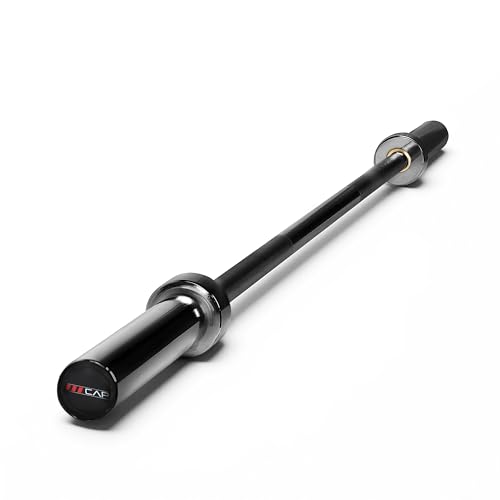
As an Amazon Associate we earn from qualifying purchases at no extra cost to you. Ratings are shown as listed on Amazon.
Best Olympic Barbells at a Glance
| Best for | Bar type | Typical shaft | Typical tensile strength | Bearings | Typical price range |
|---|---|---|---|---|---|
| Heavy squats, bench press, and deadlifts | Power bar | 29 mm, 20 kg, 220 cm | 190,000–205,000 PSI | Bronze bushings | $250–$450 |
| Snatch, clean and jerk, and Olympic lifting | Weightlifting bar | 28 mm, 20 kg, 220 cm | 190,000–215,000 PSI | Needle bearings | $350–$900+ |
| General home-gym strength training | Multipurpose bar | 28.5 mm, 20 kg, 220 cm | 180,000–190,000 PSI | Bushings or basic bearings | $180–$350 |
| Limited space or lighter training | Short Olympic bar | 25–28 mm, 15–20 kg | Varies widely | Usually bushings | $120–$250 |
These are market ranges rather than fixed prices. A stainless-steel shaft, premium coating, calibrated sleeves, or competition certification can raise the cost considerably.
Best Choice by Lifting Style
Best for powerlifting: a 29 mm power bar
A power bar is the best option when your priorities are squat, bench press, and deadlift performance. Its 29 mm shaft is thicker and generally stiffer than a weightlifting bar, while aggressive knurling gives your hands and upper back a secure contact point. Power bars also include a center knurl, which helps the bar stay in place during squats.
Well-known examples include the Rogue Ohio Power Bar and comparable 29 mm bars from established strength-equipment manufacturers. Look for tensile strength around 190,000 PSI or higher, powerlifting markings, and a load rating of at least 1,000 lb for normal home use. A 1,500 lb rating provides a larger safety margin but does not automatically mean the bar feels better or lasts longer.
Best for Olympic lifting: a 28 mm weightlifting bar
For snatches, cleans, and jerks, select a 28 mm bar with noticeable whip, rotating sleeves, and weightlifting-style knurl marks. The narrower shaft makes it easier to hold in a hook grip, while controlled flexibility helps the bar move around the knees and receive smoothly in the catch.
Competition-style bars from Eleiko, Rogue, and other established manufacturers are designed around this specification. Needle-bearing sleeves are common in premium weightlifting bars because they allow rapid rotation during explosive lifts. A weightlifting bar normally has less aggressive knurling than a power bar and often lacks center knurling, reducing friction against the chest during cleans.
Best for most home gyms: a 28.5 mm multipurpose bar
A multipurpose bar is the practical choice when one bar must handle presses, squats, deadlifts, cleans, rows, and occasional snatches. The 28.5 mm shaft sits between power and weightlifting standards. It is usually stiff enough for moderate-to-heavy strength work but has more whip and smoother sleeve rotation than a dedicated power bar.
This category is often the best value for a beginner or intermediate home gym. It also avoids paying for features that may not matter if Olympic lifting is only an occasional part of your training.
Which Specifications Matter Most?
Shaft diameter and length
Standard men’s Olympic barbells are generally 20 kg, 220 cm long, with a 28 or 29 mm shaft. A 28 mm bar is typical for weightlifting; 29 mm is typical for powerlifting; 28.5 mm is common for multipurpose bars. Women’s Olympic bars are usually 15 kg, 201 cm long, and 25 mm in diameter.
Check the sleeve length before buying. Two bars can both measure 220 cm but provide different usable loading space. Longer sleeves are helpful if you expect to use thick bumper plates or load beyond roughly 400 lb.
Tensile strength and weight rating
Tensile strength describes how much force the steel can withstand before failing in a laboratory test. It is useful for comparing construction, but it is not a complete durability score. A well-made 190,000-PSI bar can be a better long-term purchase than a poorly finished bar advertised with a larger number.
For a home gym, a published rating of 1,000 lb or more is normally ample. If you train with repeated drops, very heavy deadlifts, or high-volume Olympic lifting, prioritize a reputable warranty, sleeve construction, and coating quality rather than choosing solely by the biggest capacity figure.
Knurling
Knurling is the textured pattern cut into the shaft. Aggressive knurling improves grip for heavy deadlifts and helps a squat bar stay anchored, but it can irritate the hands during high-repetition cleans or rows.
- Powerlifting knurl: deep and sharp, usually with center knurl.
- Weightlifting knurl: secure but smoother, usually without center knurl.
- Multipurpose knurl: moderate depth for mixed training.
- Knurl marks: powerlifting bars use wider IPF-style spacing; weightlifting bars use narrower IWF-style spacing.
Whip and stiffness
Whip is the amount and timing of shaft flex during a lift. More whip can assist Olympic lifting by allowing the lifter to complete the pull while the plates are still accelerating. Excessive whip can feel unstable during heavy bench press or slow squats.
Do not assume that higher tensile strength means more whip. Diameter, steel treatment, shaft length, and manufacturing tolerances all affect how a bar behaves. A 29 mm power bar is usually stiffer; a 28 mm weightlifting bar generally provides more dynamic movement.
Sleeve bearings
Bushings are durable, relatively simple, and sufficient for most powerlifting and general training. Needle bearings usually offer faster, smoother rotation, which matters more during cleans, snatches, and jerks than during bench press or deadlift work.
A premium bearing system cannot compensate for poor maintenance or a bent shaft. For a home gym used three or four times per week, quality bushings may offer better value than competition-grade bearings.
Finish Durability: What Should You Buy?
Stainless steel usually provides the best resistance to surface rust and preserves a consistent feel, although it is often more expensive. Cerakote protects the shaft with a durable ceramic coating, but the knurl can feel slightly different and the coating may eventually wear on high-contact areas.
- Bare steel: excellent grip and feel, but requires regular oiling and rust prevention.
- Black oxide: attractive and grippy, but offers limited corrosion protection.
- Zinc: affordable and moderately protective; it can fade or wear with use.
- Chrome: durable and easy to clean, though some chrome finishes feel less grippy.
- Stainless steel: strong corrosion resistance and natural feel, usually at a premium price.
- Cerakote: good environmental protection, with eventual wear possible at the knurl and sleeves.
If your gym is in a humid garage, stainless steel or a quality coated bar is usually worth the extra cost. In a dry indoor room, finish choice can be based more on grip preference and maintenance habits.
Decision Matrix for a Home Gym
| Your situation | Recommended bar | Why | What to avoid |
|---|---|---|---|
| Budget under $200 and mixed beginner training | Basic 28.5 mm multipurpose bar | Broadest usefulness per dollar | Unrated bars with loose sleeves |
| Heavy squat and bench training four or more days weekly | 29 mm power bar | Stiff shaft, firm knurl, center mark | Very whippy weightlifting bars |
| Frequent cleans, snatches, and jerks | 28 mm weightlifting bar with bearings | Fast rotation and useful whip | Sharp power-bar knurling |
| Humid garage or coastal environment | Stainless or quality-coated bar | Lower rust risk | Neglected bare steel |
| Low ceiling or narrow training area | Short Olympic bar, if rack compatibility allows | Less sleeve overhang and easier storage | Assuming every short bar fits a standard rack |
Maintenance and Ownership Realities
The knurl usually accumulates chalk, sweat, and skin oils before the steel itself becomes a problem. Brush the shaft with a nylon or brass barbell brush after training, wipe away moisture, and store the bar horizontally or in a rack where it cannot be repeatedly dropped onto the sleeves. Avoid leaving plates loaded on the bar for long periods, especially in a humid room.
Do not use heavy grease on the knurl. For sleeve maintenance, follow the manufacturer’s instructions: some bushings need occasional light lubrication, while bearing assemblies may be damaged by excess oil or improper disassembly. Inspect retaining rings, end caps, and sleeve play periodically.
A useful cost calculation is to compare price with expected use. A $300 bar used three times weekly for five years receives about 780 sessions, or approximately $0.38 per session before maintenance. A cheaper $150 bar that needs replacing after two years and is used twice weekly costs about $0.72 per session. The higher-priced bar is not automatically better, but frequent users can justify stronger steel, better sleeves, and corrosion-resistant finishing.
Final Recommendation
Choose a 29 mm power bar if strength training means heavy squat, bench, and deadlift work. Choose a 28 mm bearing weightlifting bar if Olympic lifts are the priority. For most home gyms, a 28.5 mm multipurpose bar with moderate knurling, reliable bushings, a documented load rating of at least 1,000 lb, and a corrosion-resistant finish is the most sensible all-around purchase.