Key takeaways
- Fingering system: German style
- Key: C (soprano/descant)
- Holes: 8
- Body: three-piece detachable design typical of the class, in ABS-style plastic
- Assembled length: approximately 32–33 cm, the standard descant size
- Weight: roughly 90–130 g, light enough for a small hand to hold without fatigue
- Included: a basic cleaning rod and soft carry bag in most versions of this listing
The best recorder for a beginner who plans to keep playing past the first year is the Eastar Baroque C Soprano Recorder Kit (ERS-21BN). It uses Baroque fingering — the system method books, school programs and later ensemble playing assume — and it arrives as a complete kit with a bag, cleaning rod and fingering chart, so there is nothing else to buy. If you simply want the lowest entry cost for a child trying an instrument for one term, the EAST TOP 8-hole German-fingering recorder does the same job for less and is cheap enough to replace without a second thought. Choose German fingering only when a teacher specifically asks for it or the player is very young: it makes F natural simpler to finger but complicates F sharp and the upper register. For equipping a whole class or a large family, the LOLYSIC 16-pack brings the per-instrument cost down sharply. The guide below compares fingering systems, materials, joint construction, tone, cleaning needs, included cases and real ease of learning, so you can match a recorder to the actual player rather than to the prettiest listing photo.
Top 3 Picks
Best Overall: Eastar Baroque C Soprano Recorder Kit (ERS-21BN)
The ERS-21BN pairs the fingering system that teachers expect with a genuinely usable starter kit: bag, cleaning rod and fingering chart in one box. Baroque fingering costs a beginner almost nothing to learn at the start and saves a disruptive switch later when F sharp and the upper octave arrive. It is the pick for a player aged roughly eight and up who is likely to keep going.
Best Budget: EAST TOP 8-Hole German Fingering Soprano Recorder
A three-piece plastic descant recorder with German fingering and a cleaning kit, priced in the budget tier where a lost or broken instrument is an inconvenience rather than a crisis. It suits first-term trial lessons, classroom spares and very young players who need the easiest possible F natural. Expect basic tone and a thin carry bag, not a lifelong instrument.
Best for Groups: LOLYSIC 16-Pack 8-Hole Recorder Set
Sixteen matched German-fingering recorders with cleaning rods, which is the sensible way to buy when a teacher, homeschool co-op or after-school club needs a whole group playing the same instrument. Per-instrument cost drops dramatically compared with buying singles, and matched instruments mean matched intonation and fingering charts across the room.
Quick Comparison
| Product | Best for | Key specs | Price tier |
|---|---|---|---|
| Mr.Power Soprano Recorder, German Style, C Key, 8 Holes | Cheapest possible first instrument; school spares | German fingering; C (descant); 8 holes; three-piece ABS body; ~32–33 cm assembled; ~90–130 g class; basic rod/bag | Budget |
| Eastar Baroque C Soprano Recorder Kit, Natural (ERS-21BN) | Beginners who will continue; teacher-recommended fingering | Baroque fingering; C; 8 holes; three-piece; kit with bag, cleaning rod, fingering chart; natural-finish ABS | Mid-range |
| Auteey 8-Hole Soprano Recorder with Cleaning Rod and Bag | One reliable mid-range recorder with accessories included | German fingering; C; 8 holes; three-piece detachable; ABS; cleaning rod and fabric bag included | Mid-range |
| ZEAYEA 6-Pack Soprano Recorder, 8-Hole German Fingering | Families, small classes, sibling sets | 6 matched recorders; German fingering; C; 8 holes; detachable three-piece bodies; ~32 cm each | Premium (multi-pack) |
| Eastrock 3-Piece German Style Soprano Recorder, Pink | Young beginners who want a coloured instrument | German fingering; C; 8 holes; three-piece; pink ABS; beginner accessory set | Budget |
| EAST TOP Soprano Recorder for Kids, 8-Hole German Fingering, 3-Piece | First-term lessons; classroom spares | German fingering; C; 8 holes; plastic three-piece; cleaning kit included | Budget |
| HOSEYIN Soprano Recorder, C Key, 8 Holes (Baroque, Pink) | Beginners whose teacher insists on Baroque fingering | Baroque fingering variant; C; 8 holes; three-piece; pink ABS; cleaning accessories | Mid-range |
| MoResolune Soprano Recorder, German Fingering 3-Piece (Blue) | Budget colour choice for young players | German fingering; C; 8 holes; three-piece detachable; blue ABS; ~32 cm class | Budget |
| LOLYSIC 16-Pack 8-Hole Recorder Flute | Classrooms, co-ops, large families | 16 matched recorders; German fingering; C; 8 holes; plastic; cleaning rods included | Premium (multi-pack) |
| CONJURER Soprano Recorder, German Fingering, 8-Hole ABS Descant | Students who want a sturdier single recorder | German fingering; C; 8 holes; explicitly ABS; three-piece descant; cleaning rod and bag | Mid-range |
| Eastar German C Soprano Recorder Kit, Blue (ERS-21GB) | Younger beginners or teacher-directed German fingering | German fingering; C; 8 holes; three-piece; kit with bag, cleaning rod, chart; blue | Mid-range |
| Yop-yes Soprano Recorder for Kids, German Fingering, 3-Piece | Beginners who want every accessory in the box | German fingering; C; 8 holes; three-piece; cleaning rod, bag and fingering chart included | Premium |
Two patterns are worth noticing before you read the individual reviews. First, fingering system matters more than almost any other specification, and it is decided at purchase rather than later — a German-fingering instrument cannot simply be relearned into a Baroque one, because the hole sizes and placement differ. Second, multi-packs are the only category where the premium tier makes financial sense for a single household; a six-pack or sixteen-pack costs more in total but far less per player.
How We Chose
Every recorder here was selected on published listing specifications and well-established facts about the category rather than on any physical evaluation. We started with the four things that actually determine whether a beginner succeeds: fingering system (German or Baroque), key and range (C descant, roughly two octaves from C5), construction (three-piece detachable body, ABS or wood-effect plastic, corked tenons) and completeness of the kit (cleaning rod, bag or case, fingering chart, thumb rest). From there we weighed category fit — a classroom pack is judged differently from a single child’s first instrument — and upgrade path, meaning whether the instrument can carry a player into the second and third year or is realistically a one-term tool. Price was treated only as a tier, because listing prices move daily and a recorder’s value lies in whether it matches the player’s stage. We deliberately included both fingering systems, both single and multi-pack formats, and a range of price tiers so that every common beginner situation has a defensible answer. Where a listing does not state an exact dimension, we describe the spec class instead of guessing a figure.
1. Mr.Power Soprano Recorder German Style C Key 8 Holes — Best for the Cheapest Possible Start
As an Amazon Associate we earn from qualifying purchases at no extra cost to you.
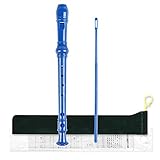
The Mr.Power soprano recorder is the plainest expression of the beginner recorder: a C-key descant instrument with eight holes, German fingering and a plastic body, sold as an easy first instrument for school students and home practice. It is not trying to be a musician’s instrument. It is trying to get a note out of a child’s hands on day one at a price where a lost recorder does not end the experiment.
Who it suits. This is the right pick for a first-term trial, a spare that lives in a school bag, a homeschool parent buying three at once, or a child under eight whose hands are still small and who needs the simplest possible F natural. It also suits adults who want to see whether they enjoy the recorder before spending more. It is the wrong pick for anyone whose teacher has named Baroque fingering, or for a player already reading music in the upper register.
Key specifications as listed.
- Fingering system: German style
- Key: C (soprano/descant)
- Holes: 8
- Body: three-piece detachable design typical of the class, in ABS-style plastic
- Assembled length: approximately 32–33 cm, the standard descant size
- Weight: roughly 90–130 g, light enough for a small hand to hold without fatigue
- Included: a basic cleaning rod and soft carry bag in most versions of this listing
Strengths. The cost is the point, and it buys a functioning instrument rather than a toy whistle: the eight-hole layout, the C tuning and the three-piece body all match what a method book assumes. German fingering means a beginner can play F natural without the forked fingering that trips up small fingers in the first weeks. The plastic body tolerates being dropped, left in a bag and wiped down, and it needs no oiling, humidification or break-in period, which matters enormously when the player is seven years old.
Pros
- Lowest-cost way to start, so a lost or broken instrument is not a family event
- German fingering makes F natural easy in the first lessons
- Three-piece body means it fits into a school bag and can be rotated for cleaning
- No maintenance beyond swabbing and wiping
Cons
- German fingering becomes a liability once F sharp and the upper octave appear
- Tone is thin and the upper register can run sharp
- The included bag offers minimal padding
- No fingering chart in some versions, so budget for printing one
How it compares. Against the EAST TOP three-piece German-fingering recorder, the Mr.Power is the more bare-bones option: both are budget German instruments, but EAST TOP more consistently bundles a cleaning kit, which a first-time buyer would otherwise have to assemble. Against the Eastrock pink three-piece, the Mr.Power trades colour appeal for a lower price. If the player is likely to continue past a year, skip both and go to a Baroque-fingering kit such as the Eastar ERS-21BN — the switch later costs more than the difference now.
2. Eastar Baroque C Soprano Recorder Kit, Natural (ERS-21BN) — Best Overall for Beginners

The Eastar ERS-21BN is the recorder this guide would hand to most beginners: a C soprano with Baroque fingering, finished in a natural wood-look tone, sold as a kit with the accessories a new player actually needs. Baroque fingering is the standard in method books, school programs and ensemble music, and starting with it avoids the single most common and most annoying mid-course correction in recorder learning.
Who it suits. A player aged roughly eight and up who is taking lessons, following a tutor book or playing in a school ensemble. It suits parents who would rather buy once than replace a German-fingering instrument in eighteen months. It also suits adult beginners, who have the hand span for Baroque forked fingerings and the patience to learn them properly from the start. It is less suitable for a five- or six-year-old who needs the easiest possible F natural for a term of general music class.
Key specifications as listed.
- Fingering system: Baroque (English), the standard system for method books and ensembles
- Key: C (soprano/descant)
- Holes: 8, with the Baroque hole sizing and placement that produces a cleaner F sharp
- Construction: three-piece detachable body with corked tenons, natural finish
- Assembled length: approximately 32–33 cm; weight in the light 90–130 g class
- Kit contents: carry bag, cleaning rod and fingering chart
Strengths. The kit is complete enough that nothing else has to be ordered, which is where cheap single recorders quietly cost more. Baroque fingering means the player is learning the same finger patterns as every tutor book and every other student in the room, so a teacher can correct posture and breath instead of translating fingerings. The three-piece body allows the headjoint to be rotated to a comfortable angle, a small detail that prevents the wrist strain beginners get when the mouthpiece and the finger holes fight each other. The natural finish also hides the fingerprints and scuffs that make a glossy black recorder look tired after a term.
Pros
- Baroque fingering aligns with method books, teachers and ensemble parts
- Complete kit: bag, cleaning rod and fingering chart in one purchase
- Three-piece body rotates for comfortable hand position and easy cleaning
- Good upgrade path — the same instrument carries a player into the second year and the upper octave
- Natural finish wears visually better than high-gloss plastic
Cons
- Forked F natural is genuinely harder for very small hands in the first weeks
- Priced above budget instruments for what is still a plastic recorder
- The included bag is a soft fabric sleeve, not a rigid case
- Not the right choice if a specific teacher has demanded German fingering
How it compares. The nearest alternative in this list is the HOSEYIN Baroque-variant recorder, which offers the same fingering system in a pink finish at a similar tier. Eastar’s advantage is the completeness of the kit and the fact that the brand makes the same instrument family in both fingering systems, so a family can match siblings without changing brands. Against the German-fingering Eastar ERS-21GB — same kit, blue, German holes — the ERS-21BN is the better long-term buy for any player over about eight.
3. Auteey 8-Hole Soprano Recorder with Cleaning Rod and Bag — Best Mid-Range Single Recorder

Auteey’s soprano recorder is a German-fingering, C-key, eight-hole descant instrument sold with a cleaning rod and a bag, positioned as a professional-style beginner recorder for children. It occupies the middle of the market: noticeably better finished than the cheapest instruments, still plastic, still affordable enough to be replaced.
Who it suits. A beginner who wants one decent recorder rather than a pack, and who has either been told to buy German fingering or is young enough that the simpler F natural is worth the trade-off. It suits a child moving from a toy whistle to a real instrument, and it suits a parent who wants a bag and cleaning rod included rather than sourced separately.
Key specifications as listed.
- Fingering system: German style
- Key: C (soprano/descant), eight holes
- Construction: three-piece detachable ABS body
- Assembled length: approximately 32–33 cm; light enough for extended practice
- Included: cleaning rod and carry bag
Strengths. The finish and joint fit are the differentiators at this tier. A three-piece recorder lives or dies by its tenons: if the joints are loose, the instrument leaks air, plays flat and wobbles while the player holds it; if they are too tight, a child cannot assemble it without help. Mid-range instruments generally get this balance closer to right than budget ones. The included cleaning rod is not an afterthought either — a recorder that is never swabbed grows mould in the bore and the block swells, which is the single most common way a beginner instrument is ruined.
Pros
- Better joint fit and finish than the cheapest tier
- German fingering keeps early F natural simple
- Cleaning rod and bag included, so the maintenance routine can start on day one
- Light and comfortable for a child’s hands
Cons
- German fingering limits later repertoire and ensemble work
- Still a plastic instrument, with the plastic tone that implies
- Single instrument only — no sibling or classroom savings
- No fingering chart listed
How it compares. The CONJURER recorder is the closest alternative: same German fingering, same eight-hole C layout, but the CONJURER listing explicitly names ABS and leans on a sturdier student build. Auteey’s edge is the included bag and rod combination at a slightly friendlier tier; CONJURER’s is the more explicit material specification. Either is a reasonable mid-range single. Buyers who want Baroque fingering should look at the Eastar ERS-21BN or HOSEYIN instead, and buyers buying for several children should compare against the ZEAYEA six-pack before committing.
4. ZEAYEA 6-Pack Soprano Recorder, 8-Hole German Fingering — Best for Families and Small Groups

The ZEAYEA set delivers six matched soprano recorders with German fingering, eight holes and detachable three-piece bodies. It is priced in the premium tier in total but in the budget tier per instrument, which makes it the practical answer for siblings, a small homeschool group or a teacher assembling a first classroom set without a school budget.
Who it suits. Families with two or more children learning together, homeschool co-ops running a general music block, after-school clubs, and anyone who expects to lose or break at least one recorder. It is not aimed at a single serious student, who would be better served by one Baroque-fingering instrument.
Key specifications as listed.
- Quantity: six matched soprano recorders
- Fingering system: German style
- Key: C (descant), eight holes
- Construction: detachable three-piece bodies in plastic
- Assembled length: approximately 32 cm per instrument
- Included: cleaning accessories with the set
Strengths. Matched instruments matter more than beginners expect. When six recorders in a room are the same model, they tune together, they respond to the same breath pressure and they use the same fingering chart, so a group can play in unison instead of negotiating. Spares are built in: if one recorder cracks at a tenon or gets chewed by a dog, the group continues without a purchase order. Per-instrument cost is the headline number — spreading the pack price across six players brings it close to the cheapest singles on the market, which is why multi-packs are the only premium-tier category that makes arithmetic sense for a household.
Pros
- Dramatically lower cost per player than buying singles
- Matched intonation and fingering across a group
- Built-in spares for breakage and loss
- Six children can start the same week
Cons
- German fingering across the whole set, so none of them suit advanced study
- Higher upfront outlay than a single budget recorder
- Individual instrument quality control is harder to verify in bulk
- Overkill for one child
How it compares. The LOLYSIC sixteen-pack is the same idea at a larger scale and a lower cost per instrument, but sixteen recorders is more than most families can use and closer to a school purchase. Against buying six budget singles such as the Mr.Power or MoResolune, the ZEAYEA pack wins on per-instrument price and consistency. If even one player in the group is likely to continue seriously, buy that player a Baroque-fingering instrument separately and use the pack for everyone else.
5. Eastrock 3-Piece German Style Soprano Recorder, Pink — Best Budget Pick for Young Beginners

Eastrock’s pink three-piece soprano is a German-fingering C descant recorder aimed squarely at young beginners who care what the instrument looks like. The colour is not a gimmick in this category: a seven-year-old who chose the pink recorder is measurably more likely to pick it up, and picking it up is the entire battle in the first month.
Who it suits. Children roughly six to nine starting general music class, parents buying a first instrument for a child who has opinions about colour, and households where a second or third recorder is needed for a sibling. It also works as a classroom spare that is easy to identify in a pile.
Key specifications as listed.
- Fingering system: German style
- Key: C (soprano/descant), eight holes
- Construction: three pieces, detachable, in coloured plastic
- Assembled length: approximately 32–33 cm; lightweight beginner class
- Finish: pink
Strengths. Three-piece construction at a budget price is the important specification. A one-piece recorder cannot be rotated for comfort or properly swabbed, and it is the format used by the cheapest toy-tier instruments. Eastrock keeps the detachable body, which means the instrument can be cleaned, the headjoint angle adjusted, and the joints greased when they stiffen. German fingering keeps early F natural within reach of small hands, and the price means a replacement after an accident is painless.
Pros
- Colour that gets a young child to actually practise
- Three-piece detachable body at a budget price
- German fingering simplifies the first few notes
- Low enough cost to keep a spare at home and one at school
Cons
- German fingering will need revisiting for advanced work
- Budget-tier tone and intonation, especially in the upper octave
- Colour finishes show scuffs and adhesive wear
- Accessories vary by version, so check the box contents
How it compares. The MoResolune three-piece German recorder in blue is the direct counterpart — same format, same tier, different colour — and the two are effectively interchangeable, so let the child choose. Against the Mr.Power recorder, the Eastrock costs a little more in most periods and gives back the colour appeal and, usually, a fuller accessory set. None of these three is a long-term instrument; if the player shows real interest after a term, move up to a Baroque-fingering kit.
6. EAST TOP Soprano Recorder for Kids, 8-Hole German Fingering, 3-Piece — Best Budget All-Rounder

EAST TOP’s soprano recorder is a three-piece plastic descant instrument with German fingering and a cleaning kit, sold for children and beginners. It sits in the same budget tier as the Mr.Power and Eastrock options but tends to be the more complete package, which makes it the default recommendation when someone wants one inexpensive recorder with everything needed to maintain it.
Who it suits. A first-term student, a parent who does not want to hunt for a cleaning rod separately, a teacher buying a handful of spares, or an adult beginner testing the water. It is also a sensible choice for a child who has already broken one recorder and needs a cheap replacement mid-year.
Key specifications as listed.
- Fingering system: German style
- Key: C (soprano/descant), eight holes
- Construction: three-piece detachable plastic body
- Assembled length: approximately 32–33 cm; beginner weight class
- Included: cleaning kit
Strengths. The included cleaning kit is the reason to prefer this over cheaper singles. Recorders fail from the inside out: condensation collects in the bore during playing, and if it is left there, the wooden block in the mouthpiece absorbs moisture and swells, the instrument goes breathy, and eventually it stops speaking cleanly at all. A rod and cloth in the box means the habit starts with the first practice session instead of being deferred indefinitely. The three-piece body also lets a beginner rotate the headjoint to find a comfortable playing angle, which is the single easiest fix for the hunched, twisted posture that new players adopt.
Pros
- Cleaning kit included, so maintenance can start immediately
- Three-piece detachable body for comfort and hygiene
- Budget price with a full accessory set
- German fingering makes the first octave quick to learn
Cons
- German fingering caps how far the instrument can go
- Basic plastic tone and tuning
- Bag quality is typically minimal
- Not matched for group intonation the way a multi-pack is
How it compares. Against the Mr.Power, EAST TOP’s advantage is the cleaning kit and generally tidier finish; against the Eastrock pink, it gives up colour choice for a more neutral instrument that will not feel babyish to an older sibling. Against the MoResolune, the two are close enough that availability and price should decide. If the goal is a whole classroom rather than one child, jump to the LOLYSIC sixteen-pack, where the per-instrument cost falls below even this.
7. HOSEYIN Soprano Recorder, C Key, 8 Holes (Baroque, Pink) — Best Baroque Option in Pink

HOSEYIN sells this recorder in both Baroque and German fingering variants, and the variant reviewed here is the Baroque model in pink: a C-key, eight-hole soprano with the hole sizing and placement that make forked fingerings work correctly. For a beginner whose teacher has specified Baroque fingering and who wants a colour, this is one of the few instruments that satisfies both conditions at once.
Who it suits. Students in a school program that uses Baroque fingering, children who respond to owning a colourful instrument, and any beginner whose tutor book introduces F sharp early. It also suits families who already own German-fingering recorders and want to add one Baroque instrument for a player moving ahead.
Key specifications as listed.
- Fingering system: Baroque (the listing also offers a German variant — check the option selected)
- Key: C (soprano/descant), eight holes
- Construction: three-piece detachable body
- Assembled length: approximately 32–33 cm; light beginner weight
- Finish: pink; cleaning accessories included
Strengths. Getting the fingering system right is worth more than any other specification in this price bracket. A Baroque-fingering instrument plays F sharp and the upper register far more cleanly than a German one, because the holes are positioned for it; a German instrument makes F natural easy at the cost of everything above it. HOSEYIN’s dual-variant listing is genuinely useful for that reason, since the same instrument family can be bought in whichever system a teacher requires. The three-piece body and pink finish add the practical and motivational benefits that come with any well-made beginner recorder.
Pros
- Baroque fingering matches method books and ensemble parts
- Available in pink, which matters to young players
- Three-piece body rotates and cleans easily
- Same model family available in German fingering if a teacher insists
Cons
- Buyers must be careful to select the correct fingering variant when ordering
- Forked F natural is harder for very small hands at first
- Mid-range price for a plastic instrument
- Colour finish shows wear more than a plain finish
How it compares. The Eastar ERS-21BN is the closest rival: same Baroque fingering, same beginner focus, but supplied as a fuller kit in a natural finish. HOSEYIN’s edge is colour and the option of switching fingering systems within one product family; Eastar’s is the completeness of the box and the better-documented kit contents. If the player is under seven, the German-fingering Eastar ERS-21GB may be the more comfortable start, with a planned move to Baroque later.
8. MoResolune Soprano Recorder, German Fingering 3-Piece (Blue) — Best Budget Blue Starter

MoResolune’s beginner soprano is a blue, three-piece, German-fingering recorder in C, sold as a straightforward starter instrument. It occupies the same slot as the Eastrock pink model and the Mr.Power recorder: inexpensive, functional, and aimed at the first year of playing rather than the fifth.
Who it suits. Young children starting recorder in class, parents buying a first instrument in a colour the child picked, and households that need a second recorder that will not be confused with a sibling’s. It is also a reasonable choice for a school that wants a small batch of identifiable spares.
Key specifications as listed.
- Fingering system: German style
- Key: C (soprano/descant), eight holes
- Construction: three-piece detachable plastic body
- Assembled length: approximately 32 cm class; light beginner weight
- Finish: blue
Strengths. Three-piece construction is the specification that separates a real beginner instrument from a toy, and MoResolune keeps it. The detachable headjoint can be rotated so the mouthpiece sits at a natural angle, which reduces the wrist twist that makes new players sound worse than they are. It also allows the bore to be swabbed properly and the joints to be greased when they stiffen, extending the instrument’s life well beyond a term. German fingering means the first tunes come together quickly, which is what keeps a beginner coming back.
Pros
- Three-piece body at a budget price
- Blue finish that children tend to prefer over plain black
- German fingering makes the first octave accessible fast
- Cheap enough to replace without drama
Cons
- German fingering limits progress beyond beginner repertoire
- Budget tone and intonation
- Accessory contents vary, so confirm what ships in the box
- Not matched for group tuning
How it compares. The Eastrock pink three-piece is the direct equivalent and the two are interchangeable in practice — the choice comes down to colour and which is available. Against the EAST TOP recorder, MoResolune gives up the reliably included cleaning kit, which is a real if small disadvantage. Against the Auteey mid-range recorder, it saves money and loses finish quality and joint fit. For a child who will still be playing in two years, the money is better spent on a Baroque-fingering kit now.
9. LOLYSIC 16-Pack 8-Hole Recorder Flute — Best for Classrooms and Large Groups

The LOLYSIC sixteen-pack is a bulk set of eight-hole plastic soprano recorders with cleaning rods, designed for classrooms, music programs and group teaching. Sixteen is the size of a typical primary class group, and buying at that scale changes the economics completely: the cost per instrument drops below what most single budget recorders cost on their own.
Who it suits. Primary and elementary music teachers, homeschool co-ops, after-school clubs, church groups and community programs that need a whole cohort playing the same instrument on the same day. It also suits a very large family or a parent organising a neighbourhood group. It does not suit a single learner, who will pay more in total for fifteen recorders they will never use.
Key specifications as listed.
- Quantity: sixteen matched soprano recorders
- Fingering system: German style
- Key: C (descant), eight holes
- Construction: plastic, three-piece detachable bodies in the standard format
- Assembled length: approximately 32–33 cm per instrument
- Included: cleaning rods with the set
Strengths. Uniformity is the real product here. Sixteen identical recorders tune with each other, respond to the same breath pressure and use one fingering chart, so a group can play together rather than negotiate. Cleaning rods in the set mean the maintenance routine can be taught once, to the whole room, on the first day — which is also the point at which hygiene habits are easiest to establish, since a recorder that is shared or stored in a class bin needs swabbing even more than one kept at home. Built-in spares matter too: in a class of sixteen, at least one instrument will be dropped, sat on or lost during the year, and the set absorbs that without a mid-term purchase.
Pros
- Lowest cost per instrument of any option here
- Matched tuning and fingering across a whole class
- Cleaning rods included, so hygiene routines can be taught immediately
- Spares absorb the inevitable breakages
Cons
- Large upfront outlay for a family that needs one or two
- German fingering throughout, so no advanced work
- Bulk sets offer limited control over individual finish quality
- Sixteen instruments need storage space and a labelling system
How it compares. The ZEAYEA six-pack is the smaller-scale version of the same idea: choose ZEAYEA for a family or a small group, LOLYSIC for a full class. Against buying sixteen budget singles individually, the pack wins clearly on price and consistency. If any student in the group shows real aptitude, buy that student a Baroque-fingering instrument such as the Eastar ERS-21BN or the HOSEYIN Baroque model separately — a class set is for teaching, not for the one player heading toward graded exams.
10. CONJURER Soprano Recorder, German Fingering, 8-Hole ABS Descant — Best Student-Build Mid-Range

CONJURER’s soprano recorder is a German-fingering, eight-hole C descant instrument whose listing explicitly names ABS plastic, aimed at students and school use. The explicit material call-out matters more than it sounds: ABS is the tough, dimensionally stable plastic that keeps a recorder’s bore and holes consistent, and it tolerates the knocks that a school instrument takes.
Who it suits. Students who need one dependable recorder for lessons and practice rather than a disposable, and parents who have already replaced a cheaper instrument once and would rather not do it again. It also suits teachers buying a handful of better-quality loaners that will survive several cohorts.
Key specifications as listed.
- Fingering system: German style
- Key: C (soprano/descant), eight holes
- Material: ABS plastic, explicitly stated
- Construction: three-piece detachable descant body
- Assembled length: approximately 32–33 cm; standard beginner weight
- Included: cleaning rod and bag
Strengths. ABS is the reason to pick this over a generic budget recorder. It resists the two failure modes that kill beginner instruments: cracking at the tenons, where the joints take repeated stress, and warping that throws the holes out of tune. A recorder with a stable bore plays consistently in both octaves, which matters when the player reaches the notes above high C and a wobbly instrument makes them sound like a mistake. The included cleaning rod and bag complete the package, and German fingering keeps the early tunes easy.
Pros
- ABS construction resists cracking and warping
- Three-piece body with a cleaning rod and bag included
- Consistent intonation in both octaves relative to generic budget instruments
- Durable enough for school loaner use
Cons
- German fingering restricts later repertoire
- Mid-range price for an instrument that still looks like plastic
- Single instrument, so no per-player savings
- Tone is functional rather than warm
How it compares. The Auteey recorder is the nearest alternative: same fingering, same key, same tier, but Auteey leans on the included bag and rod while CONJURER leans on the stated ABS material. Buyers who care about a known-durable plastic should prefer CONJURER; buyers who want the tidier accessory bundle can take either. Compared with the Eastar ERS-21GB, the CONJURER saves money but gives up Baroque-fingering upgrade potential and the Eastar kit’s chart and finish.
11. Eastar German C Soprano Recorder Kit, Blue (ERS-21GB) — Best Kit for Teacher-Directed German Fingering

The Eastar ERS-21GB is the German-fingering sibling of the ERS-21BN: same C soprano format, same kit approach, same three-piece body, finished in blue. It exists because some teachers, some school systems and some very young players genuinely need German fingering, and buying a proper kit in that system beats buying a cheap instrument and a bag separately.
Who it suits. Children aged five to eight in programs that teach German fingering, students whose teacher has specifically requested it, and parents who want the Eastar kit quality — bag, cleaning rod, fingering chart — without the Baroque forked fingerings that small hands struggle with. It is also a sensible intermediate step: start German at six, move to Baroque at nine.
Key specifications as listed.
- Fingering system: German style
- Key: C (soprano/descant), eight holes
- Construction: three-piece detachable body
- Assembled length: approximately 32–33 cm; light beginner weight
- Kit contents: bag, cleaning rod and fingering chart
- Finish: blue
Strengths. Buying a complete kit in the German system is the smart version of a compromise that many families make anyway. The included fingering chart is specific to the instrument’s system, which prevents the classic beginner error of learning Baroque fingerings from a book and applying them to a German instrument — a mistake that produces notes that are simply wrong and is often misdiagnosed as a broken recorder. The blue finish and three-piece body add the usual practical benefits: easy cleaning, adjustable headjoint angle, and an instrument a child is happy to carry.
Pros
- German fingering makes early F natural easy for small hands
- Complete kit with a fingering chart matched to the instrument
- Same build family as the Baroque ERS-21BN, so upgrades stay familiar
- Blue finish appeals to younger players
Cons
- German fingering needs revisiting for F sharp and advanced music
- Not suitable for a teacher who expects Baroque fingerings
- Mid-range price for a plastic recorder
- A player who continues seriously will eventually need a second instrument
How it compares. The ERS-21BN is the obvious alternative, and the choice is simple: Baroque for players over about eight or anyone in a standard school program, German for the very young or for a teacher’s explicit instruction. Against the cheaper German recorders such as the EAST TOP or Mr.Power, the ERS-21GB costs more and gives back the kit, the chart and the finish. Against the Yop-yes three-piece kit, Eastar’s advantage is the sibling Baroque model, which keeps a family in one familiar format.
12. Yop-yes Soprano Recorder for Kids, German Fingering, 3-Piece — Best Fully Accessorised Kit

Yop-yes sells a German-fingering, C-key, three-piece soprano recorder supplied with a cleaning rod, a bag and a fingering chart — the full accessory list a first-time buyer would otherwise have to assemble across two or three purchases. It sits in the premium tier for a single plastic recorder, and the justification is completeness rather than materials.
Who it suits. Parents buying a first instrument who do not want to research accessories, gift-buyers who need one box that covers everything, and children in German-fingering programs where a chart matching the instrument is genuinely important. It also suits a household that has already lost a cleaning rod and would rather buy a kit than a replacement part.
Key specifications as listed.
- Fingering system: German style
- Key: C (soprano/descant), eight holes
- Construction: three-piece detachable body
- Assembled length: approximately 32–33 cm; standard beginner weight class
- Included: cleaning rod, bag and fingering chart
Strengths. The matching fingering chart is the underrated part. A German-fingering recorder with a Baroque fingering chart is one of the most common causes of a beginner “playing the wrong notes” — the player follows the book, the instrument responds differently, and everyone concludes the instrument is faulty. Yop-yes removes that failure mode. The cleaning rod means the instrument can be swabbed after every session, which is the single habit that decides whether a plastic recorder lasts three years or three months, and the bag means it travels without the mouthpiece collecting pocket lint.
Pros
- Everything needed in one purchase, including a matched fingering chart
- German fingering keeps early learning quick
- Three-piece body for cleaning and comfortable hand position
- No separate accessory shopping for a first-time buyer
Cons
- Premium tier pricing for a single plastic recorder
- German fingering limits progression into ensemble repertoire
- Not economical if you need instruments for several children
- Accessory quality is basic rather than premium
How it compares. The Eastar ERS-21GB offers a comparable kit in the same fingering system and adds the option of the Baroque ERS-21BN later, which makes it the better long-term family purchase. Yop-yes wins narrowly on the explicitly matched chart-and-rod-and-bag combination for a single first-time buyer. Against the Auteey or CONJURER mid-range singles, Yop-yes costs more and delivers a more complete box; if you already own a cleaning rod, one of those is the better value.
How to Choose
The recorder is one of the few instruments where a purchase decision can be made almost entirely from three specifications: fingering system, key and construction. Everything else — colour, brand, packaging — is secondary. Work through the criteria below in order, because each one narrows the field before the next one applies.
1. Fingering system: the decision you cannot undo
This is the first and most consequential choice. Soprano recorders are made in two fingering systems, German and Baroque, and they are not interchangeable, because the sixth and seventh holes are sized and positioned differently.
| Fingering system | F natural | F sharp | Upper register | Best for |
|---|---|---|---|---|
| German | Simple, no forked fingering — easiest early note | Awkward and often flat | Less reliable tuning above high C | Children under about eight; teachers who specify it |
| Baroque (English) | Requires forked fingering — harder in week one | Clean and in tune | More accurate and easier to control | Players eight and up; method books; ensembles; graded exams |
The practical rule: if a teacher has named a system, follow the teacher. If no one has, choose Baroque for any player aged about eight or older, and German only for the very young or for a short trial. The cost of starting German and switching later is a second instrument plus relearning the finger patterns — typically more than the price difference between a budget and a mid-range recorder today. Also check that the fingering chart in the box matches the instrument: a Baroque chart used with a German recorder produces notes that are simply wrong.
2. Size, weight and hand span
The soprano or descant recorder is the right size for beginners and the only one this guide covers. It measures roughly 32–33 cm assembled and weighs in the 90–130 g range in plastic, which a six-year-old can hold without fatigue. The larger alto recorder in F is a different instrument with wider hole spacing; it is not a beginner’s first recorder, because small hands cannot cover the holes cleanly. If a child’s fingers cannot seal the holes on a soprano, the problem is almost always hand position rather than hand size: the right hand should sit with fingers curved, using the pads rather than the fingertips, and the headjoint should be rotated so the wrist is straight.
3. Materials and what they mean in practice
Almost every beginner recorder is ABS plastic. It is tough, dimensionally stable, immune to humidity changes and needs no oiling. Its limitation is tonal warmth: plastic recorders sound bright and can be slightly shrill in the upper octave, which is a fair trade for an instrument that survives a school bag. Wooden recorders — maple, pearwood or boxwood — sound warmer and more complex, but they cost several times as much, need breaking in with short playing sessions over the first weeks, require periodic oiling and are vulnerable to cracking if played for long periods when new. For a beginner, wood is a second-year upgrade, not a first purchase. Within plastic, the material name to look for is ABS, since it resists the tenon cracking and bore warping that retire cheap instruments early.
4. Construction: three pieces or one
Buy a three-piece recorder. The detachable headjoint, middle section and foot allow the instrument to be rotated to a comfortable angle, swabbed properly through the bore, and greased when the corked tenons stiffen. A one-piece recorder cannot be cleaned internally without difficulty and cannot be adjusted, and single-piece construction is a marker of the toy tier. On a three-piece instrument, check that the joints are snug but not stiff: a child should be able to assemble it without help, and it should not wobble or leak air while being played.
5. Cleaning and hygiene: the routine that decides lifespan
Recorders do not wear out from playing; they wear out from moisture left inside them. After every session, the routine is:
- Disassemble the three sections so air can reach the bore. Leaving a recorder assembled traps condensation in the joints.
- Swab the bore with a soft cloth pulled through on the cleaning rod, working from the foot end. This removes the droplets that would otherwise soak into the block in the mouthpiece.
- Wipe the tenon corks dry, then apply a trace of cork grease only when assembly becomes difficult — over-greasing attracts dust and grit.
- Air-dry the sections separately before returning them to the bag. A recorder put away damp will smell musty within weeks.
- Never put a recorder in a dishwasher, soak it in hot water or pour boiling water through it. Heat distorts the bore and can loosen the block irreversibly.
In classrooms, where instruments may be shared or stored together, add a wipe of the mouthpiece with a mild soapy cloth or an alcohol wipe between users, and label each recorder to its player. Hygiene is a legitimate reason to prefer a matched multi-pack for group teaching, because each student keeps their own instrument.
6. Cases, bags and what actually protects the instrument
Almost all beginner recorders ship with a soft fabric sleeve. That is enough to keep dust off and the sections together, but it will not protect against a dropped school bag. If the recorder travels daily, a rigid or semi-rigid case is worth buying separately, or choose a kit that includes one. Look for a bag