Key takeaways
- 78A–83A: Very comfortable for sidewalks, asphalt, and imperfect pavement. These wheels are a strong choice for cruising and commuting.
- 84A–90A: A useful compromise when you want comfort but still plan to practice basic slides or ride occasional smoother surfaces.
- 95A–101A: Fast and responsive on smooth skatepark concrete, with less grip and noticeably more vibration on rough roads.
The best skateboards for smooth, stable rides are complete cruisers with a 8.25–9.5-inch deck, soft 78A–87A wheels, dependable trucks, and enough wheel clearance to prevent bite; choose a shorter, lighter street setup instead if tricks are your priority.
The right board depends less on a brand name than on where and how you ride. A compact popsicle deck suits ramps and flip tricks, a cruiser makes rough pavement more comfortable, and a longer board improves stability for commuting. Use the specifications below to narrow the choice before comparing individual completes.
Our top picks
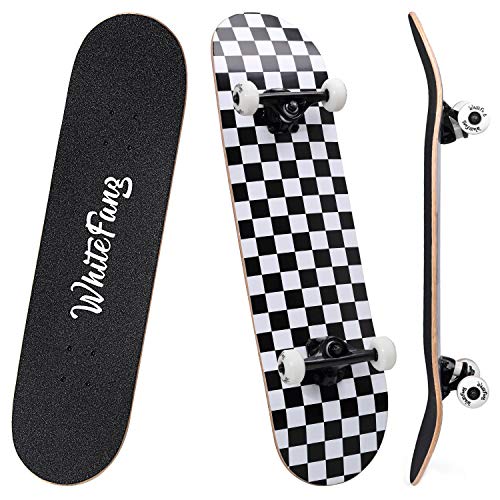


As an Amazon Associate we earn from qualifying purchases at no extra cost to you. Ratings are shown as listed on Amazon.
Quick comparison: which skateboard fits your situation?
| Riding situation | Deck size and shape | Wheels | Truck width | Best priority |
|---|---|---|---|---|
| Beginner learning balance | 8.25–8.75 in, moderate concave | 54–60 mm, 85A–92A | Deck-matched, standard height | Stable platform and predictable turning |
| Smooth-road cruising | 8.5–9.5 in, cruiser or mild kicktail | 60–65 mm, 78A–87A | Independent or comparable quality trucks | Comfort, grip, and vibration control |
| Tricks and skatepark use | 7.75–8.5 in popsicle shape | 50–54 mm, 97A–101A | Low or standard trucks | Low weight, pop, and responsive edges |
| Longer commuting | 9–10.5 in cruiser or 36–42 in longboard | 65–75 mm, 78A–85A | Stable, often reverse-kingpin trucks | Rolling efficiency and stability |
| Limited storage or frequent carrying | 7.75–8.5 in, short cruiser | 56–60 mm, 80A–90A | Standard-height trucks | Lower weight and easier handling |
Deck size: stability versus maneuverability
Deck width is the first specification to match to your riding style. An 8.25-inch board is a versatile middle ground: it has enough standing room for most beginners while remaining manageable for ollies and other tricks. Riders who want maximum agility often choose 7.75–8.125 inches, while riders with larger feet or a strong preference for cruising may appreciate 8.5–9 inches.
Length affects stability and turning more than many first-time buyers expect. A typical street skateboard is about 31–32 inches long with a wheelbase near 14 inches. A cruiser may be 29–34 inches long, while a commuter longboard commonly measures 36–42 inches. Longer wheelbases feel calmer at speed but need more room to turn.
Concave—the curve across the deck—also changes control. Medium concave gives your feet useful reference points without making a relaxed cruise uncomfortable. Deep concave can help lock your feet in during aggressive riding, but it is not automatically better for commuting.
Wheel hardness: the key to a smoother ride
Wheel durometer is usually marked with an “A” number. Softer wheels deform around cracks and provide more grip, while harder wheels slide more readily and transfer more road vibration to your feet.
- 78A–83A: Very comfortable for sidewalks, asphalt, and imperfect pavement. These wheels are a strong choice for cruising and commuting.
- 84A–90A: A useful compromise when you want comfort but still plan to practice basic slides or ride occasional smoother surfaces.
- 95A–101A: Fast and responsive on smooth skatepark concrete, with less grip and noticeably more vibration on rough roads.
Diameter matters alongside hardness. Wheels around 50–54 mm accelerate quickly and keep a trick board low to the ground. Wheels from 60–65 mm roll over small cracks more confidently. Larger wheels can create wheel bite—the wheel touching the deck during a turn—unless the board has riser pads, appropriate truck height, or wheel wells.
Trucks and bearings: where stability is won or lost
Trucks should be close to the deck’s width. A mismatch of roughly 0.25 inches is normally manageable, but trucks that are substantially narrower can feel twitchy, while very wide trucks may make flip tricks awkward. For cruising, standard-height trucks pair well with medium wheels; high trucks offer more clearance for larger wheels.
Look for trucks made from cast or forged aluminum with a steel axle and replaceable bushings. The most important quality feature is consistent turning without excessive slop. Recognized truck brands such as Independent, Thunder, and Paris are established options, but the correct width and setup matter more than the logo.
Bearings are commonly labeled with an ABEC rating, but that number alone does not determine skateboard performance. Sealed bearings with clean races, adequate lubrication, and properly adjusted axle nuts are more useful than chasing a high printed rating. The wheels should spin freely without noticeable side-to-side movement.
Best skateboard types by use
For smooth, stable cruising
Choose a 8.5–9.5-inch cruiser with 60–65 mm wheels in the 78A–87A range. A kicktail is useful for turning around obstacles and lifting the front over small pavement changes. Wheel wells or 1/8-inch riser pads reduce the chance of wheel bite. Arbor, Landyachtz, Sector 9, and similar established longboard or cruiser lines offer this general format, but compare the actual dimensions rather than selecting by brand alone.
For tricks and skateparks
A traditional popsicle board around 8–8.5 inches wide, with 50–54 mm hard wheels and standard or low trucks, is easier to pop and spin than a large cruiser. Hard wheels also slide more predictably on smooth concrete. A board from a recognized skate brand such as Santa Cruz, Powell Peralta, Element, or Baker can be a sensible starting point when the width and truck fit are appropriate.
For commuting
For trips longer than a few blocks, prioritize wheel diameter and wheelbase. A 36–42-inch drop-through or top-mount longboard with 65–75 mm wheels can maintain speed with fewer pushes and feel stable on straight sections. A shorter cruiser is easier to carry on public transport, but it may feel less settled at speed and offer less room for both feet.
Setup details that prevent common problems
- Match the trucks to the deck. Check the manufacturer’s axle-width specification rather than guessing from appearance.
- Check wheel clearance. Stand on the board and lean it into a turn while stationary. If the wheel can touch the deck, add suitable riser pads, use smaller wheels, or tighten the setup only temporarily while correcting the underlying fit.
- Adjust the axle nuts. Tighten until the wheel has minimal side-to-side play, then back off slightly if it cannot spin freely. Over-tightening damages bearings and slows the board.
- Set the bushings for your weight and preference. Softer bushings turn more easily; firmer bushings provide greater resistance. Make small, equal adjustments on both trucks.
- Inspect before every longer ride. Look for cracked wood, loose hardware, damaged bushings, flat-spotted wheels, and noisy or gritty bearings.
Durability and ownership costs
Wheels and bearings are consumables. Frequent riders may wear through a set of wheels in several months to a year, depending on sliding, surface roughness, rider weight, and mileage. Bearings last longer when kept dry and clean, but water, grit, and riding through road debris shorten their life. Hardware can loosen through vibration, so check it periodically with a skate tool.
Wood decks eventually lose pop, develop stress cracks, or delaminate after repeated impacts. Do not ride a deck with a structural crack near the trucks or mounting holes. Store the board indoors, avoid leaving it in a hot car, and dry it immediately if it gets wet. Water can swell the maple layers and corrode axles and bearings.
A simple ownership calculation can clarify the value of a better setup. Suppose a complete board costs $100 and you ride it three times per week for one year: 3 × 52 = 156 rides, or about $0.64 per ride before replacement parts. If a cheaper board needs new trucks, wheels, and bearings within that year, its lower purchase price may disappear quickly. For occasional use, however, a basic complete with correctly sized components can be entirely reasonable.
Final buying recommendation
For most new riders seeking a smooth, stable board, choose an 8.25–8.75-inch complete with medium-height trucks, 56–60 mm wheels around 85A–90A, and sealed bearings. Move to softer 60–65 mm wheels for rough pavement, harder 50–54 mm wheels for tricks, or a 36–42-inch longboard for faster commuting. The best skateboards are not the largest or most expensive ones; they are the boards whose deck, wheels, trucks, and wheelbase match the surface, distance, and control you actually need.