Key takeaways
- Solid wood: sturdy and repairable, but heavier and more expensive.
- Engineered wood: affordable and consistent, though swollen edges can result from repeated moisture exposure.
- Fabric: light and visually soft, but more likely to hold fur, dust, and odors.
- Rattan or cane: airy and attractive, but vulnerable to scratching and chewing.
The best room dividers depend on whether you need occasional separation, true visual privacy, or a sturdy boundary that can also store pet supplies: folding screens suit renters and flexible layouts, sliding panels suit frequent reconfiguration, and bookshelf-style dividers suit permanent zoning.
Our top picks
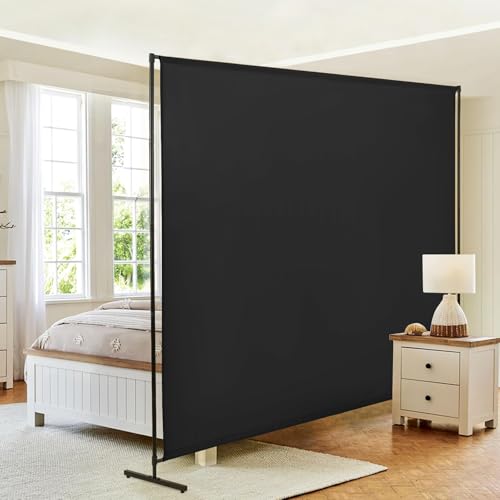


As an Amazon Associate we earn from qualifying purchases at no extra cost to you. Ratings are shown as listed on Amazon.
Quick picks by situation
| Your situation | Best divider type | Why it fits | Main compromise |
|---|---|---|---|
| Small rental or occasional guests | Folding screen | No installation; folds into a narrow package | Can tip or let light through at the hinges |
| One room used as office and living area | Sliding panel | Opens and closes along a predictable track | Needs clear wall or ceiling installation space |
| Open-plan home needing everyday zoning | Bookshelf-style divider | Provides storage, weight, and a visual boundary | Uses permanent floor area and is difficult to move |
| Pet feeding, litter, or crate area | Open-backed shelving or washable folding screen | Separates the area without blocking airflow completely | Open shelves collect fur; fabric can absorb odors |
| Frequent daily reconfiguration | Sliding panels | Usually quicker to operate than unfolding several panels | Rollers and tracks need periodic cleaning |
Folding screens: the easiest flexible option
Folding room dividers use two or more hinged panels made from wood, engineered board, fabric, rattan, or a combination of materials. A typical screen is 60 to 72 inches tall, with a total extended width of about 72 to 96 inches. It usually covers roughly 30 to 48 square feet when positioned as a shallow zigzag.
Choose a folding screen when setup space matters more than maximum privacy. It can be opened only as far as needed, moved without tools, and stored behind a door or beside a wardrobe. A three-panel screen generally folds to approximately one-third of its open width, although thick frames and feet make the folded package wider than the panels alone suggest.
Privacy and stability
Solid wood or tightly woven panels provide better visual privacy than open lattice. Fabric panels block silhouettes but may still glow with backlighting. For pets, avoid loose cords, dangling ties, and easily shredded natural fibers at nose or paw level.
Stability depends on the screen’s depth and angle. A straight screen has a large tipping risk, while a shallow zigzag creates a more stable base. If a screen will be near an active dog, cat, or doorway, select one with wide feet or a weighted frame. Do not rely on a lightweight screen as a barrier to prevent a determined pet from entering another area.
Materials and ownership
- Solid wood: sturdy and repairable, but heavier and more expensive.
- Engineered wood: affordable and consistent, though swollen edges can result from repeated moisture exposure.
- Fabric: light and visually soft, but more likely to hold fur, dust, and odors.
- Rattan or cane: airy and attractive, but vulnerable to scratching and chewing.
Expect general-market prices of about $50 to $180 for basic folding screens and $180 to $500 or more for larger wood, acoustic, or custom-finished models. Vacuum fabric with an upholstery attachment and wipe hard panels with a lightly damp cloth. Avoid saturating hinges, because moisture can loosen fasteners or swell composite panels.
Sliding panels: best for repeated daily changes
Sliding dividers use panels that travel along a ceiling-mounted, wall-mounted, or floor-guided track. They are the strongest choice when you open and close the boundary every day, such as separating a home office from a living room or concealing a sleeping area in a studio.
A common panel is 80 to 96 inches high and 24 to 36 inches wide. Two or three panels can cover an opening approximately 48 to 108 inches wide. Measure the opening and the parked-panel area separately: a divider cannot fully retract unless there is somewhere for the panels to stack or slide past the opening.
Privacy, materials, and installation
Opaque wood, composite, or laminated panels provide the most privacy. Frosted or translucent panels diffuse light while preserving a sense of openness, but they will not conceal silhouettes as effectively as solid panels. Acoustic felt can soften reflected sound, but it should not be treated as soundproofing.
The track and mounting surface matter more than the panel finish. A ceiling track must be fixed into suitable framing or a properly supported mounting system. Plasterboard alone may not support a heavy multi-panel assembly. Floor tracks improve alignment but create a raised edge that can catch dust, toys, or small pet wheels. A top-hung system avoids that trip point, but the ceiling structure must carry the load.
Budget roughly $250 to $1,200 for a standard sliding system, with custom sizes and architectural hardware costing more. Clean the track every few weeks in homes with shedding pets. Fur and grit can increase rolling resistance, causing users to pull harder and eventually wear the rollers. Never force a panel that has stopped; inspect the track for debris first.
Bookshelf-style dividers: the most stable everyday boundary
A bookshelf divider separates areas with open cubbies or shelving rather than a single solid panel. It is the best choice when you want room zoning plus storage for books, baskets, plants, toys, or pet supplies. Models range from narrow units about 12 inches deep to substantial shelving approximately 15 to 18 inches deep.
For a convincing boundary, aim for a unit at least 60 inches high. A 30- to 42-inch shelf separates visual zones while preserving sightlines, but it will not hide a desk, litter cabinet, or crate. A 72- to 80-inch unit provides more privacy but can make a small room feel enclosed.
Stability and safety
Bookshelf dividers are more stable than lightweight screens because their broad base and stored contents add mass. They still require anti-tip anchoring, especially when placed where a child or pet could climb, bump, or pull on a shelf. Anchor the unit to an appropriate wall surface and follow the manufacturer’s hardware instructions.
Use closed bins on lower shelves for leashes, food accessories, and cleaning items. Keep toxic cleaners, medications, strings, and small chewable objects out of reach. For cats, unsecured decorative objects can become falling hazards when the shelf doubles as a climbing route.
Open shelving does not provide full privacy, and objects can look cluttered from both sides. A back panel improves concealment but reduces airflow and may make the unit visually heavier. Cube shelving systems, including products such as IKEA KALLAX, can work as room dividers when they are correctly sized and anchored; confirm the specific unit’s assembly and anchoring requirements before using it this way.
Coverage and setup-space comparison
| Divider type | Typical height | Typical usable width | Parked or folded depth | Privacy level | Typical market range |
|---|---|---|---|---|---|
| Folding screen | 60–72 in | 72–96 in extended | 8–16 in folded | Low to high, depending on panel material | $50–$500+ |
| Sliding panels | 80–96 in | 48–108 in for two or three panels | 24–36 in stacking zone per panel | Medium to high | $250–$1,200+ |
| Bookshelf divider | 30–80 in | 24–72 in per unit | 12–18 in permanent floor depth | Low to medium, higher with a back panel | $100–$700+ |
These figures are planning ranges rather than universal specifications. Product dimensions, hardware, and weight limits vary, so use the exact manufacturer’s measurements before ordering.
How to calculate whether a divider will fit
Start with the opening width, then add operating space. For a folding screen, leave at least 6 inches of clearance from nearby furniture so the hinges can open without rubbing. For a sliding system, measure the opening plus the full panel-stacking zone. For a bookshelf, add the unit’s depth to the walking clearance; a 16-inch shelf beside a 30-inch passage leaves only 14 inches, which is too narrow for comfortable everyday use.
For example, an 84-inch opening divided by three 28-inch sliding panels appears to fit exactly. In practice, allow a small overlap between panels and space for the track hardware, so a system advertised as covering 84 inches may require a slightly wider installation area. Check the actual coverage measurement, not just the number of panels.
Which divider should you buy?
Choose a folding screen if you are renting, change layouts occasionally, or cannot drill into walls. Choose sliding panels if the opening is used several times a day and you can support a proper track installation. Choose a bookshelf divider if the boundary will stay in place and you can use the storage without creating a pet-access or anti-tip hazard.
For homes with pets, prioritize wipeable lower surfaces, secure anchoring, smooth edges, and a design that does not trap a collar, leash, or paw. A divider should organize the room—not become an unstable obstacle or a substitute for a properly secured pet gate when containment is the actual goal.