We independently review everything we recommend. When you buy through our links, we may earn a commission. As an Amazon Associate we earn from qualifying purchases.
How to Choose a Dog Doorbell for Potty Training Guide
Learn how to choose a dog doorbell for potty training, compare hanging bells and electronic buttons, and pick a clear signal your dog can use daily.
A dog doorbell gives your dog a clear way to ask to go outside. Instead of scratching, barking, or pacing, your dog learns one simple action: ring the bell or press the button, then wait for you to open the door.
The right choice depends on your dog and your home. Hanging bells suit dogs that paw or nudge with a nose, and they need no power. Electronic buttons suit homes where a chime must carry across rooms. This guide explains both types and compares five dog doorbells so you can match the signal to your dog.
As an Amazon Associate, we earn from qualifying purchases.
Quick Answer
Choose hanging bells if you want a simple, silent-until-rung signal with no batteries or plugs, and choose an electronic button if you need a chime you can hear from another room. Hang bells at nose height, place a button where your dog naturally pauses by the door, and reward every ring with a prompt trip outside. Consistency matters more than the model you buy.
Type: electronic button. The Mighty Paw Smart Bell 2.0 is a wireless electronic dog doorbell with two activators and a plug-in receiver. Your dog presses an activator with a paw or nose, and the receiver sounds inside the home. With two buttons, you can place one by the door your dog uses to go out and one by the door your dog uses to come back in.
The light press suits small dogs and puppies: the listing states each activator needs only 0.75 pounds of pressure. The activators are described as water resistant and suitable for indoor and outdoor use, and a training guide is included.
Type: hanging bells. Caldwell’s Pet Supply Co. Potty Bells are a classic hanging bell strap for the door handle. Your dog nudges or paws the bells, and the jingle tells you that your dog wants to go out. There is no receiver, no battery, and no setup beyond hanging the strap where your dog can reach it.
The strap is adjustable, with durable snaps that let you set the hanging length for your door and your dog. The listing describes the bells as a housetraining aid for puppies and dogs of all breeds and ages, so the same design can stay in place as a puppy grows. It is less suited to a large home where a soft jingle may not carry to another floor.
Type: hanging bells. The Luckyiren Upgraded Puppy Bells are a hanging bell strap with seven large bells on a sewn belt. Your dog rings the bells by nudging them with a nose or paw, and the louder jingle is easier to hear from another room than a single small bell.
The belt is 41 inches long, with three snaps that adjust the hanging length from 28.3 inches to 32.3 inches, so you can set the bells at a height your dog can reach without stretching. Each bell is 1.5 inches in diameter. It is less suited to a dog that chews straps, because a fabric belt will show wear faster than a metal fitting.
Type: electronic button. The PATPET Wireless Dog Doorbell pairs a touch button transmitter with a plug-in receiver. Your dog touches the button with a paw or nose, and the receiver sounds one of 55 melodies. Five volume levels let you set the chime from quiet to loud, with a maximum of 85 decibels.
The transmitter is rated IP65 for water and dust resistance, which suits placement near an exterior door where wet noses and dirty paws are part of daily life. The receiver is for indoor use only. The stated wireless range is up to 500 feet in an open area, and the transmitter battery is stated to last 6 to 12 months in typical use.
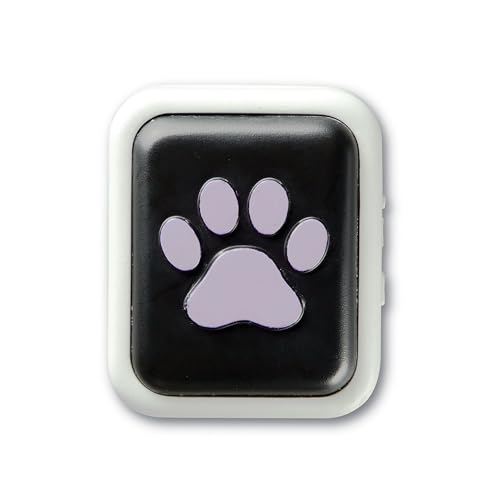
Type: electronic recordable button. The Hunger for Words Talking Pet Doorbell is a single press button that gives your dog a signal for going outside. You can use the pre-recorded bell sound, or record your own word, so the button can match the cue your dog already knows. It was created with guidance from Christina Hunger, a speech therapist known for work on dog communication buttons.
The button is pressed with a nose or paw. It is powered by 2 AAA batteries, which are not included, so you will need batteries on hand before the first training session. The stated dimensions are 10.2 by 19.1 by 4.1 centimetres, with a weight of 80 grams. It is less suited to an owner who wants a loud chime across a large home, because a single small button is best heard in the room where it sits.
Specs
Feature
Detail
Type
Electronic recordable button
Sound
Pre-recorded bell sound or record your own word
Power
2 AAA batteries, not included
Dimensions
10.2 by 19.1 by 4.1 centimetres
Weight
80 grams
Activation
Press with nose or paw
How to choose
Start with the signal your dog can already make. A dog that paws at the door will learn hanging bells quickly, while a dog that stands and stares may need a button placed right where the dog pauses. Watch your dog for a day before you buy: the spot where your dog waits is the spot for the bell or button.
Next, think about sound and distance. Hanging bells are quiet and local, which suits a small home. Electronic buttons carry further, which suits a larger home or a second floor. For hanging bells, look at strap length and bell size. For electronic buttons, look at press force, water resistance, and battery type. A light press suits puppies and small dogs.
No doorbell trains a dog on its own. Pick one door, one signal, and one response: ring or press, then go outside at once. Reward the signal every time at first, and only for outside trips, so your dog does not learn to ring for play.
Who should skip
Skip a dog doorbell if your dog is still in the earliest stage of house training and does not yet have a regular outside routine. At that stage, frequent scheduled trips matter more than a signal. Build the routine first, then add the bell as a way for your dog to ask between scheduled trips.
Skip hanging bells if your dog chews straps or pulls hanging objects, because a chewed strap is a safety concern as well as a broken tool. An electronic button placed flat on the floor is a safer choice for that dog. Skip an electronic button if you have no wall outlet near the door, or if you do not want to manage batteries and a receiver. If your dog is deaf or hard of hearing, a doorbell is also the wrong tool on its own, and a visual signal may suit that dog better, with guidance from a trainer or veterinarian.
FAQ
How long does it take a dog to learn a doorbell?
Learning time varies by dog, age, and how consistent the routine is. Many dogs start to connect the ring with going outside within a few weeks of short, repeated sessions, while others need longer. Pair every ring with a prompt outside trip, keep the bell in the same place, and use the same door each time.
Should I use hanging bells or an electronic button?
Use hanging bells if you want a simple, battery-free signal and you can hear a jingle from the rooms you use most. Use an electronic button if you need a louder chime, a receiver in another room, or a press action that suits a dog that does not paw at bells. Either type works when the training routine is steady.
Where should I hang or place a dog doorbell?
Place it by the door your dog uses to go outside, at nose height for hanging bells or on the floor by the door for a button. Your dog should be able to reach it without jumping or stretching. Avoid moving it between doors during the first weeks of training, because a fixed spot helps your dog learn faster.
What if my dog rings the bell just for fun?
Keep the response boring and brief. Take your dog outside on a lead, wait a short time, then return indoors calmly if your dog does not need to go. Do not play, feed, or extend the trip after a fun ring, and keep the bell for outside trips only.
Final verdict
For most homes, start with the type that fits your space, then pick a model your dog can operate easily. Hanging bells are the simplest first step: the Luckyiren bells suit owners who want a louder jingle, while the Caldwell’s bells suit owners who want a classic single strap. Electronic buttons suit larger homes, and the Mighty Paw Smart Bell 2.0 is the most flexible pick with two activators, while the PATPET doorbell offers the most choice over melody and volume. If you want a recordable cue, the Hunger for Words Talking Pet Doorbell is the clearest choice in this guide.
L
Live With Paws Editorial Team
We compare specs, materials and verified owner reviews before a product earns a spot. Rankings are never paid.
Affiliate disclosure. As an Amazon Associate we earn from qualifying purchases at no extra cost to you. Prices accurate as of the date shown.
Compare the best dinosaur pajamas for dogs by style, fabric and size range: a spiked velvet costume set, a lightweight summer print, and two picks sized for big dogs.
Find the best hot dog air compressors for automotive hobby shops, with quiet operation, garage power, and CFM for impact wrenches and tyre work in your garage.
Compare the best filtration for saltwater aquarium setups with four proven canister and hang-on-back filters, flow rates, tank sizes and media choices.
Find a gentle, safe starter tank for newborn fish. Compare five aquarium kits for fry by size, filtration, heater, lid, and ease of feeding and water care.
Find the best started planted 10 gallon aquarium kit for a first aquascape, with LED lighting, gentle filtration, a heater and room for easy low-light plants.
Compare the best filters for a 65 gallon aquarium, from canisters to hang-on-back models, with flow rates, media capacity and fit notes for your setup.
Find the best wall mounted cat climbing sets with replaceable scratching posts for adult indoor cats, with stud mounting, wall load, and rental tips at home.

 Mighty Paw Smart Bell 2.0, 2 Button Pack
 Caldwell’s Pet Supply Co. Potty Bells
 Luckyiren Upgraded Puppy Bells
 PATPET Wireless Dog Doorbell
 Hunger for Words Talking Pet Doorbell