Key takeaways
- Best for a small nursery: a compact swivel glider, ideally no wider than 30 inches and no deeper than 34 inches.
- Best for long evening sitting: a wider upholstered glider with a 21–23-inch seat, high-density foam, and a supportive back angle.
- Best for a shared living room: a tailored glider with a stationary-looking frame, performance fabric, and a quieter ball-bearing or enclosed glide mechanism.
- Best for a lower budget: a manual glider with a fixed ottoman or separate footrest; it usually offers better value than a powered recliner.
- Best for maximum flexibility: a power reclining swivel glider, provided the room has an outlet nearby and enough clearance behind the chair.
The best glider chairs balance a smooth, quiet glide with firm enough cushioning, washable upholstery, and dimensions that leave room to walk around the nursery; for most buyers, a compact swivel glider with a 19–22-inch seat and 30–36-inch overall depth is the safest choice.
Our top picks
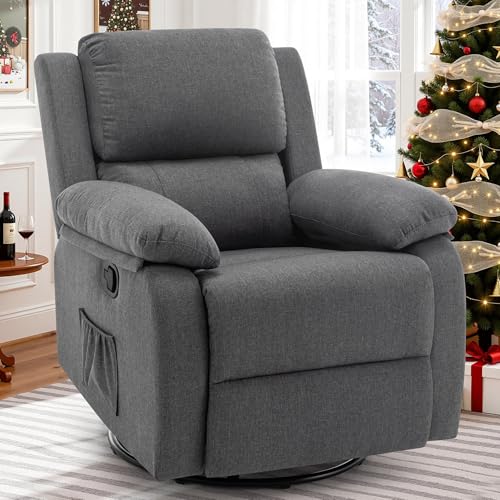
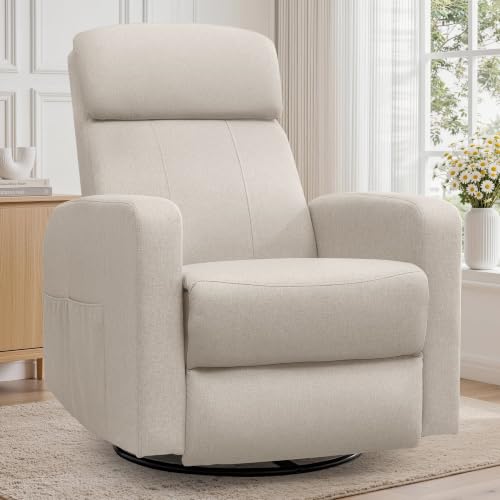


As an Amazon Associate we earn from qualifying purchases at no extra cost to you. Ratings are shown as listed on Amazon.
Quick picks by room and routine
- Best for a small nursery: a compact swivel glider, ideally no wider than 30 inches and no deeper than 34 inches.
- Best for long evening sitting: a wider upholstered glider with a 21–23-inch seat, high-density foam, and a supportive back angle.
- Best for a shared living room: a tailored glider with a stationary-looking frame, performance fabric, and a quieter ball-bearing or enclosed glide mechanism.
- Best for a lower budget: a manual glider with a fixed ottoman or separate footrest; it usually offers better value than a powered recliner.
- Best for maximum flexibility: a power reclining swivel glider, provided the room has an outlet nearby and enough clearance behind the chair.
What separates the best glider chairs from ordinary nursery seating?
A nursery chair can look comfortable in a product photograph yet become tiring after 30 minutes. The important specifications are the glide path, seat foam, fabric construction, and the chair’s true footprint with the footrest or recline mechanism extended.
Glide mechanism
Ball-bearing gliders generally provide a controlled, repeatable front-to-back motion. Enclosed bearings or well-shielded mechanisms are preferable in a nursery because they reduce access to pinch points and are less exposed to dust. A swivel glider adds rotation, which is useful when reaching for a side table or turning toward a crib, but it also increases the chair’s effective clearance requirement.
Test the movement by pushing the seat rather than the arms. A good chair should start without a sudden jerk, stop without a loud knock, and avoid drifting sideways. A rocking motion that feels loose at the frame is a warning sign; tightening visible hardware may help, but a persistently uneven glide can indicate poor alignment or wear.
Cushion density and shape
For long sitting, medium-firm high-resilience foam is usually more practical than very soft fill. As a buying target, look for seat foam around 2.0–2.5 pounds per cubic foot, or a manufacturer’s equivalent description of high-density, high-resilience foam. Lower-density foam may feel plush initially but can develop a compressed sitting area sooner.
A seat depth of roughly 20–22 inches accommodates many adults without forcing the knees too high. Very deep seats can be comfortable for taller users but may require a lumbar cushion. A slightly rounded front edge helps avoid pressure behind the knees, while a back cushion with moderate contouring supports upright feeding, reading, or bottle preparation without forcing one posture.
Fabric durability
Choose upholstery by how it will be used, not just by color. Tightly woven polyester, performance chenille, and solution-dyed acrylic commonly handle everyday spills better than delicate linen-look fabrics. A removable, machine-washable cover is useful, but check whether the inner cushion can be removed without dismantling the mechanism.
For a busy household, a practical target is at least 30,000 double rubs on a Wyzenbeek abrasion test, although test numbers do not predict stain resistance by themselves. Look for a fabric-care code, colorfastness information, and a warranty that covers the frame and mechanism separately from upholstery.
Specification comparison: which format fits your room?
| Glider format | Typical width × depth | Seat width | Recommended clearance | Best use | Typical market range |
|---|---|---|---|---|---|
| Compact manual swivel glider | 28–31 × 32–35 in | 18–20 in | 18 in each side; 12 in behind | Small nursery or apartment | $250–$550 |
| Standard upholstered glider | 31–35 × 34–39 in | 20–22 in | 20 in each side; 12–18 in behind | Frequent daily sitting | $450–$900 |
| Glider with separate ottoman | 31–36 × 34–40 in | 20–23 in | 30–42 in in front | Leg support without a bulky recliner | $400–$850 |
| Power reclining swivel glider | 32–38 × 37–42 in | 20–23 in | 24 in behind; 28–36 in in front | Living room comfort and frequent use | $800–$1,700 |
These are useful planning ranges rather than universal specifications. Always measure the assembled chair, not only the shipping carton, and confirm whether the listed depth is measured upright or fully reclined.
Decision matrix for the most common buying situations
| Your situation | Priority | Best choice | Trade-off |
|---|---|---|---|
| Less than 36 inches of usable wall width | Narrow frame and small turning radius | Compact manual swivel glider | Narrower seat and less arm padding |
| Several hours of sitting each day | Foam density, lumbar support, stable arms | Standard glider with 20–22-inch seat | Uses more floor space |
| Shared living room | Appearance, quiet operation, stain resistance | Tailored performance-fabric swivel glider | Often costs more than nursery styling |
| Occasional reading or soothing | Value and simple maintenance | Manual glider with removable cushion | Fewer positions and no powered adjustment |
| Users of very different heights | Seat depth and adjustable recline | Power recliner or chair with separate ottoman | Greater weight, cost, and clearance needs |
How to calculate whether a chair really fits
Measure the open floor rectangle before shopping. For example, a 34-inch-wide glider with 18 inches of side clearance needs at least 70 inches of wall-to-wall width if both sides must remain accessible:
34 inches + 18 inches + 18 inches = 70 inches.
If the chair reclines forward or uses a separate ottoman, add the open front area. A chair requiring 38 inches of body depth plus 30 inches for leg extension needs about 68 inches from the back wall to the nearest obstruction. Door swings, crib drawers, radiator covers, and changing-table access count as obstructions.
Durability and ownership realities
The first parts to show wear are usually the seat’s front edge, the arm caps, and the fabric beneath the user’s elbows. Repeatedly pushing off with one arm can also stress the frame unevenly. Use both arms when standing, avoid dragging the chair while occupied, and keep the glide path free of toys, cords, and rugs with thick edges.
- Weekly: vacuum seams, under the seat, and around the mechanism using a soft brush attachment.
- After spills: blot rather than rub, then follow the upholstery care code. Rubbing can spread the mark and roughen the weave.
- Every few months: inspect bolts, washers, feet, and any exposed glide hardware. Tighten only according to the manufacturer’s instructions.
- For powered models: route the cable away from walkways and do not use an extension setup that the manufacturer prohibits.
- For removable covers: measure and photograph the cushion orientation before washing; a cover that shrinks even slightly may no longer fit smoothly.
Do not place a loose blanket over a moving mechanism, allow children to play underneath the chair, or assume that a “stain-resistant” finish makes upholstery stain-proof. Mechanism and frame warranties are often longer than fabric warranties, so read both before buying.
Final buying recommendation
For most nurseries, choose a compact or standard swivel glider with a 20–22-inch seat, medium-firm high-density foam, tightly woven upholstery, and at least 12 inches of rear clearance. Choose a power reclining glider only when multiple adults will use it for long periods and the room can accommodate its extended footprint. The best glider chairs are not necessarily the softest or largest; they are the ones whose glide remains quiet, whose cushion stays supportive, and whose dimensions work every day without blocking the rest of the room.