Key takeaways
- Compare OBD1 and OBD2 B series engine harnesses for Honda Civic and Acura Integra B16 and B18 swaps, with fitment checks, connector details and tucked routing advice.
The real decision with a B series engine harness is not whether the loom looks tidy in a product photo. It is whether every plug on that loom matches the generation of electronics already living in your car. An OBD1 distributor, OBD1 injectors and a 1992 to 1995 ECU need one connector family, while an OBD2 engine dropped into a later shell needs another, and mixing the two turns a weekend swap into weeks of tracing dead circuits, chasing injection fault codes and wondering why a freshly built engine idles roughly or misfires only when warm.
This guide is for Civic and Integra owners replacing a heat-damaged or cut-up factory loom, for swappers moving a B16, B18 or related engine into a different shell, and for builders who want a tucked layout without paying for a full custom motorsport loom. Every product below was chosen from the name and specifications stated on its Amazon product page, including connector type, stated engine fitment and harness reference numbers, so you can cross-check each claim against your own car before ordering anything.
Quick Picks
As an Amazon Associate we earn from qualifying purchases
| Product | Best for | Key spec from title |
|---|---|---|
| MISIOEK Engine Wiring Harness Compatible with Honda Civic Integra B16 B18 D16 OBD1 Budget D & B-Series Tucked CNCH-OBD1-1 | OBD1 cars from 1992 to 1995 running a tucked B16 or B18 swap | OBD1 connector type with 92-95 ECU plugs |
| A ABSOPRO OBD2 Budget Engine Wiring Harness CNCH-OBD2-1 for Acura Integra B16 B18 D16 D/B Series | OBD2 B-series engines in Civic or Integra shells needing a full replacement loom | OBD2 connector type, CNCH-OBD2-1 reference |
How to Choose
Choosing between the looms in this guide comes down to four checks you can make on your own car in one afternoon. None of them requires special equipment beyond a torch, a phone camera and the ECU code stamped on your computer case. Work through them in order, because each answer narrows the field: generation first, then distributor and injector plugs, then routing, then the condition of the wiring itself. Skipping straight to ordering because a listing mentions your engine code is how most wrong harnesses get bought.
Match the OBD Generation to Your ECU First
Start at the ECU, not at the engine. A harness built for OBD1 electronics carries OBD1 distributor, injector and alternator plugs and ends in plugs shaped for 1992 to 1995 ECUs, exactly as the MISIOEK listing describes its CNCH-OBD1-1. An OBD2 loom such as the ABSOPRO CNCH-OBD2-1 uses a different connector family even when both looms name the same B16 and B18 engines. If your shell runs an OBD1 computer but your engine came from an OBD2 car, you still need the harness that speaks to the computer, plus separate planning for any sensor differences on the engine itself.
Check Distributor, Injector and Alternator Plugs
Three plug groups cause most failed first starts. Photograph your distributor plug and count its pins and shape, then do the same for one injector plug and the alternator plug, and compare those photos with the connector descriptions on the listing before ordering. The MISIOEK OBD1 harness explicitly bundles OBD1 distributor, injector and alternator connections, which tells you those three junctions were designed as one matched set. If your engine keeps an OBD2 distributor while the rest of the car is OBD1, neither off-the-shelf loom solves that single mismatch on its own, so plan for that gap instead of discovering it with the engine already hanging in the bay.
Decide How Tucked You Actually Want the Bay
A tucked harness routes the loom so the bay looks clean, with branches arriving at sensors from less visible paths instead of draping across the valve cover. Both looms here use the word tucked in their fitment descriptions, but a tucked layout changes your working life too: plugs sit in tighter spots, future sensor swaps take longer, and a branch that is slightly short has nowhere forgiving to go. Measure your intended route loosely with string before committing. If this car is a daily driver you service in a driveway, a near-stock route you can reach easily may serve you better than the cleanest possible bay.
Judge the Wire and Sheathing, Not the Photos
Listings state materials plainly if you read past the headline claims. The ABSOPRO loom states pure copper cable and a stated length of 175cm, while the MISIOEK listing names acrylonitrile butadiene styrene as its material and a weight of 1.09 kilograms. Copper conductors matter because they carry current and resist work hardening at terminals better than cheaper substitutes, and a stated overall length lets you sanity-check the loom against your chassis size. What no listing photo can show you is crimp quality inside each plug, so budget time on arrival to inspect every terminal before the harness goes anywhere near the car.
The 2 Best Options
Only two looms earned a place here, because only two combined a verifiable Amazon listing, a stated B-series fitment and a clearly declared OBD generation. That split is actually helpful: one serves the earlier OBD1 cars and one serves OBD2 engines, so your ECU choice, rather than marketing language, decides which section below deserves your attention. Read the watch-out line under each one carefully, because each loom fails in a different way when it is matched to the wrong car.
MISIOEK Engine Wiring Harness Compatible with Honda Civic Integra B16 B18 D16 OBD1 Budget D & B-Series Tucked CNCH-OBD1-1
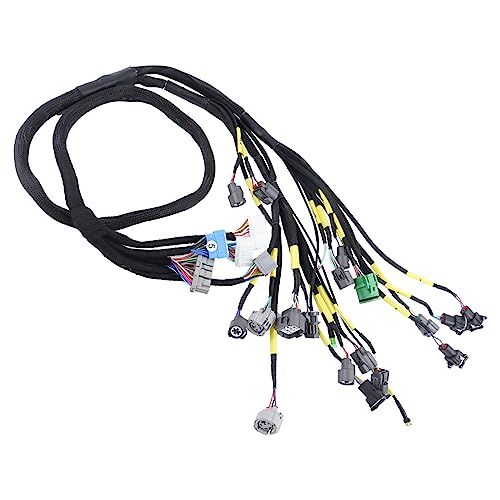
This is the loom aimed squarely at the classic early-nineties build: a Civic or Integra running OBD1 electronics with a B16 or B18 up front. Its listing ties the harness to 1992 to 1995 ECU plugs and groups the distributor, injector and alternator connections in the OBD1 pattern, which suits owners converting a tired factory loom on an OBD1 swap or refreshing a tucked bay that was wired years ago with whatever was on hand. Because the same listing also names the D16, D-series owners working within the same OBD1 generation can consider it for their own tucked projects as well.
Specs
- Brand: MISIOEK
- Connector type: OBD1
- Fitment stated on listing: Honda Civic and Acura Integra B16, B18 and D16 OBD1 engines
- Reference: CNCH-OBD1-1
- ECU plugs: 92-95 ECU plugs stated in listing
- Connections stated in listing: OBD1 distributor, injector and alternator plugs
- Material: Acrylonitrile Butadiene Styrene
- Item weight: 1.09 kilograms
- Manufacturer part number: DMOBD1
Best for: OBD1 Civic and Integra owners with a B16 or B18 who want a tucked replacement loom matched to 1992 to 1995 ECU plugs.
Watch out for: The listing gives no precise year-by-year connector chart, so compare every plug against your own distributor and injectors before the return window closes.
ASIN: B0C5BZVV91
A ABSOPRO OBD2 Budget Engine Wiring Harness CNCH-OBD2-1 for Acura Integra B16 B18 D16 D/B Series
Where the MISIOEK serves the earlier cars, this ABSOPRO loom covers the OBD2 side of the B-series world, naming the Civic and Integra with B16, B18 and D16 engines under an OBD2 connector type. Its listing frames the job in practical terms, pointing at injection fault codes, rough idling and intermittent misfires as the symptoms a tired loom can produce, which matches why most owners shop for one: the engine hardware is sound, yet electrical gremlins keep moving around. A stated pure copper cable construction and a published overall length make its basic build easier to judge from the page than most budget looms allow.
Specs
- Brand: A ABSOPRO
- Connector type: OBD2
- OE number: CNCH-OBD2-1, CNCHOBD21
- Fitment stated on listing: Honda Civic and Acura Integra B16, B18 and D16, D/B Series
- Cable material stated on listing: pure copper cable
- Length: 175cm
- Colour: Black
- Material stated in listing details: Metal, Plastic
- Package contents: 1 pc Engine Wiring Harness
Best for: Owners of OBD2 B-series Civic and Integra builds replacing a damaged loom to cure injection faults, rough idle or intermittent misfires.
Watch out for: The listing describes the product as a non-OEM accessory, so verify connector fitment against your exact model and year before ordering, as the seller itself instructs.
ASIN: B0CPJ2XF3Y
Which One Fits Your Situation
Your situation, rather than either brand name, should make this call. The four scenarios below cover the ways B-series harnesses usually get bought: reviving an early OBD1 car, keeping an OBD2 engine honest, chasing electrical faults that imitate mechanical ones, and dressing up a bay without losing service access. Find the one that sounds like your garage, then confirm the plug checks from the How to Choose section before spending anything.
Your Car Is a 1992 to 1995 OBD1 Build
Choose the MISIOEK CNCH-OBD1-1. Its entire stated design centres on this generation: OBD1 distributor, injector and alternator plugs feeding 1992 to 1995 ECU plugs, with Civic and Integra B16 and B18 fitment named outright. An OBD2 loom would leave you adapting connectors at both ends of the car, which defeats the point of buying a complete harness in the first place.
Your Engine and ECU Are Both OBD2
Choose the ABSOPRO CNCH-OBD2-1. It is the only loom here whose connector type is declared OBD2, and its listing names the same B16 and B18 engines in Civic and Integra applications. Keeping one connector family from distributor to ECU removes the layered adapters that so often become the weak points people end up diagnosing a year later.
Fault Codes Keep Moving Around a Healthy Engine
Start with the ABSOPRO if your car is OBD2, because its listing speaks directly to injection fault codes, rough running and intermittent misfires traced to the loom. On an OBD1 car, the MISIOEK plays the same replacement role for its generation. Either way, inspect the old harness for heat damage and chafing first, so you know the loom really is the culprit before replacing it.
You Want a Cleaner Bay Without a Custom Loom Bill
Both listings describe tucked applications, so let your OBD generation pick the brand and let the tucked routing satisfy the tidy-bay goal. The MISIOEK states a tucked design for B and D series OBD1 swaps, while the ABSOPRO covers the OBD2 side. Route patiently, leave service loops where sensors need future access, and resist pulling branches drum-tight just for a photograph.
Common Mistakes
- Ordering by engine code alone, then discovering the harness generation does not match the ECU actually running the car.
- Assuming OBD1 and OBD2 distributor or injector plugs interchange because the engines share the B16 and B18 names.
- Fitting a tucked loom without test-routing it first, leaving one branch too short to reach its sensor comfortably.
- Throwing away the old harness on removal day, losing your only reference for plug positions and branch lengths.
- Blaming the engine for misfires and rough idle before checking whether a heat-aged loom is breaking down electrically.
Frequently Asked Questions
Can an OBD2 harness run an OBD1 ECU if the engine is the same?
No. The connector families differ at the distributor, injectors, alternator and ECU ends, so the same B18 badge does not make the looms interchangeable. Match the harness generation to the ECU in the car, then deal with any engine-side sensor differences separately, rather than expecting one loom to bridge both generations cleanly.
Does a tucked harness change how the engine runs?
Routing alone does not change engine behaviour. A tucked loom simply reaches the same sensors by a cleaner path. What changes is access: plugs can sit in tighter places, so future work takes longer. Choose the routing for the bay you want to live with, and pick the OBD generation for the electronics you actually run.
Which symptoms suggest the harness, not the engine, is failing?
Faults that wander are the classic clue: injection codes that appear and vanish, a misfire that moves between cylinders, or rough idling that changes when the loom is touched or warmed. The ABSOPRO listing itself names injection fault codes, idling trouble and intermittent misfires as loom-related problems, which mirrors how these failures usually present.
What should I check the day a new harness arrives?
Lay it beside the old loom and compare every plug shape, branch length and connector count before fitting anything. Confirm the distributor, injector, alternator and ECU plugs all match your car, and inspect terminals for loose crimps. Catching a mismatch on the bench costs minutes, while catching it after installation costs an entire weekend.
More from Amazon
Programs that pair well with the guide above. Offers and eligibility are set by Amazon and may change.
Set up recurring deliveries of everyday items on eligible products. Terms and savings are set by Amazon.
Explore Subscribe & SaveFree shipping on eligible items, Prime Video and more. Eligible new members can start with a free trial.
Start a Prime free trialAudiobooks and podcasts to listen to on the go. Eligible new members can start with a free trial.
Try Audible freeRead from a large library of eBooks and audiobooks on any device. Check Amazon for current plans.
Explore Kindle UnlimitedAs an Amazon Associate we earn from qualifying purchases.