The best dog food is the one that is complete and balanced for your dog’s life stage, fits their size and health needs, and that they will actually eat. For most healthy adult dogs, a Purina Pro Plan or Hill’s Science Diet adult formula is a dependable starting point, while the Farmer’s Dog is the strongest fresh option if the budget allows. This guide compares seven current options by who they suit, what the label tells you, and what each costs to feed in practice. General information only: your veterinarian should guide any food choice for a dog with a medical condition.
Our top picks


As an Amazon Associate we earn from qualifying purchases at no extra cost to you.
Quick Comparison of the Best Dog Foods for 2026
| Pick | Best for | Format | Key label point | Price range |
|---|---|---|---|---|
| Purina Pro Plan Adult (Chicken & Rice) | Best overall for healthy adults | Dry kibble | Real chicken first; AAFCO adult maintenance statement | Mid |
| Hill’s Science Diet Adult | Best vet-recommended staple | Dry kibble | Fixed-formula, research-backed nutrient levels | Mid |
| The Farmer’s Dog | Best fresh food | Fresh, refrigerated | Human-grade ingredients, portioned to your dog | Premium |
| Blue Buffalo Life Protection | Best value natural kibble | Dry kibble | Deboned meat first, no poultry by-product meal | Mid |
| Royal Canin Size Health Nutrition | Best for breed size | Dry kibble | Kibble shape and calories tuned to size class | Mid to upper |
| Wellness CORE | Best high-protein grain-free-style choice | Dry kibble | Protein-forward recipes; discuss grain-free with your vet | Upper |
| Iams Proactive Health | Best budget pick | Dry kibble | Complete adult nutrition at lower cost per cup | Budget |
Best Overall: Purina Pro Plan Adult
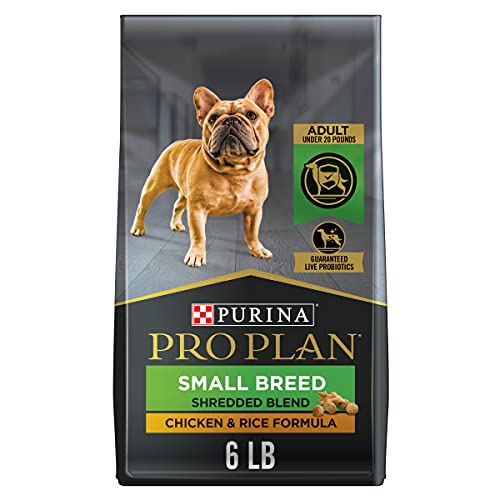
Purina Pro Plan is the broadest line in this list, with formulas for sensitive skin and stomach, weight management, sport and large breeds. The chicken and rice adult recipe lists chicken as the first ingredient and carries a statement that it is complete and balanced for adult maintenance. Purina employs veterinary nutritionists and runs feeding programs, which is part of why many breeders and trainers keep using it.
The trade-off is that the ingredient list includes by-product meal and corn in some recipes, which some owners dislike even though they are not harmful for most dogs. Choose it if you want predictable results and a food you can find in almost any store.
Best Vet-Recommended Staple: Hill’s Science Diet Adult
Hill’s uses a fixed formula approach, meaning each recipe is built to hit the same nutrient targets every batch. The adult line includes small bite, large breed and sensitive stomach versions, and the company publishes its feeding research. It suits owners who want a food many veterinarians know well and are comfortable recommending.
The downside is a plainer label than boutique brands and a cost per cup similar to Purina. It is a safe choice if you are switching a dog who has a mild sensitive stomach, and it is also available in prescription lines through your vet for medical needs.
Best Fresh Food: The Farmer’s Dog
This subscription service ships fresh, gently cooked recipes sized to your dog’s weight, age and activity. Per the company’s materials, recipes are formulated to meet AAFCO standards for complete and balanced nutrition, and ingredients are human-grade. Dogs that are picky or reluctant eaters often respond well to the texture and smell.
The cost is the main drawback. Feeding a large dog fresh food can cost several times more than kibble per day, and you need freezer and fridge space. A practical compromise some owners use is fresh food as a topper over a smaller portion of kibble.
Best Value Natural Kibble: Blue Buffalo Life Protection
Blue Buffalo Life Protection Formula leads with deboned chicken, includes brown rice and oatmeal, and adds the brand’s LifeSource Bits, a blend of vitamins and antioxidants. It avoids chicken or poultry by-product meal, corn, wheat and soy, which is the label profile many shoppers look for.
It costs more than basic grocery brands but typically less than premium boutique foods. The kibble is relatively dense, so check the feeding chart rather than guessing portions, since overfeeding is the most common way dogs gain weight on any food.
Best for Breed Size: Royal Canin Size Health Nutrition
Royal Canin separates formulas by size class: mini, medium, large and giant. Small-breed kibble is smaller and more energy dense to suit faster metabolisms, while large-breed formulas manage calories and mineral levels to support controlled growth and joints. The company also offers breed-specific recipes for Labradors, French Bulldogs, German Shepherds and others.
The trade-off is price and a corn- and by-product-containing ingredient list that does not read like a natural food. It is a good pick if size is your dog’s main nutritional variable, especially for giant breed puppies where growth rate matters.
Best High-Protein Choice: Wellness CORE
Wellness CORE is built around higher protein and meat-first recipes, in grain-inclusive and grain-free versions. Dogs that are very active, or owners who prefer a protein-forward ingredient list, often choose it. Since the FDA began investigating a possible link between certain grain-free diets and heart disease in dogs, many veterinarians suggest discussing grain-free feeding with them before starting it.
Because the evidence is still developing, a grain-inclusive CORE recipe is the lower-stress choice for most households. It runs at the upper end of kibble pricing.
Best Budget Pick: Iams Proactive Health
Iams Proactive Health gives complete adult nutrition at one of the lowest costs per cup among recognized brands. It includes chicken as the first ingredient in its adult recipes, plus beet pulp and prebiotics for digestion. It is available in small and toy breed, large breed and weight control versions.
The compromise is a more basic ingredient list and less recipe variety. Still, a complete and balanced budget food fed in the right amount is better than a premium food a household cannot afford to keep buying consistently.
How to Read a Dog Food Label
Start with the nutritional adequacy statement. It should say the food is complete and balanced for your dog’s life stage, based on AAFCO nutrient profiles or feeding trials. “All life stages” foods must meet puppy requirements, so they are higher in calories and may not suit an overweight adult.
Next, check protein and fat. Adult maintenance minimums are 18 percent crude protein and 5.5 percent crude fat on a dry matter basis. Many quality foods run well above that, but more is not automatically better, especially for dogs prone to pancreatitis or weight gain.
Finally, look at the first five ingredients and the manufacturer’s contact information. Reputable brands employ veterinary nutritionists and can tell you where food is made.
Decision Matrix: Match the Food to Your Dog
| Your dog | What to prioritize | Good starting point |
|---|---|---|
| Puppy, large breed | Controlled calcium and calories | Large breed puppy formula from Royal Canin or Purina Pro Plan |
| Healthy adult, 20-50 lb | Complete adult maintenance | Pro Plan Adult, Hill’s Adult |
| Small or toy breed | Small kibble, higher calorie density | Royal Canin Mini, Hill’s Small Bites |
| Picky eater | Palatability, texture | Fresh food or fresh topper |
| Overweight | Lower calories, measured portions | Weight management formula; ask your vet for a target |
| Senior, 7+ years | Joint support, lower calories | Senior or mature adult formula |
Worked Example: Cost Per Day
Compare foods by cost per day, not bag price. Cost per day equals the bag price divided by the number of days it lasts. A 40 lb bag holds roughly 160 cups. A 50 lb dog eating 3 cups per day empties it in about 53 days. A premium bag that costs half again as much but is denser, so the same dog needs only 2.5 cups, lasts about 64 days. Divide each bag price by those day counts and the premium food is only about 25 percent more per day, not 50 percent. That gap is why feeding guides matter when comparing brands, and why a calorie-dense food can be better value than its sticker price suggests.
Mistakes to Avoid When Choosing Dog Food
- Switching foods overnight. Transition over 7 to 10 days, mixing in more of the new food each day to limit stomach upset.
- Free-feeding without measuring. Use a measuring cup and adjust by body condition, not by the bowl looking empty.
- Chasing trends. Grain-free, raw and exotic proteins are not automatically better; talk to your vet first.
- Ignoring treats. Treats should stay under about 10 percent of daily calories.
Frequently Asked Questions
What is the healthiest dog food?
The healthiest food is one that is complete and balanced for your dog’s life stage, made by a company with veterinary nutritionists, and suited to their health needs. There is no single best brand for every dog, so match the formula to age, size and conditions.
Is wet or dry dog food better?
Both can be complete and balanced. Dry food is cheaper and convenient, while wet food adds moisture and can help picky eaters. Many owners mix a spoonful of wet food into kibble for flavor.
How much should I feed my dog?
Start with the feeding chart on the bag, which gives amounts by body weight, then adjust. You should be able to feel your dog’s ribs without seeing them. Your vet can give a precise target for your dog.
Is grain-free dog food safe?
Most dogs do not need grain-free food unless a vet diagnoses a grain allergy. The FDA has investigated a possible link between some grain-free diets and a heart condition called DCM, so discuss it with your veterinarian before choosing one.
How often should I change my dog’s food?
Healthy dogs do not need frequent changes. Switch when life stage changes, such as puppy to adult, or when your vet recommends it, and always transition gradually over about a week.
Which Dog Food Should You Buy?
Choose Purina Pro Plan or Hill’s Science Diet if you want a proven, easy-to-find food for a healthy adult. Pick The Farmer’s Dog for a picky eater and a flexible budget, Royal Canin if size drives your dog’s needs, Blue Buffalo for a natural-style label at mid pricing, and Iams when cost per day matters most. Whatever you choose, introduce it slowly and recheck your dog’s weight after a month.