Key takeaways
- Skipping the subscription math. The monthly fee is the biggest cost.
- Assuming a tag works everywhere. Coverage and Bluetooth networks vary.
- Ignoring fit. A loose collar can slip off, tracker and all.
- Not charging on schedule. A dead tracker locates nothing.
The best GPS dog tracker for most households in 2026 is the Tractive Dog tracker or the Fi Series 3, both cellular collar trackers that need a monthly or prepaid subscription. Choose Tractive for the broadest coverage and lowest running cost, Fi for the longest battery and a sturdier collar-style design, and Garmin Alpha for hunting or off-grid use where there is no cell signal. This guide compares seven current options by how they track, battery life, subscription needs and size limits. Specs and plans change often, so confirm current details on the maker’s site before you buy.
Our top picks



As an Amazon Associate we earn from qualifying purchases at no extra cost to you.
Quick Comparison of the Best GPS Dog Trackers for 2026
| Pick | Best for | Tracking tech | Subscription | Battery (maker claim) | Price range |
|---|---|---|---|---|---|
| Tractive GPS Dog | Best overall | Cellular and GPS | Yes, plans by term | Days; varies with live tracking | Mid |
| Fi Series 3 or 3+ | Best battery and collar design | LTE-M and GPS | Yes | Weeks to months | Upper |
| Garmin Alpha | Best for hunting and off-grid | Radio and GPS to handheld | No for basic radio tracking | Hours to days | Premium |
| Halo Collar | Best virtual fence plus GPS | Cellular, GPS, fence | Yes | About a day | Premium |
| SpotOn GPS Fence | Best for rural property fencing | GPS boundary | Varies | Varies | Premium |
| Apple AirTag in a holder | Best for finding nearby lost dogs | Bluetooth and Find My network | No | About a year, replaceable battery | Budget |
| Pawfit 3 | Best budget GPS | Cellular and GPS | Yes | Days | Budget |
Best Overall: Tractive GPS Dog Tracker
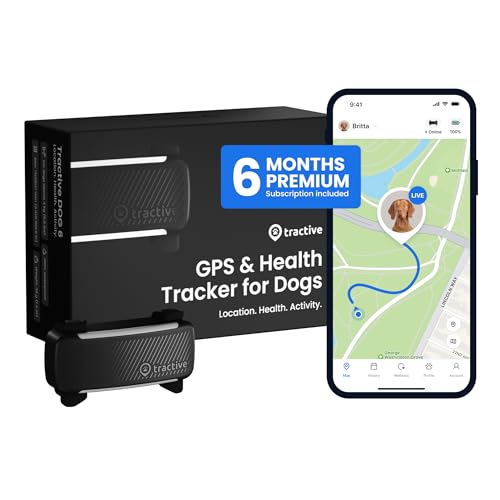
Tractive is a clip-on tracker that attaches to a collar and reports location through an app, with a live tracking mode that refreshes every few seconds, per the maker’s description. It offers virtual boundary alerts, a location history and activity monitoring, and covers many countries. Annual or multi-year plans reduce the monthly cost.
Battery life depends heavily on how often you use live tracking, and heavy use means charging every few days. It is a good choice for pet owners who travel and want flexible coverage.
Best Battery Life: Fi Series 3 and 3+
Fi builds the tracker into a collar, which is more secure than a clip-on and suits larger dogs. The maker advertises battery life measured in weeks to a few months, with real-world results depending on settings. It also uses LTE-M and reports escape alerts, and offers activity and sleep tracking.
It costs more upfront and over time than some rivals, and you need a subscription for location features. The collar is relatively bulky for very small dogs, so check the weight guidance.
Best for Hunting and Off-Grid: Garmin Alpha
The Alpha system pairs a handheld device with a radio-linked collar, so it works without cell signal and without a monthly fee for basic tracking. It can show dog position, direction and distance on a map and supports multiple dogs. It is built for hunters and trial work.
It is very expensive and more complex than most pet owners need. For a pet in a neighborhood, a cellular tracker is simpler.
Best Virtual Fence Plus GPS: Halo Collar
The Halo Collar combines GPS tracking with virtual fences you draw in the app and uses audio and vibration cues to guide a dog back. It suits owners without a physical fence or who want to define boundaries on trips. The maker also offers training support.
It is among the costliest options, battery life is about a day of active use, and a collar-based fence is not ideal for every temperament. Introduce it with training and consult a trainer.
Best Rural Property Fencing: SpotOn GPS Fence
SpotOn focuses on GPS boundaries for acreage and does not rely on a buried wire. You set a perimeter on a map and the collar gives warnings. It suits rural owners who want containment without installing a wire fence.
It’s expensive and the plan structure has changed over time, so confirm current fees. It is less relevant if you just want to find a lost dog.
Best Simple Option: Apple AirTag with a Collar Holder
An AirTag is not a GPS tracker. It uses Bluetooth and the Find My network of nearby Apple devices, so it works best in populated areas. It has no subscription and a replaceable coin cell battery. It is cheap insurance if your dog usually stays near people.
In rural areas with few phones, it may not update at all. Use a dedicated holder; do not rely on it as your only safety measure.
Best Budget Tracker: Pawfit 3
Pawfit offers cellular GPS tracking at a lower hardware price and includes a basic app with location history and safe zone alerts. It’s a way to try GPS tracking without a big commitment.
Battery life, accuracy and app polish typically trail premium models. Check subscription cost and coverage in your area.
How to Choose a GPS Dog Tracker
Cellular, radio or Bluetooth
Cellular trackers (Tractive, Fi, Halo) work wherever there is mobile coverage and need a subscription. Radio trackers (Garmin) work off-grid but need a handheld. Bluetooth tags (AirTag) rely on other people’s phones.
Size and weight
Most trackers add 30 to 60 grams or more. Many makers suggest a minimum dog weight, often around 10 lb or higher, so check before putting one on a small dog.
Total cost
Add hardware and subscription over three years. A tracker with a lower price and a higher monthly fee can cost more than a premium unit with a discounted plan.
Worked Example: Three-Year Cost
Use this formula: hardware price plus (monthly plan fee times 36). If a tracker’s hardware is 50 and the plan is 6 per month, three years costs 50 + 216 = 266 in whatever currency units you use. A collar tracker with hardware at 190 and a plan at 10 per month costs 190 + 360 = 550. A Bluetooth tag with a one-time cost of 30 and no plan costs 30. The pattern matters more than the numbers: the monthly fee usually outweighs the hardware price within the first year, so compare plan terms and prepaid discounts before you compare devices.
| Tracker type | Hardware cost | Monthly fee | Three-year pattern |
|---|---|---|---|
| Budget cellular | Low | Mid | Plan fee dominates |
| Mid cellular with prepaid plan | Low to mid | Low with long term | Often cheapest cellular option |
| Collar cellular | Upper | Mid to upper | Highest cellular total |
| Radio system | Premium | None for basic tracking | High upfront, low ongoing |
| Bluetooth tag | Very low | None | Lowest total, least capable |
Mistakes to Avoid
- Skipping the subscription math. The monthly fee is the biggest cost.
- Assuming a tag works everywhere. Coverage and Bluetooth networks vary.
- Ignoring fit. A loose collar can slip off, tracker and all.
- Not charging on schedule. A dead tracker locates nothing.
Frequently Asked Questions
Do GPS dog trackers need a subscription?
Most cellular trackers do, because they use mobile networks. Radio systems like Garmin Alpha and Bluetooth tags like AirTag do not require a monthly plan for basic tracking.
How accurate are GPS dog trackers?
Typically within a few meters in open areas, but accuracy drops under heavy tree cover, in buildings and in canyons. Treat the pin as a starting point and search nearby.
Can I use an AirTag as a dog tracker?
You can attach one to a collar with a holder, but it relies on nearby Apple devices and is not true GPS. It works better in cities than remote areas.
What is the best GPS tracker for small dogs?
Choose the lightest clip-on tracker the maker rates for your dog’s weight. Check the minimum weight guidance carefully, because many collar-style models are too heavy for toy breeds.
How long does the battery last?
It varies from about a day to a few months depending on the model and how often you use live tracking. Makers’ numbers are best-case, so expect less with frequent updates.
Which GPS Dog Tracker Should You Buy?
Pick Tractive for flexible coverage and value, Fi if you want a long-lasting collar, Garmin Alpha for hunting, Halo for virtual fences, and an AirTag only as a light backup. Check current plan pricing and your dog’s weight before you decide.