Key takeaways
- Use small ice cubes or crushed ice unless the instructions specifically permit large cubes.
- Add liquid first, then softer ingredients, then ice. This helps the motor start without a dry load.
- Do not fill above the marked maximum line; thick mixtures need more circulation space.
- Use short pulse cycles rather than one long run. This reduces heat buildup and helps redistribute ingredients.
- For frozen fruit or cream-heavy drinks, thaw hard ingredients slightly and cut fruit into small pieces.
- Stop if the motor stalls, smells hot, or repeatedly shuts down. Overload protection is not a substitute for correct loading.
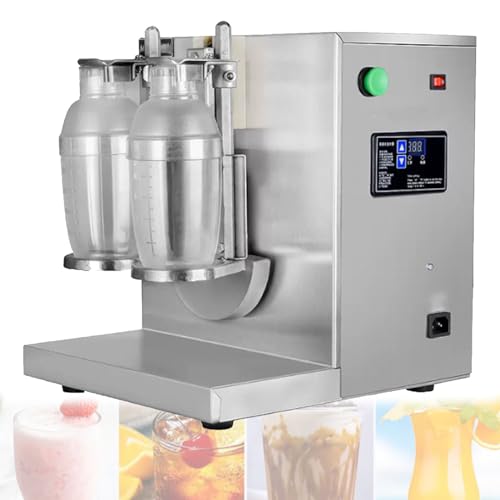
The best electric cocktail shakers are rechargeable, leak-resistant tumblers with a 500–700 ml capacity, a motor strong enough to move ice without stalling, and a removable mixing cup that can be cleaned separately.
They are most useful when you want consistent single-serve cocktails with less wrist effort, but they are not automatically better than a traditional Boston or cobbler shaker. Motorized models vary considerably in how well they aerate drinks, crush or circulate ice, resist leaks, and tolerate thick ingredients. The right choice depends on whether you mostly mix spirits and juice, make frozen drinks, or need several cocktails in a row.
Our top picks


As an Amazon Associate we earn from qualifying purchases at no extra cost to you. Ratings are shown as listed on Amazon.
Best electric cocktail shakers by situation
| Situation | Best choice | Why | Look for |
|---|---|---|---|
| Occasional home use | Compact rechargeable shaker | Lower cost and easier storage | 350–500 ml capacity, USB-C charging, dishwasher-safe cup |
| Frequent cocktails for one or two people | Mid-size motorized tumbler | Better runtime and fewer refills | 500–700 ml capacity, 10–20 minute rated runtime, silicone gasket |
| Thick drinks and crushed-ice cocktails | High-torque mixing model | Less likely to stall under resistance | At least 60 watts, reinforced blade assembly, pulse mode |
| Small kitchen or bar cart | Short tumbler-style shaker | Stores more easily than tall bottles | Under 23 cm tall and a separate charging base or USB-C port |
| Batch preparation | Large-capacity electric mixer | Handles two or more servings at once | 700–1,000 ml capacity, stable base, motor overload protection |
Key specifications compared
The numbers below describe practical buying targets rather than one particular model. A product can exceed one target while falling short in another, so capacity alone should not determine your choice.
| Feature | Entry-level | Best general-purpose range | Heavy-duty target |
|---|---|---|---|
| Usable liquid capacity | 300–450 ml | 500–700 ml | 700–1,000 ml |
| Motor power | 20–40 watts | 40–70 watts | 60–120 watts |
| Typical charge time | 2–4 hours | 1.5–3 hours | 2–4 hours |
| Practical cocktails per charge | 5–10 | 10–20 | 15–30 |
| Empty weight | 300–500 g | 450–750 g | 650–1,100 g |
| Useful materials | Plastic cup, stainless blade | Food-grade stainless steel or Tritan-style cup | Stainless cup, metal drive shaft, replaceable seal |
What separates the best electric cocktail shakers
Mixing power and drink texture
For a Martini, Daiquiri, Margarita, or Whiskey Sour, the motor mainly needs to circulate liquid and ice. A 20–40 watt unit can manage that if the ice is in small cubes and the cup is not overfilled. The drink may be chilled, but it will not necessarily have the same aeration as vigorous hand shaking.
Thick drinks are more demanding. Frozen fruit, cream, syrups, egg white, and large quantities of crushed ice increase resistance around the blade or impeller. Entry-level shakers may slow down, stop after a few seconds, or leave unmixed pockets. For these recipes, choose a pulse function, overload protection, and at least 60 watts. Do not interpret a high wattage figure as proof that a device can crush large ice cubes; many manufacturers rate the motor for liquid blending rather than ice crushing.
Capacity without overfilling
A stated capacity is rarely the same as a safe mixing capacity. Leave roughly 20% of the cup empty so liquid and ice can circulate. A 600 ml vessel therefore works best with about 480 ml of ingredients and ice. That is enough for two modest cocktails, but not two large frozen drinks.
Very small shakers are convenient but can produce uneven mixing when packed with ice. Large vessels are more versatile, although they require a stronger motor and take longer to chill. For most home users, 500–700 ml is the useful middle ground.
Leak resistance and lid design
Leak resistance depends on the seal, the locking mechanism, and how the motor couples to the container. A screw-on lid with a silicone gasket is preferable to a loose press-fit cap. Look for a lid that locks in at least two points and has a covered drinking or pouring opening.
Never assume that a motorized shaker is safe to operate upside down. Some designs have a motorized base attached to the cup, while others use a sealed blade module. If the manufacturer does not explicitly describe the unit as leakproof during operation, keep it upright. Check the gasket after every few uses; a twisted or flattened seal is a common cause of drips.
Battery life and charging
Battery claims are usually based on short cycles with thin liquids. Ice, thick syrups, and repeated starts reduce runtime. For occasional use, five to ten cocktails per charge is adequate. Frequent users should target at least ten to twenty cycles and choose a model that can operate while charging only if the manufacturer permits it.
USB-C is more convenient than a proprietary cable, particularly if the shaker is stored away from its charger. Avoid charging immediately after rinsing. Moisture in the charging port can cause corrosion or prevent charging, so dry the connector and leave the unit open until completely dry.
Handling icy and thick cocktails
- Use small ice cubes or crushed ice unless the instructions specifically permit large cubes.
- Add liquid first, then softer ingredients, then ice. This helps the motor start without a dry load.
- Do not fill above the marked maximum line; thick mixtures need more circulation space.
- Use short pulse cycles rather than one long run. This reduces heat buildup and helps redistribute ingredients.
- For frozen fruit or cream-heavy drinks, thaw hard ingredients slightly and cut fruit into small pieces.
- Stop if the motor stalls, smells hot, or repeatedly shuts down. Overload protection is not a substitute for correct loading.
An electric shaker is not a full replacement for a high-powered blender. If your priority is a completely smooth frozen cocktail made with hard ice, a countertop blender remains the more suitable appliance.
Cleaning, maintenance, and ownership costs
The easiest models separate into a washable cup, lid, and blade or impeller assembly, while the motor housing stays dry. A cup that is technically rinseable but cannot be opened around the blade can retain syrup, pulp, and dairy residue.
- Empty the shaker immediately after pouring.
- Rinse with warm water to prevent sugar and fruit pulp from drying around the seal.
- Add warm water and a small amount of dish soap, then run the shortest approved cycle.
- Remove the lid and gasket, wash hidden grooves with a soft brush, and rinse thoroughly.
- Dry every part separately before reassembly or charging.
Do not immerse the motor base, use abrasive scouring pads, or pour boiling water into a plastic cup. Dishwasher compatibility applies only to the parts identified in the instructions; heat can warp lids and shorten gasket life. The gasket and blade seal are usually the first consumable parts to wear, especially when exposed to citrus, alcohol, sugar, and frequent dishwasher cycles. A model with replacement seals is usually a better long-term purchase than one with a permanently sealed cup.
Worked value calculation
Suppose a rechargeable shaker costs $45 and is used twice a week. Over two years, that is approximately 208 uses, or about $0.22 per use before electricity and replacement parts. If the battery lasts only one year, the effective equipment cost doubles to roughly $0.43 per use. This is why battery replaceability, a durable gasket, and accessible cleaning often matter more than a small difference in motor power.
Bottom line
Choose a 500–700 ml rechargeable shaker with a 40–70 watt motor, USB-C charging, a locking lid, a silicone gasket, and removable washable parts for the best balance of convenience and performance. Select a stronger 60-watt-or-higher model if you regularly make thick or icy drinks, and choose a compact 300–450 ml unit only when storage and single servings matter more than versatility. Electric shakers make mixing easier, but careful loading and prompt cleaning are what keep them reliable.