Our Top Picks
 Outset Cast Iron Fish Grill and Serving Pan18.9 x 7.28 x 0.98 inches18.9 x 7.28 x 0.98 inches4.08 poundsCheck on Amazon
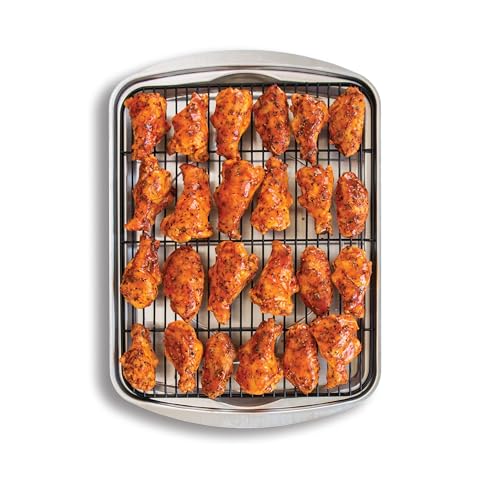 Nordic Ware Oven Crisp Baking Tray 2pc SetHalf Sheet Oven Crisp17.1 x 12.4 x 1.4 inches1.9 PoundsCheck on Amazon
 Kordisen Nonstick Grilling Pan with Lid for Stove11 Inch7.5 x 11 x 2 inches4.7 PoundsCheck on Amazon


The best pan for cooking salmon overall is a 12-inch, deep-sided nonstick skillet with a lid — the SENSARTE 12-Inch Ceramic Nonstick Deep Frying Pan, a 5-quart saute-style pan that fits two to four fillets or a small whole side, holds a pan sauce without overflowing, and releases delicate fish without tearing the crust. It suits anyone who cooks salmon at least once a week and wants one pan that also handles weeknight vegetables, rice and pasta. If you want restaurant-grade browning and don’t mind a short learning curve, the DELARLOCHEF 5-Ply Stainless Steel 12-inch pan is the premium pick, and if you want the least expensive pan that still produces crisp skin and grill lines, the Lodge Square Cast Iron Grill Pan at 10.5 inches is the budget pick. The rest of this guide explains the sizes, materials and surface choices behind those three recommendations, then matches twelve currently listed pans to the way you actually cook — how thick your fillets are, how many people you feed, whether you finish in the oven, and how much cleanup you are willing to do.
Top 3 Picks
Best overall: SENSARTE 12-Inch Ceramic Nonstick Deep Frying Pan with Lid. The combination of a 12-inch cooking surface, roughly 5-quart depth and a matching lid covers almost every salmon method — seared skin-side down, covered steam-finish, shallow poach, or oven transfer. The ceramic nonstick release means delicate fish slides out intact, and the depth keeps butter and oil from spitting across the stovetop. It is the safest single purchase if you are buying one pan and want it to work the first time.
Best budget: Lodge Square Cast Iron Grill Pan, 10.5 Inches. Cast iron gives you the two things salmon rewards most: stored heat that recovers instantly when a cold fillet hits the surface, and raised ridges that lift the fish out of its own rendering fat. It is PFAS-free by nature of being bare iron, it is nearly indestructible, and it costs less than most nonstick pans of the same footprint. The trade-off is weight and a seasoning routine.
Best premium: DELARLOCHEF 5-Ply Stainless Steel Pan, 12-Inch. Five bonded layers of stainless and aluminum spread heat evenly and let you build a genuine fond — the browned, stuck-on layer that becomes a pan sauce when you deglaze with wine, stock or citrus. It is the pan for cooks who want a hard sear, a crisp skin and a sauce made in the same vessel, and who accept that stainless is not nonstick until you learn the heat-and-fat routine.
Quick Comparison
| Product | Best for | Key specs | Price tier |
|---|---|---|---|
| Outset Cast Iron Fish Grill and Serving Pan | Whole side of salmon, grill marks | 18.9 x 7.28 x 0.98 in; cast iron; BBQ and oven safe; long oval fish shape | Mid-range |
| Nordic Ware Oven Crisp Baking Tray 2pc Set | Oven-finished crisp salmon | 2 pieces: tray plus rack; natural aluminum; air-fry, crisp, bake | Budget |
| SENSARTE Nonstick Grill Pan for Stove Tops | Budget stovetop grill marks | Square format; large cooking surface; pour spouts; nonstick | Budget |
| Kordisen Nonstick Grilling Pan with Lid | Splatter-free indoor grilling | 11 in square; granite-style nonstick; tempered glass lid; stovetop | Premium |
| SENSARTE Ceramic Nonstick Frying Pan with Lid | Deep searing plus sauce | 12 in; 5 QT capacity; ceramic nonstick; induction compatible; lid | Premium |
| DELARLOCHEF 5 Ply Stainless Steel Pan | Hard sear and pan sauce | 12 in; 5-ply clad construction; stainless interior; oven safe | Premium |
| YumOmNom Tamagoyaki Pan | Single fillets and small portions | Rectangle; Japanese omelet format; compact footprint | Mid-range |
| Greenloom Nonstick Frying Pan Set of 5 | Multi-portion breakfast and fish | 5 pans plus spatulas; assorted small diameters; nonstick | Mid-range |
| Lodge Square Cast Iron Grill Pan | High-heat searing with grill lines | 10.5 in square; bare cast iron; PFAS-free; ridged base | Budget |
| Moss & Stone 12″ Grill Pan | Family-size weeknight fillets | 12 in; nonstick; tempered glass lid; indoor use | Mid-range |
| SENSARTE 8″ Ceramic Nonstick Paella Pan | One-person fillets, portion control | 8 in; ceramic nonstick; taupe finish; shallow paella profile | Budget |
| GoodCook Ceramic Titanium-Infused 12″ Divided Skillet | Two-texture plating | 12 in; divided compartments; ceramic nonstick; light blue exterior | Premium |
How We Chose
Every pan here was evaluated on published specification and category behavior rather than hands-on use. The first filter was salmon-specific geometry: a fillet is a long, flat, low-mass object with a skin side that wants full contact and a flesh side that wants gentle handling, so a pan’s usable surface area, rim height and interior shape matter more than its marketing name. The second filter was thermal behavior by material class — how quickly each pan comes up to temperature, how much it drops when a cold fillet lands, and whether the surface tolerates the 400°F-plus stovetop heat that produces a crisp skin without scorching. The third filter was coating and care reality: whether the surface is bare iron, ceramic nonstick, granite-style nonstick or uncoated stainless, and what that means for release, utensil safety and long-term maintenance. Finally, we checked category fit and upgrade path — whether a pan is a first purchase, a specialist addition, or a step up for a cook who has already outgrown their starter pan — and whether it overlaps with something else on this list. Pans that duplicated another entry’s job without adding a distinct advantage were ranked lower, not removed, because the right answer depends on your kitchen, not on a single ranking.
1. Outset Cast Iron Fish Grill Pan – Best for a Whole Side of Salmon
As an Amazon Associate we earn from qualifying purchases at no extra cost to you.

The Outset Cast Iron Fish Grill and Serving Pan is shaped for exactly one job that no round skillet does well: cooking a whole side of salmon, a whole trout, or a long fillet that would otherwise need to be cut in half to fit. At 18.9 inches long, 7.28 inches wide and just under an inch deep, it is a long oval that matches the natural proportions of a fish rather than forcing the fish to match the pan. It suits households that buy a side of salmon from a fish counter or warehouse club and want to cook it in one piece, and it suits anyone who wants grill marks without owning a grill.
Key specs
- Dimensions: 18.9 x 7.28 x 0.98 inches — long oval footprint
- Material: cast iron, which stores heat and releases it steadily
- Heat sources: stovetop, oven and BBQ safe per the listing
- Surface: bare iron with raised grill ridges, so it is PFAS-free by construction
- Dual role: the listing positions it as both a cooking pan and a serving pan
- Best fillet size: a 2–3 lb side, or three to four individual portions side by side
The reason this shape matters is contact area. A whole side of salmon might run 14 to 18 inches long and 5 to 6 inches wide. In a 12-inch round skillet, that fish either has to be cut, curled, or allowed to drape up the curved side wall, which means the edges steam instead of sear. In this pan, the whole side lies flat from nose to tail, so every square inch of skin meets hot iron at the same time. That is the difference between skin that crisps uniformly and skin that is crackly in the middle and flabby at the ends.
The ridges do more than decorate. They lift the fish roughly a few millimeters above the pan floor, which keeps the skin out of the rendering fat that pools as the salmon cooks. Fat that stays under the fish will fry the skin, but fat that surrounds it will poach it. On a flat surface, a fillet sitting in a puddle of its own oil tends to go soft at the center. On ridges, the fat drains into the valleys and the skin stays in direct contact with hot metal.
Cast iron also solves the temperature-drop problem. A cold 1-inch-thick fillet straight from the refrigerator can knock 60 to 100°F off a thin pan’s surface in the first thirty seconds, which is when sticking happens. A heavy iron pan recovers that heat quickly, so the initial sear is not interrupted. The trade-off is the same one every cast iron owner knows: you preheat slowly, you use more fat than you would in a nonstick pan, and you cannot leave it wet in the sink.
Pros
- Fits a whole side of salmon in one piece, which no round skillet in this list can do
- Grill ridges drain rendering fat away from the skin for a crispier result
- Cast iron heat retention means less temperature drop when cold fish goes in
- Oven and BBQ safe, so you can sear on the stovetop and finish in the oven or on the grill
- Doubles as a serving piece, which saves a platter and a transfer step
- No nonstick coating to scratch or wear out
Cons
- Heavy and long, so storage is awkward in small kitchens and it may not fit a small sink
- Requires seasoning and careful drying to avoid rust
- Not ideal for sauces, rice or vegetables — the shape is specialized
- Bare iron reacts with acidic deglazing liquids if the seasoning is thin
- Ridges are harder to scrub clean than a flat surface
Compared with the Lodge Square Cast Iron Grill Pan, also on this list, the Outset wins on length and loses on versatility. Lodge’s 10.5-inch square gives you a compact, multi-purpose grill pan for steaks, chicken, vegetables and individual fillets, but a whole side of salmon will not fit. If you mostly cook two 6-ounce portions, Lodge is the better buy. If you regularly cook a whole side for a family or for meal prep, the Outset’s extra eight inches of length is the entire point.
2. Nordic Ware Oven Crisp Baking Tray Set – Best for Oven-Finished Crisp Salmon

The Nordic Ware Oven Crisp Baking Tray 2pc Set pairs a natural aluminum tray with a fitted rack, and that rack is the salmon-relevant part. Cooking salmon on a rack in a hot oven lets air circulate under the fillet, so the skin dries and crisps from both sides while the flesh stays moist. This set suits cooks who have decided that stovetop searing is more fuss than it is worth and who want a hands-off method that produces consistent results with a single sheet to wash.
Key specs
- Format: two pieces — one baking tray plus one rack
- Material: natural aluminum, valued for fast, even heat conduction
- Intended uses per the listing: air frying, crisping and baking
- Rack function: elevates food so fat drips away and hot air circulates underneath
- Surface: uncoated metal — no nonstick layer to flake or scratch
- Care: hand washing recommended for aluminum to preserve the finish
The physics of rack cooking are worth understanding because they explain why this budget-tier set can outperform a more expensive skillet for one specific outcome. When a salmon fillet sits directly on a solid surface, moisture evaporating from the flesh has nowhere to go but up and out, and the bottom of the fish sits in a shallow film of water and rendered fat. That film steams the skin. On a rack, the bottom face is exposed to moving hot air, so surface moisture leaves continuously and the skin dehydrates into a crisp sheet rather than a soggy one.
Aluminum is the right material for this job. It conducts heat roughly several times faster than stainless steel of the same thickness, which means the tray comes up to oven temperature quickly and the fish starts cooking the moment it goes in. It also means the tray cools quickly when you pull it out, which is a small but real convenience when you are trying to move a delicate fillet onto plates.
The uncoated surface is a genuine advantage for salmon specifically. Nonstick coatings have temperature ceilings — many are rated well below the 425–450°F that produces the best crisped skin in a rack setup, and pushing past the rated limit is how coatings degrade. Bare aluminum has no such ceiling. It will discolor over time, and it will react with strongly acidic or salty marinades if left sitting, but it will not flake into your food.
The main limitation is that this is an oven tool, not a stovetop tool. You cannot build a fond, you cannot deglaze, and you cannot get a hard maillard crust on the presentation side without flipping the fish and finishing under a broiler. It is also a two-piece set where the rack is the part that wears and gums up first; baked-on salmon residue on thin wire is the most annoying cleanup in this entire list.
Pros
- Rack design lets hot air reach the underside for all-around crisping
- Natural aluminum heats fast and evenly at a low price tier
- No coating to scratch, flake or overheat
- Hands-off oven method frees the stovetop and reduces splatter entirely
- Tray doubles for vegetables, so the whole salmon dinner fits one setup
- Compact storage compared with a large skillet
Cons
- No stovetop sear, so no hard crust on the presentation side
- Wire rack cleanup is fiddly and requires soaking
- Aluminum can pit or discolor with acidic marinades left on it
- Not suitable for induction or any direct stovetop heat
- Rack reduces the flat area available for sauce or vegetables
Compared with the GoodCook Ceramic Titanium-Infused 12″ Divided Skillet, also here, these are opposite approaches to the same goal. The GoodCook keeps everything in one stovetop vessel with separated compartments for fish and sides; the Nordic Ware set separates the fish from the pan surface entirely and lets the oven do the work. If you want one vessel and a stovetop sear, choose the GoodCook. If you want the crispiest skin with the least attention, choose the Nordic Ware set.
3. SENSARTE Nonstick Grill Pan for Stove Tops – Best Budget Stovetop Grill Marks

The SENSARTE Nonstick Grill Pan for Stove Tops is a square, wide-surface griddle-style grill pan with pour spouts at the corners, and it exists to solve one problem cheaply: getting grill lines and drained fat on a stovetop without paying for a heavy cast iron pan. It suits renters, students and anyone cooking in a kitchen where an outdoor grill is not an option, and it suits cooks who want the grill-mark look for salmon, chicken and vegetables on a weeknight timeline.
Key specs
- Format: square grill pan sized for stovetop use
- Cooking surface: described as a large square surface, which maximizes usable area within a round burner footprint
- Pour spouts: corner spouts for draining rendered fat and pan liquid
- Surface: nonstick coating for release and easy cleaning
- Heat: designed for stovetop burners; suitable for searing fish, meat and vegetables
- Price tier: budget — the least expensive way to get raised ridges in this list alongside the Lodge
The square format is a genuine design advantage that gets overlooked. Burner heat radiates outward in a circle, but a square pan captures the corners of that circle that a round pan of the same width throws away. In practical terms, a square pan of a given width holds roughly 25 to 30 percent more usable cooking area than a round pan of the same diameter. For salmon, that is the difference between fitting two fillets comfortably and cramming them so they steam each other.
The pour spouts are the second practical feature. Salmon releases a surprising amount of liquid and fat during cooking — a 6-ounce skin-on fillet can give up a tablespoon or more. In a pan without a drainage path, that fat sits in the valleys of the ridges and eventually climbs back over the fish. With corner spouts, you can tip the pan over the sink or a bowl mid-cook and pour it off without lifting the fish out.
Where this pan gives ground is heat retention. A thin nonstick grill pan responds quickly to burner changes, which is good for delicate control, but it also drops temperature sharply when a cold fillet lands. The nonstick coating further limits how hot you can safely run the pan; most nonstick surfaces are rated well below the temperatures that bare iron or clad stainless tolerate, so you get a good sear rather than a maximal one. That is a fair trade at this price tier, but it is a real ceiling.
Coating longevity is the other ownership reality. A budget nonstick grill pan is a consumable, not an heirloom. Ridges are where coatings fail first, because they take the most abrasive scrubbing and the most concentrated heat. Expect to treat it gently — no metal utensils, no thermal shock under cold water, no empty preheating at high flame — if you want several years out of it rather than one.
Pros
- Lowest-cost route to raised grill ridges and drained fat on a stovetop
- Square surface fits more fish than a round pan of the same width
- Pour spouts make fat disposal easy mid-cook
- Nonstick release means delicate fillets lift without tearing
- Light enough to handle and flip one-handed
- Fast to clean compared with cast iron ridges
Cons
- Coating is a wear item and will degrade with high heat or metal tools
- Thin body loses heat fast when cold fish is added
- Cannot match bare iron for crust depth
- Ridges trap residue and need a brush to clean properly
- No lid included, so covered steam-finishing is not an option
Compared with the Kordisen Nonstick Grilling Pan with Lid, this SENSARTE is the budget sibling of the same idea. Both are square nonstick grill pans; Kordisen adds a glass lid and an 11-inch footprint at a premium tier, which buys you splatter control and the ability to steam-finish thick fillets without moving them. If you cook salmon often and hate cleaning grease off the stovetop, the lid is worth the upgrade. If you want grill marks for the least money, this SENSARTE is the pick.
4. Kordisen Nonstick Grilling Pan with Lid – Best for Splatter-Free Indoor Grilling

The Kordisen Nonstick Grilling Pan with Lid is an 11-inch square granite-style nonstick grill pan with a tempered glass lid, built for indoor cooking where the cook wants the grill marks without the grease film that usually comes with them. It suits small kitchens and apartment cooks, and it specifically suits anyone who has ever finished a salmon dinner and then spent twenty minutes wiping oil off a backsplash.
Key specs
- Size: 11 inches square — a large footprint for a stovetop pan
- Surface: granite-style nonstick coating, speckled finish, designed for release and durability
- Lid: tempered glass with a handle, so you can watch the fish without lifting it
- Ridges: raised grill bars for marking and for draining fat
- Heat source: stovetop, indoor use
- Price tier: premium for the category — you are paying for the lid and the larger square surface
The lid is the entire value proposition, and it earns its place for one specific salmon scenario: thick fillets. A 1.5-inch center-cut portion is the hardest piece of salmon to cook, because the outside overcooks before the center reaches a safe internal temperature. The standard fix is to sear both sides and then cover the pan, trapping steam so the interior finishes gently while the exterior stays crisp. Doing that with a sheet of foil works, but foil tears, sticks to the crust, and never seals well. A fitted glass lid does it cleanly and lets you see when the flesh has turned opaque through to the center.
Granite-style nonstick is a meaningful step up from a basic coating for one reason: abrasion resistance. The speckled composite surface tolerates more scrubbing and more utensil contact than a thin, smooth nonstick layer, which matters on a ridged pan where a brush is the normal cleaning tool. It is still a coating and still has a heat ceiling, but it is the more forgiving version of the category.
Eleven inches square is a lot of pan. If your burners are small or your stovetop is crowded, check the footprint before buying — a pan this wide can overhang a small burner and heat unevenly at the corners. On a large burner, the square surface is a real advantage: two large fillets with room to spare, or four 6-ounce portions cooked in one batch rather than two, which is the difference between a fifteen-minute dinner and a thirty-minute one.
The lid also changes your cleanup math. Covered cooking reduces airborne grease dramatically, so the stovetop wipe-down shrinks from a chore to a pass with a cloth. The lid itself, however, becomes a second item to wash, and glass lids with metal rims need to cool before they hit water or the rim seal can loosen over time.
Pros
- Tempered glass lid enables covered steam-finishing for thick fillets
- 11-inch square surface handles multiple portions in one batch
- Granite-style nonstick resists scratching better than basic coatings
- Dramatically reduces stovetop splatter and cleanup
- See-through lid means no lifting and no heat loss
- Grill ridges deliver marks and drain fat away from the skin
Cons
- Large footprint may overhang small burners
- Premium tier pricing for what is still a coated pan with a limited lifespan
- Lid adds a second item to wash and needs careful handling when hot
- Glass lid limits how high you can run the oven if you transfer the pan
- Ridges are harder to clean than a flat skillet
Compared with the Moss & Stone 12″ Grill Pan, also on this list, the choice comes down to half an inch and a price tier. Moss & Stone gives you a slightly wider round of coverage at a mid-range price with a glass lid of its own; Kordisen gives you a square surface that packs more usable area into the same burner footprint and a more abrasion-resistant coating. If you have a large burner and cook four portions at once, the square Kordisen edges ahead. If you want the same features for less, Moss & Stone is the closer call.
5. SENSARTE 12-Inch Ceramic Nonstick Deep Frying Pan – Best for Deep Searing and Pan Sauce

The SENSARTE 12-Inch Ceramic Nonstick Frying Pan with Lid is a 5-quart deep saute-style pan, which makes it the most versatile single vessel in this list for salmon. It suits cooks who want one pan that can sear a fillet, hold a shallow braise or poach, finish a side of vegetables, and go into the oven — and who want a lid included rather than sold separately.
Key specs
- Diameter: 12 inches — the largest round cooking surface here alongside the DELARLOCHEF
- Capacity: 5 quarts, which is deep-sided saute territory rather than a shallow fry pan
- Surface: ceramic nonstick, mineral-based and PFAS-free in construction
- Lid: included, for covered cooking and steam finishing
- Compatibility: induction compatible per the listing, plus standard gas and electric
- Price tier: premium
The 5-quart depth is the feature that separates this pan from a standard 12-inch fry pan, and it matters for salmon in three concrete ways. First, oil containment: a shallow pan spits fat across the stovetop when a skin-on fillet hits hot oil; a 5-quart wall catches most of it. Second, sauce capacity: you can deglaze with a cup of white wine or stock and reduce it without the liquid climbing the sides and steaming the fish. Third, poaching: a deep pan holds enough liquid to shallow-poach a fillet, which is a gentler method for anyone who finds searing finicky.
Ceramic nonstick behaves differently from PTFE-based coatings in a way that matters here. It releases very well when new, tolerates somewhat higher surface temperatures, and is generally free of the fluoropolymer chemistry that some cooks want to avoid. What it does not do as well is last. Ceramic coatings tend to lose their release properties faster than the best PTFE coatings, especially if they are overheated repeatedly or washed in a dishwasher. Treating a ceramic pan as a three-to-five-year tool rather than a lifetime purchase is the realistic expectation.
The 12-inch diameter gives you roughly 113 square inches of theoretical surface, though the sloped walls of a saute pan reduce the truly flat area to something closer to 90 square inches. That is enough for two large fillets or three medium ones with space between them — which matters, because crowding is the single most common cause of steamed rather than seared salmon. Two fillets in a pan that fits three will always brown better than three fillets crammed into a pan that fits two.
Induction compatibility is a genuine plus for anyone with a glass-top induction range, since many nonstick pans with aluminum cores are not magnetic. It also tends to indicate a thicker, more substantial base than a purely aluminum pan, which helps with heat retention during the initial sear.
Pros
- 5-quart depth contains splatter and holds a real pan sauce
- 12-inch surface fits two to three fillets without crowding
- Ceramic nonstick is PFAS-free and releases delicate fish cleanly
- Lid included, enabling covered steam-finishing for thick portions
- Induction compatible, plus gas and electric
- Versatile enough to replace both a fry pan and a saute pan
Cons
- Ceramic coating wears faster than the best PTFE coatings
- Heavy when full, especially one-handed with a fillet in it
- Premium tier pricing for a pan with a finite coating lifespan
- Deep walls make it slightly harder to slide a spatula fully under a fillet
- Not dishwasher-friendly if you want the coating to last
Compared with the DELARLOCHEF 5-Ply Stainless Steel Pan, also here, this is the choice between convenience and control. The SENSARTE releases fish effortlessly and cleans in seconds but will never build the deep fond that a stainless pan produces, and its coating has a lifespan. The DELARLOCHEF demands technique — preheat, fat, patience before flipping — but rewards it with a harder crust and a sauce built from the pan itself. If you want salmon to be easy, choose the SENSARTE. If you want salmon to be excellent, choose the stainless.
6. DELARLOCHEF 5-Ply Stainless Steel Pan, 12-Inch – Best for Searing Without a Nonstick Coating

The DELARLOCHEF 5-Ply Stainless Steel Pan is a 12-inch fully clad pan built from five bonded layers, with a stainless steel cooking surface over an aluminum core. It suits experienced cooks and anyone who wants to cook salmon without a nonstick coating at all — whether for durability reasons, for high-heat capability, or because they want to make a pan sauce from the browned bits the fish leaves behind.
Key specs
- Diameter: 12 inches — the same surface area as the SENSARTE deep pan
- Construction: 5-ply clad — alternating layers of stainless steel and aluminum bonded through the full body, not just a disc base
- Cooking surface: uncoated stainless steel
- Heat response: aluminum core spreads heat; stainless exterior resists warping and holds it
- Oven safe: metal construction with no coating ceiling, suitable for high-heat finishing
- Price tier: premium
Fully clad construction is the detail worth understanding, because it is what separates a serious stainless pan from a cheap one. An inexpensive “stainless” pan often has a thin stainless shell with an aluminum disc welded to the bottom. That disc heats evenly across its own footprint, but the side walls are single-layer stainless and stay comparatively cool, so food near the edges cooks slower. A 5-ply clad pan carries the aluminum core up the walls, so the entire vessel — floor and sides — heats as one unit. For salmon, that means the fillet’s edges brown at the same rate as its center.
The learning curve is real and it is worth stating plainly. Stainless steel is not nonstick. A cold fillet laid on a cold stainless surface will weld itself to the metal and tear when you move it. The routine that works is: preheat the empty pan over medium-high for two to three minutes, add fat, wait until the fat shimmers and moves freely, lay the fish skin-side down and then leave it alone. A properly heated stainless pan releases a fillet on its own after roughly four to six minutes, when the skin has browned enough to unstick. If it resists when you nudge it, it is not ready.
What you get in return is the fond — the layer of browned protein and caramelized sugars left on the pan floor. Deglazed with wine, stock, cider or citrus juice and finished with cold butter, that fond becomes a pan sauce in about ninety seconds. No nonstick pan on this list can do that, because there is no stuck-on layer to build from. This is the single biggest reason a stainless pan earns its premium price for salmon specifically.
The other advantage is heat ceiling. There is no coating to degrade, so you can sear at the highest temperature your burner produces, transfer the pan to a hot oven, or run it under a broiler to finish the top. Combined with the clad construction, that makes this the pan that produces the deepest crust of anything in this guide. The cost is weight, price, and the fact that burnt-on protein on stainless requires a proper soak and a scouring pad rather than a wipe.
Pros
- 5-ply clad construction heats the walls and floor evenly, so edges brown with the center
- No coating means no heat ceiling and no coating lifespan
- Builds a genuine fond for deglazed pan sauces
- Effectively indestructible — no flaking, scratching or delamination to worry about
- Oven and broiler safe for finishing thick fillets
- Works with metal utensils without damage
Cons
- Not nonstick — requires preheating technique and fat, or fish will tear
- Heaviest option in this list alongside cast iron
- Premium price tier for a bare metal pan with no lid included
- Stuck-on protein demands soaking and abrasive cleaning
- Stainless can discolor with high heat; not a cosmetic pan
- Unforgiving for beginners cooking their first skin-on fillet
Compared with the SENSARTE 12-Inch Ceramic Nonstick Deep Frying Pan, the trade is explicit: the DELARLOCHEF will out-sear and out-sauce it, while the SENSARTE will out-release and out-clean it. Cooks who make salmon twice a week and want a sauce should take the stainless. Cooks who want dinner done with minimal attention and minimal scrubbing should take the ceramic. There is no wrong answer — only a mismatch between the pan and the cook.
7. YumOmNom Tamagoyaki Pan – Best for Single Fillets and Small Portions
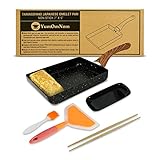
The YumOmNom Tamagoyaki Pan is a rectangular Japanese-style pan originally designed for rolled omelets, and it turns out to be a surprisingly good shape for single salmon portions. Its narrow rectangle matches the proportions of a fillet better than a round pan does, and its compact footprint suits one-person kitchens. It suits solo cooks, small-apartment dwellers, and anyone cooking one 6-ounce portion at a time who is tired of a 12-inch pan for a single piece of fish.
Key specs
- Format: rectangular, in the traditional Japanese tamagoyaki profile
- Intended uses per the listing: omelets, egg dishes and general small-portion frying
- Footprint: compact, designed for a single burner with room to spare
- Walls: low, which makes flipping and sliding a spatula under food easy
- Surface: nonstick-style release suited to delicate proteins and eggs
- Price tier: mid-range
The geometry argument for this pan is stronger than it first appears. A 6-ounce salmon fillet is typically 4 to 5 inches long and 3 to 4 inches wide. In a 12-inch round pan, that fillet occupies a small fraction of the surface, and the rest of the pan is empty hot metal that spits oil and radiates heat you do not need. In a rectangular tamagoyaki pan, the fillet fills the width almost edge to edge. That means the fat you add stays under and around the fish instead of spreading into a thin film across unused surface area, and there is less hot metal to splatter.
The low walls are a second practical benefit. A tamagoyaki pan has shallow sides, which makes it easy to get a thin spatula fully underneath a fillet in one motion. In a deep saute pan, the wall gets in the way and you end up working the spatula in from the side in two moves, which is exactly when delicate skin tears. For anyone who struggles with the flip, the low-wall rectangle is forgiving.
It is also a genuinely useful second pan. If your main skillet is a 12-inch workhorse, a small rectangular pan gives you a way to cook a single portion without heating up and washing the big pan — useful for a quick lunch, for a child’s portion, or for cooking one piece of fish while vegetables roast in the oven.
The limitation is capacity, and it is not negotiable. This pan cooks one portion, maybe two small ones. It is also designed primarily for eggs, so it is not built for the kind of sustained high heat that produces a hard crust on a thick fillet. And the nonstick-style surface carries the same heat ceiling as any coated pan, which means you get a good sear rather than a maximal one. For a household of four, this is an accessory, not a solution.
Pros
- Rectangular shape matches fillet proportions, so fat stays under the fish
- Compact footprint ideal for small kitchens and single-burner setups
- Low walls make spatula work and flipping easier than a deep pan
- Good second pan for single portions without dirtying a large skillet
- Nonstick release handles delicate fish and eggs equally well
- Mid-range pricing makes it an easy add-on
Cons
- Only cooks one portion, or two small ones
- Low walls mean more splatter than a deep pan
- Coated surface has a heat ceiling, limiting crust depth
- Not intended as a high-heat searing pan
- No lid for steam-finishing
- Specialized shape means limited use for other cooking tasks
Compared with the SENSARTE 8″ Ceramic Nonstick Paella Pan, also here, both are small-format options but they solve different problems. The SENSARTE 8-inch is round and shallow, which gives you a wider flat area for a fillet plus a handful of vegetables or a bed of rice, but its round shape wastes space around a long fillet. The YumOmNom rectangle wastes less space around the fish itself. If you cook fish plus sides, the round pan is more flexible. If you cook fish alone, the rectangle is more efficient.
8. Greenloom Nonstick Frying Pan Set of 5 – Best for Small Fillets and Multi-Egg Breakfasts

The Greenloom Nonstick Frying Pan Set of 5 pairs five assorted nonstick frying pans with matching spatulas, and its salmon relevance is in the smallest pans in the set. Small skillets are the right tool for portioned fillets, for crisping a single skin-on piece, and for the kind of quick fish-and-eggs breakfast that a 12-inch pan makes needlessly complicated. It suits households that want several sizes on hand without buying them one at a time, and it suits anyone outfitting a first kitchen on a mid-range budget.
Key specs
- Contents: five nonstick frying pans in graduated sizes, plus spatulas
- Surface: nonstick coating across the set for low-fat release
- Sizing logic: the smallest pans handle single portions and eggs; the largest handle family cooking
- Utensils: included spatulas matched to the set, sized for the smaller pans
- Stackability: graduated diameters stack in a cabinet more efficiently than one large pan
- Price tier: mid-range for the bundle — the per-pan cost is low
Buying a set changes the salmon conversation in a useful way. The single-pan question — “which one pan does everything?” — is really a compromise question, because no single pan is best at every size. A set lets you stop compromising: use the small pan for one 6-ounce fillet so the fat stays concentrated and the fish browns instead of spreading out, and use the larger pan when you are cooking for four. This is the strongest argument for a set, and it is the reason the Greenloom bundle sits on this list rather than being dismissed as filler.
Small pans genuinely cook salmon better than large ones for single portions, for a reason that is often misunderstood. Browning requires that the fish surface stay above roughly 300°F while moisture evaporates off it. If a small fillet sits in a large pan, the surrounding empty metal radiates heat into the air and the film of oil around the fish thins out. In a properly sized pan, the oil pools under and around the fish, maintaining contact and temperature. The practical effect is a more even sear on a single portion.
The included spatulas matter more than they sound. Nonstick coatings fail at the edges first, and the most common cause is a metal spatula catching the rim. A set that ships with matched nonstick-safe utensils removes the most frequent cause of premature coating death, which is a small but real ownership advantage.
The honest limitation is that a set is a set. The pans are unlikely to be as thick or as heat-retentive as a single premium pan, the largest pan in the bundle will not match a dedicated 12-inch clad pan for searing, and five coated pans all have finite lifespans that will eventually arrive around the same time. Sets also encourage buying sizes you may not need. If you already own a good 12-inch pan, you may be better served by one excellent small skillet than by five.
Pros
- Multiple sizes let you match pan to portion instead of compromising
- Small pans concentrate fat and heat for better single-portion searing
- Nonstick-safe spatulas included, reducing rim damage
- Low per-pan cost at a mid-range bundle price
- Graduated sizes stack efficiently in small cabinets
- Useful beyond salmon — eggs, crepes, single servings of anything
Cons
- Individual pans are unlikely to match a premium single pan for heat retention
- Five coated pans means five finite lifespans
- You may pay for sizes you rarely use
- No lids included for covered cooking
- Nonstick ceilings apply across the whole set
- Set packaging makes it harder to return just one size
Compared with the YumOmNom Tamagoyaki Pan, the Greenloom set wins on versatility and loses on shape specificity. Five round pans cover more cooking tasks than one rectangle, but none of them matches a fillet’s proportions the way the tamagoyaki pan does, and none of them will hold a whole small side. If you want one pan shaped for fish, choose the YumOmNom. If you want a range of sizes for general cooking that happens to include fish, choose the Greenloom set.
9. Lodge Square Cast Iron Grill Pan, 10.5 Inches – Best for High-Heat Searing with Grill Lines

The Lodge Square Cast Iron Grill Pan is a 10.5-inch bare cast iron pan with a ridged cooking surface, made in the classic American cast iron tradition and marketed as PFAS-free. It suits cooks who want maximum searing power for the money, who are willing to season and maintain bare iron, and who want a pan that will still be in service decades from now. For salmon specifically, it is the best budget route to a crisp, grill-marked skin.
Key specs
- Size: 10.5 inches square — roughly 110 square inches of footprint, though ridges reduce usable flat area
- Material: bare cast iron, uncoated
- Surface: raised ridges running across the pan floor
- Coating: none — PFAS-free by construction, not by substitution
- Heat retention: high thermal mass; recovers quickly after cold food is added
- Price tier: budget — the lowest-cost high-performance option here
Cast iron’s advantage for salmon is thermal mass. The pan holds a large reservoir of heat, so when a refrigerator-cold fillet lands on the surface, the temperature dip is shallow and brief. That matters because sticking is a temperature event: a fillet laid on a surface that has dropped below the browning threshold will sit in a film of its own moisture and weld to the metal. A heavy iron pan keeps the contact zone hot enough that the skin dehydrates and releases instead.
The ridges add a second benefit and a second cost. They lift the fish above the pooled fat, which keeps the skin frying rather than poaching, and they leave the characteristic dark bars that make a plated fillet look restaurant-made. The cost is contact area: only the ridge tops touch the fish, so the actual seared surface is a fraction of the pan’s footprint. Some cooks find that a flat cast iron skillet gives better overall skin crisping, while a ridged pan gives better visual results and better fat drainage. Both are defensible.
Bare iron also means no coating to fail. There is no layer to flake, scratch, or overheat, and the seasoning that develops is polymerized oil rather than a manufactured surface. The maintenance is the price of admission: dry it thoroughly after washing, never soak it, re-oil it lightly, and re-season if it dulls. Cooks who follow that routine find cast iron easier to live with than they expected. Cooks who leave it wet in the sink will find rust within a day.
The practical limitation for salmon is sauce. Acidic deglazing liquids — wine, vinegar, lemon — will strip seasoning if it is thin, and the ridges make it hard to build a uniform fond. This is a searing pan, not a saucing pan.
Pros
- Outstanding heat retention for a hard, fast sear on cold fillets
- Ridges drain fat away from the skin for crispier results
- No coating — nothing to flake, scratch or replace
- PFAS-free by construction
- Budget price tier with decades-long potential lifespan
- Oven safe for finishing thick portions
Cons
- Heavy, especially when hot and full of oil
- Requires seasoning, thorough drying and re-oiling after each wash
- Ridges cut usable contact area and are tedious to scrub
- Acidic deglazing can strip seasoning and add an iron taste
- Slow to preheat compared with aluminum or clad pans
- Handle gets hot on the stovetop and in the oven
Compared with the Outset Cast Iron Fish Grill Pan, also here, this is a length-versus-versatility decision. The Outset’s 18.9-inch oval holds a whole side of salmon that will not fit here, but it is a specialized shape. The Lodge 10.5-inch square is compact, fits individual fillets, steaks, chicken and vegetables, and costs less. If you cook whole sides, the Outset earns its place. If you cook portions, the Lodge is the better first cast iron pan.
10. Moss & Stone 12″ Grill Pan – Best for Family-Size Weeknight Fillets

The Moss & Stone 12″ Grill Pan is a large nonstick indoor grill pan with a glass lid, sized for cooking several portions at once without moving to a bigger vessel. It suits families and batch cooks — anyone who wants four fillets seared in a single pass and a lid to cover them while they finish. It is the pan for the weeknight where salmon is dinner for everyone, not a project.
Key specs
- Size: 12 inches — the largest grill pan format in this list
- Surface: nonstick coating for release and easy cleanup
- Lid: tempered glass with handle, included
- Ridges: raised grill bars for marking and fat drainage
- Heat source: stovetop, indoor cooking
- Price tier: mid-range — a step below the Kordisen, above the SENSARTE grill pan
Twelve inches is the practical threshold for cooking four 6-ounce salmon portions at once without crowding. Each 6-ounce fillet occupies roughly 4 to 5 inches by 3 inches, so four of them need around 60 square inches of flat surface with breathing room between them. A 12-inch round pan offers about 113 square inches of theoretical area, which comfortably fits four with gaps — and those gaps matter, because fillets that touch each other steam at the contact points and end up pale and soft where they meet.
The lid earns its place in a family context more than in a single-portion one. When you are cooking four fillets of varying thickness, the thin ends will be done before the thick centers. Covering the pan for the last two to three minutes traps steam and gently finishes the thick pieces without pushing the thin ends from done to dry. It is an imperfect equalizer, but it is better than cooking in two batches, which is the alternative at this size.
Nonstick is the right surface choice for a pan this size used this often. A 12-inch stainless pan with four fillets in it is a crowded, splattery operation with a real risk of tearing when you flip; nonstick release makes the whole process calmer, and the cleanup difference is substantial. The trade is the same ceiling every coated pan has: a good sear rather than a maximal one, and a surface that will need replacing eventually.
At 12 inches with a lid, this is a wide pan. Check your burner size and your cabinet before buying — it needs a large burner for even heat and a deep shelf or a hook for storage. It also weighs meaningfully more than the budget SENSARTE grill pan, especially with four fillets and their rendered fat in it.
Pros
- 12-inch surface fits four portions in one batch without crowding
- Glass lid helps even out thick and thin fillets at the finish
- Nonstick release handles delicate fish and simplifies cleanup
- Grill ridges give marks and drain fat
- Mid-range price for a large lidded grill pan
- Useful for chicken, burgers and vegetables, not just fish
Cons
- Large and heavy — needs a big burner and generous storage
- Coated surface has a heat ceiling and a finite lifespan
- Ridges are more work to clean than a flat pan
- Glass lid is a second item to wash and to handle hot
- Nonstick sear depth is good but not cast-iron good
- Overkill for one- or two-person households
Compared with the Kordisen Nonstick Grilling Pan with Lid, this is a shape-versus-size decision. Kordisen’s 11-inch square packs more usable area into its footprint and uses a more abrasion-resistant granite-style coating at a premium price. Moss & Stone offers a slightly wider round pan with the same lid feature at a mid-range price. If you scrub your pans hard, Kordisen’s coating lasts longer. If you want the family-size feature set for less, Moss & Stone is the better value.
11. SENSARTE 8″ Ceramic Nonstick Paella Pan – Best for One-Person Fillets and Portion Control

The SENSARTE 8-Inch Ceramic Nonstick Paella Pan is a small, shallow, round pan in a taupe finish, designed for paella but well suited to single salmon portions. It suits solo cooks, anyone cooking a single fillet with a handful of vegetables or a bed of rice, and anyone who wants a small, light pan that heats fast and cleans in seconds.
Key specs
- Diameter: 8 inches — roughly 50 square inches of cooking surface
- Profile: shallow and wide, in the traditional paella style with low flared sides
- Surface: ceramic nonstick, PFAS-free construction
- Finish: taupe exterior
- Weight: light — easy to handle and to move from burner to counter
- Price tier: budget
Eight inches is the correct size for one 6-ounce fillet, and that is a more useful statement than it sounds. A 6-ounce fillet is about 4 to 5 inches long. In an 8-inch round pan, the fillet occupies a meaningful share of the surface, so the oil you add stays pooled under and around the fish rather than spreading into a useless film. In a 12-inch pan, that same fillet leaves a large ring of hot empty metal spitting oil and heating the kitchen for no benefit. Small pans are underrated for small portions.
The shallow, flared profile is the second advantage. Paella pans are designed to maximize surface area relative to depth, which is exactly what you want for searing a fillet: maximum contact, minimum wall interference, and a wide open top that lets moisture escape quickly so the skin dehydrates instead of steaming. A deep saute pan does the opposite — it traps moisture near the surface, which is useful for sauces and unhelpful for crust.
Ceramic nonstick gives clean release on delicate fish without the fluoropolymer chemistry some cooks prefer to avoid, and it is a genuinely good match for a light, fast