Key takeaways
- Side sleeping: medium-soft to medium, with cushioning around the shoulder and hip.
- Back sleeping: medium to medium-firm, with stable support beneath the lower back.
- Stomach sleeping: medium-firm to firm, reducing excessive sink at the abdomen.
- Mixed positions: medium or medium-firm, with enough responsiveness for easy movement.
Best Twin XL Mattresses for Better Sleep
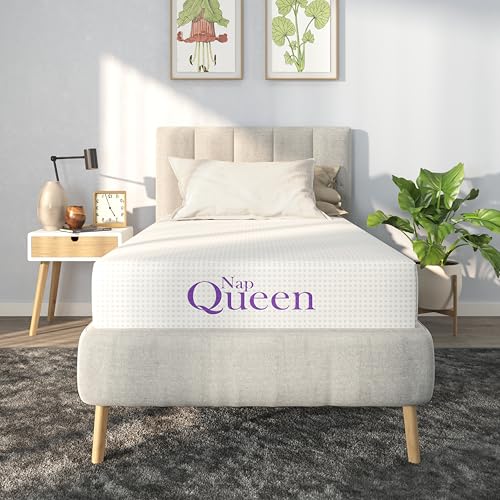
The best Twin XL mattress depends on whether you prioritize pressure relief, cooling, edge support, a lower price, or compatibility with an adjustable base: choose foam for motion isolation, a hybrid for balanced support and airflow, or an innerspring for a familiar, bouncy feel.
A Twin XL mattress measures approximately 38 inches wide by 80 inches long—5 inches longer than a standard Twin and the same length as a Queen. That makes it useful for taller sleepers, dorm rooms, guest rooms, split adjustable bases, and compact bedrooms where a wider mattress will not fit.
Our top picks



As an Amazon Associate we earn from qualifying purchases at no extra cost to you. Ratings are shown as listed on Amazon.
Quick Picks by Sleeping Situation
| Situation | Best mattress type | Useful target specifications | Why it fits |
|---|---|---|---|
| Lowest-cost occasional-use bed | Innerspring | 8–10 inches thick; medium-firm; 55–75 lb typical queen-equivalent construction varies | Usually costs less and has good airflow |
| Side sleeper or pressure-sensitive sleeper | All-foam | 10–12 inches; medium to medium-soft; at least 2 inches of comfort foam | Contours around shoulders and hips with little motion transfer |
| Hot sleeper | Hybrid | 10–14 inches; pocketed coils; breathable cover; moderate foam depth | Coils create more airflow than a dense foam core |
| Two people sharing a split adjustable base | Flexible foam or hybrid | 10–13 inches; flexible perimeter; no rigid foundation underneath | Bends more easily when the head or foot section rises |
| Heavier sleeper or frequent guest use | Reinforced hybrid | 12–14 inches; firm support core; reinforced edge construction | Provides more stable support and better usable surface area |
Head-to-Head: Foam vs. Hybrid vs. Innerspring
All-foam mattresses: best for motion isolation
Foam mattresses use layers of memory foam, polyfoam, latex, or a combination of these materials. A typical Twin XL all-foam model is 8 to 12 inches thick. Memory foam is particularly effective at absorbing movement, which can help if a partner, child, or pet shifts position nearby.
The trade-off is heat retention. Dense memory foam can feel warmer because it surrounds the body and allows less air movement. Cooling covers and ventilated foam may improve surface comfort, but they cannot eliminate the insulating effect of a thick foam layer. Foam also tends to have weaker edge support unless the perimeter is reinforced.
Look for a medium or medium-firm foam mattress if you want a compromise between contouring and ease of movement. A softer model can suit some side sleepers, while stomach sleepers generally need enough firmness to prevent the midsection from sinking too far.
Hybrid mattresses: the most balanced choice
Hybrids combine comfort foam with pocketed coils. They are commonly 10 to 14 inches thick and usually offer the best middle ground among pressure relief, cooling, responsiveness, and edge support.
Individually wrapped coils move more independently than traditional interconnected springs, while the open coil layer allows more airflow than a solid foam support core. A hybrid can also make it easier to change positions because the surface does not envelop the sleeper as deeply as memory foam.
Hybrids are not automatically cooler or more durable. A thick layer of dense foam can still retain heat, and poorly reinforced edges may compress when used for sitting. For a Twin XL used every night, prioritize a robust coil unit, reinforced perimeter, and a comfort layer thick enough to prevent pressure from reaching the springs.
Innerspring mattresses: best for airflow and value
Traditional innerspring mattresses use interconnected or individually wrapped coils, often with a relatively thin foam or fiber comfort layer. They are frequently 8 to 10 inches thick and are often available at the lower end of the general market price range, roughly $200 to $600 for a Twin XL, depending on materials and construction.
Innersprings sleep cool, feel supportive, and are easy to move on. However, they usually provide less pressure relief and more motion transfer than foam or hybrid designs. The edge may also sag sooner if it lacks a reinforced border. They are a practical choice for a dorm, occasional guest room, or sleeper who prefers a firm, springy surface.
What to Compare Before Buying
Firmness
Firmness is subjective, but a useful starting point is soft at about 3–4 out of 10, medium at 5–6, and firm at 7–8. A heavier person may experience the same mattress as softer than a lighter person. Body shape, sleeping position, and the thickness of the comfort layers matter as much as the label.
- Side sleeping: medium-soft to medium, with cushioning around the shoulder and hip.
- Back sleeping: medium to medium-firm, with stable support beneath the lower back.
- Stomach sleeping: medium-firm to firm, reducing excessive sink at the abdomen.
- Mixed positions: medium or medium-firm, with enough responsiveness for easy movement.
Thickness and usable height
Thickness affects comfort, support, sheet fit, and how high the bed sits. An 8-inch mattress can work for a light sleeper or occasional-use room, while a 10- to 14-inch model generally offers more substantial comfort and support layers. Measure the bed frame, headboard, and fitted sheets together: a tall mattress on a tall foundation can make getting into bed awkward and may leave insufficient clearance beneath a desk or loft.
Cooling
Coils, breathable fabric covers, perforated latex, and open-cell foams can improve airflow. Cooling claims should be treated as relative rather than absolute. Room temperature, bedding, sleepwear, body weight, and the mattress protector can have a larger effect than a cooling label. Use a breathable protector rather than a thick waterproof pad that traps heat.
Edge support
Edge support matters more on a narrow Twin XL because a weak perimeter reduces the area that feels stable. Look for reinforced coils, firmer perimeter foam, or dedicated edge support. Sit on the edge briefly when possible; noticeable collapse indicates that the mattress may feel smaller than its stated 38-inch width.
Motion isolation
All-foam designs usually isolate movement best, followed by hybrids with individually pocketed coils. Traditional interconnected innersprings transmit more motion across the surface. If the mattress is for one person, responsiveness may matter more than motion isolation; if it is for two sleepers on separate Twin XL beds, movement between mattresses is already reduced, but vibration through a shared foundation can still be noticeable.
Adjustable-base compatibility
Most flexible foam and hybrid mattresses can work on an adjustable base, but the manufacturer’s compatibility policy should decide the purchase. Avoid using a mattress that requires a rigid, flat foundation if you intend to raise the head or feet. A very thick, heavy mattress may bend less easily and place greater strain on the base’s motor.
For a split setup, buy two Twin XL mattresses rather than two standard Twin mattresses. Each Twin XL is 38 by 80 inches; placed side by side, they create a surface approximately 76 by 80 inches, matching a standard King’s width and length. Check whether the base requires mattresses of similar height and weight.
Examples of Established Twin XL Options
Brand names can help narrow the search, but construction is more important than branding. Established product families that have offered Twin XL configurations include the Tempur-Pedic TEMPUR-Adapt line for dense foam contouring, the Purple Mattress for a responsive grid-based comfort layer, Brooklyn Bedding hybrid and foam models for several firmness choices, Saatva innerspring and hybrid designs for stronger edge-focused construction, and Linenspa hybrid and innerspring mattresses for budget-oriented rooms. Availability, thickness, warranties, and exact Twin XL specifications can change, so verify the current model page before ordering.
Ownership Realities: What Wears First
The comfort layer usually shows wear before the coil unit. Soft foam can develop body impressions, while edge foam may compress from sitting in the same place. Rotating a mattress from head to foot every three to six months can distribute wear when the manufacturer permits it. Do not flip a one-sided mattress unless it is explicitly designed for two-sided use.
- Use a supportive, level base with slats spaced according to the mattress warranty requirements.
- Keep pets from repeatedly jumping onto the same edge; concentrated impact can damage foam and upholstery.
- Use a washable mattress protector for spills, shedding, and accidents.
- Vacuum the surface and seams during sheet changes, but avoid soaking the mattress.
- Let a compressed mattress expand in a ventilated room and follow the stated expansion time before judging its feel.
A mattress priced at $400 and used for four years costs about $0.27 per night before bedding and foundation costs: $400 divided by 1,460 nights. A cheaper mattress is not necessarily the better value if early sagging forces replacement, while an expensive model only earns its premium if its materials and support remain suitable for the intended use.
Bottom Line
Choose an all-foam Twin XL for the strongest motion isolation and deepest contouring, a hybrid for the best overall balance of support, cooling, and pressure relief, or an innerspring for airflow, bounce, and a lower purchase price. Before choosing among the best Twin XL mattresses, confirm the 38-by-80-inch size, match firmness to sleeping position, inspect edge construction, and verify adjustable-base compatibility in writing.