Key takeaways
- Cord protection: Dogs chew. Look for a bowl with a wrapped, armored, or steel-covered cord if the maker offers it, and route the cord so the dog cannot reach it, such as through a wall or conduit. Never use a bowl with a damaged cord.
- Outdoor-rated power: Use outdoor-rated extension cords and a GFCI-protected outlet, with connections kept out of standing water or snow. If you are not sure about the outlet or wiring, ask a licensed electrician.
- Certifications: Look for markings the maker states, such as a safety listing on the product or packaging. Do not assume every bowl carries the same certification.
- Monitoring: Check the bowl daily for cracks, leaks, or tingling signs, such as a dog that avoids the water or shows unusual behavior. If you suspect an electrical fault, unplug it at once and have it inspected or replaced.
- Supervision: Puppies and heavy chewers should not have unsupervised access to powered equipment.
- Follow the manual: Use only as directed, do not submerge the base or plug, and keep it level and stable.
For dogs that live or spend time outdoors in freezing weather, a heated bowl with a chew-resistant cord and a maker-stated thermostat, such as the K&H Pet Products Thermo-Bowl line or Farm Innovators and API (Allied Precision) heated bowls, is the practical pick; for indoor dogs or garages, a simple insulated or non-heated bowl is often enough. The right bowl depends on your dog’s size, chewing habits, outdoor outlet access, and how cold it gets.
Our top picks



As an Amazon Associate we earn from qualifying purchases at no extra cost to you.
At a Glance: Heated Dog Bowl Directions
| Brand and line | Best for | Features makers describe | Limits |
|---|---|---|---|
| K&H Pet Products Thermo-Bowl and heated bowls | Outdoor dogs and cats in cold climates | Thermostatically controlled warming to keep water above freezing, with wrapped or armored cords on some models | Requires an outdoor-safe outlet; cord safety depends on the dog |
| Farm Innovators heated bowls and buckets | Farm, kennel, and multi-animal setups | Heated flat-back buckets and pans designed to keep water from freezing | Bulkier; some designs are less elegant for home patios |
| API (Allied Precision) heated pet bowls | Budget to mid-range outdoor use | Plastic or stainless heated bowls with built-in thermostats | Capacity and cord design differ among models |
| Petmate and similar heated bowls | Small to medium dogs on porches | Compact heated bowls in a range of sizes | Smaller capacity; availability varies |
| Insulated non-heated bowls | Mild winters, garages, covered porches | Insulated walls slow freezing without electricity | Will freeze in prolonged hard cold |
How Heated Bowls Work
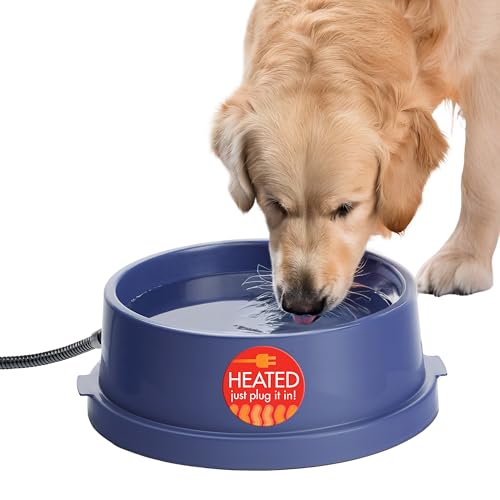
Heated pet bowls contain a small heating element and a thermostat. The thermostat turns the element on when the temperature falls near freezing and off as the water warms. The aim is to keep water liquid, not to make it warm, and makers generally describe it as freeze prevention. Wattage and thermostat settings vary by model, so read the specifications on the product page and label. Electrical safety matters here because water and electricity share the same space.
Safety First
- Cord protection: Dogs chew. Look for a bowl with a wrapped, armored, or steel-covered cord if the maker offers it, and route the cord so the dog cannot reach it, such as through a wall or conduit. Never use a bowl with a damaged cord.
- Outdoor-rated power: Use outdoor-rated extension cords and a GFCI-protected outlet, with connections kept out of standing water or snow. If you are not sure about the outlet or wiring, ask a licensed electrician.
- Certifications: Look for markings the maker states, such as a safety listing on the product or packaging. Do not assume every bowl carries the same certification.
- Monitoring: Check the bowl daily for cracks, leaks, or tingling signs, such as a dog that avoids the water or shows unusual behavior. If you suspect an electrical fault, unplug it at once and have it inspected or replaced.
- Supervision: Puppies and heavy chewers should not have unsupervised access to powered equipment.
- Follow the manual: Use only as directed, do not submerge the base or plug, and keep it level and stable.
A dog that is exposed outdoors for long periods in extreme cold also needs shelter, insulated bedding, and food adjustments. Talk to your veterinarian about cold-weather care, particularly for puppies, seniors, and short-coated breeds.
What to Look for
Capacity and size
Match the bowl to your dog. Large dogs drink more and need larger volume, while small dogs may be better served by compact bowls. Heavier bowls also resist tipping. Capacity is listed in quarts, gallons, or ounces on the maker’s page.
Material
Stainless steel is easy to clean and resists scratches that can harbor bacteria. Plastic bowls are lighter and cheaper, but they can scratch and some dogs chew them. Heated bowls often use a plastic body with a removable stainless insert, according to the makers.
Thermostat and shut-off
Many heated bowls state a thermostat range. Some makers describe an automatic shut-off or overheat protection, but it varies by product. Rely only on the features stated by the maker, and still check the bowl regularly.
Stability
Wide, flat bases and non-slip feet help prevent tipping. Some buckets and pans include mounting points for fences or posts. Dogs that paw at water need heavier or secured bowls.
Cleaning
Remove the bowl from power, empty, and wash according to the manual. Do not immerse electrical parts. Clean regularly to prevent slime and algae build-up, which can form even in cold weather.
Product Directions in More Detail
K&H Pet Products
K&H is a well-known maker of heated pet products. Its Thermo-Bowl line includes different sizes and finishes, and the brand is frequently recommended by reviewers for outdoor water. Buyers should read the model-specific specifications on thermostat behavior and cord construction.
Farm Innovators
Farm Innovators produces heated buckets, pans, and bowls aimed at farms, kennels, and livestock. They suit people who need to keep water open for several animals or in barns. The utilitarian look is a trade-off for durability.
API (Allied Precision)
Allied Precision offers heated bowls and bird baths aimed at the budget to mid-range tier. Check capacity and cord details for the specific model you are considering.
Petmate and others
Petmate and similar brands sell compact heated bowls for porches. They fit smaller dogs and cats, though capacity may not suit large breeds.
Budget Tiers
- Budget: Basic plastic heated bowls with smaller capacity. Fine for mild cold and supervised use.
- Mid-range: Larger capacity and chew-resistant cord designs from established makers such as K&H.
- Premium: Heavier-duty heated buckets or stainless systems for kennels and farm use.
Pick X If… Decision Table
| Pick this | If you… |
|---|---|
| K&H Thermo-Bowl | want a known name for porch or yard water with a cord designed for outdoor use |
| Farm Innovators heated bucket | keep several dogs, a kennel run, or large animals |
| API heated bowl | want a simpler design at a lower tier |
| Petmate heated bowl | have a small dog or cat on a covered porch |
| Insulated, non-heated bowl | face mild cold, or cannot supply safe power outdoors |
| Bring water indoors | have a dog who chews cords or will be unsupervised |
Alternatives
- Insulated bowl covers or buckets: Slow freezing without electricity, useful for brief cold snaps.
- Refilling with lukewarm water: Frequent fresh water works for short outdoor periods.
- Heated pet fountains and wired water systems: Larger setups for kennels, installed by a professional electrician.
- Keeping the dog indoors: In extreme cold, the safest option is shelter inside. Follow local guidance and your vet’s advice.
Frequently Asked Questions
Are heated dog bowls safe?
They are designed for pet use, but any powered device has risks, particularly with chewing. Choose a bowl with a chew-resistant cord if the maker offers one, use a GFCI-protected outdoor outlet, and inspect it daily. Do not leave puppies or chewers alone with it.
How warm does the water get?
Makers generally describe heated bowls as keeping water from freezing rather than making it warm. The thermostat cycles on in cold weather and off as the water warms.
Can I leave one plugged in all winter?
Most are meant for continuous seasonal use with the thermostat managing the heat. Follow the manual, keep the cord and plug dry, and unplug when not needed.
What if my dog chews the cord?
Unplug the bowl and stop using it. Switch to a protected cord, route it out of reach, or use a non-heated solution. Seek veterinary advice if the dog has chewed on a live cord or seems unwell.
Do I still need to clean a heated bowl?
Yes. Unplug it, empty it, and wash with mild soap, avoiding immersion of the electrical base. Clean regularly to limit slime and bacteria.
Are heated bowls enough for a dog left outside in winter?
No. Dogs left in freezing weather need insulated shelter, dry bedding, food, and monitoring. Ask your veterinarian how much time outdoors is safe for your dog’s breed, age, and coat.