Key takeaways
- Student models are designed for durability, easy response and a comfortable price. They usually have a medium-large bore, a lacquer finish and a simple lead pipe design.
- Intermediate models add better materials, finer valve fitting and often a choice of finish. They suit players who have outgrown a student horn.
- Professional models have hand-fitting, customizable leadpipes and bells, and a wider range of finishes. They are meant for experienced players.
For most beginners and returning players, a student Bb trumpet from a major maker such as Yamaha, Bach, Jupiter or Getzen suits best, intermediate players moving up usually look at a Yamaha Xeno-style or Bach Stradivarius line, and anyone shopping for the lowest cost should be wary of unbranded instruments that can have poor intonation and weak valves. Because trumpets are mechanical instruments, build quality and a good mouthpiece matter more than any single spec on a list.
Our top picks



As an Amazon Associate we earn from qualifying purchases at no extra cost to you.
Understanding trumpet types
Almost every buyer is looking for a Bb trumpet, the standard instrument in school bands, jazz groups and concert ensembles. Other types exist, including C trumpets used in orchestras, piccolo trumpets for baroque music and Eb or D trumpets for specialist works, but they are not where most people start.
Within the Bb family, trumpets are generally grouped into three levels:
- Student models are designed for durability, easy response and a comfortable price. They usually have a medium-large bore, a lacquer finish and a simple lead pipe design.
- Intermediate models add better materials, finer valve fitting and often a choice of finish. They suit players who have outgrown a student horn.
- Professional models have hand-fitting, customizable leadpipes and bells, and a wider range of finishes. They are meant for experienced players.
What to check before you buy
- Bore size. Makers list a bore measurement. A medium-large bore gives a fuller sound and easier air flow for most students, while a smaller bore can feel more focused. For beginners, the stock bore on a student model is typically fine.
- Bell material and size. Yellow brass is bright, gold brass is warmer. Bell size changes tone, but beginners should not worry about it.
- Valve quality. Smooth, quiet, well-aligned valves matter. Monel valves are common on good instruments. Cheap valves can stick or leak.
- Finish. Lacquer is common and affordable. Silver plating is more durable and bright but costs more. Both need regular cleaning.
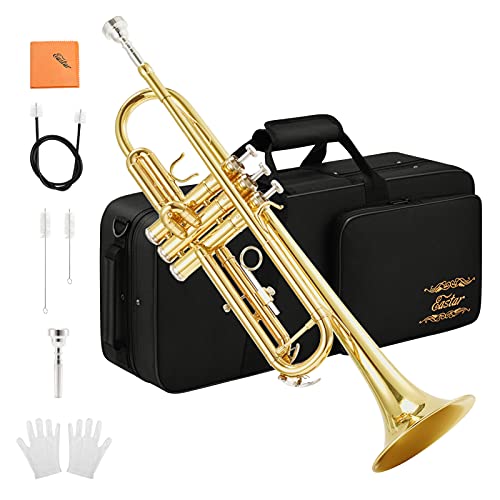
- Case and mouthpiece. A sturdy case protects the horn. Most student trumpets come with a basic mouthpiece, often a 7C, though this varies by maker.
- School requirements. Some school programs name preferred brands or model numbers, so ask the band director before buying.
At a glance: current trumpet options
| Model line | Best for | Key stated traits | Limits |
|---|---|---|---|
| Yamaha YTR-2330 student Bb trumpet | Beginners and school bands | The maker lists a standard student bore, lacquer finish and a durable build for new players | Student-level leadpipe and bell; many players move up later |
| Bach TR300H2 student Bb trumpet | Beginners wanting a recognized brand name | The maker lists a Bach-designed student horn with a gold-brass bell and a lacquer finish | Student-level; specifics vary by version, check maker page |
| Jupiter and Getzen student models | Students and school programs on a mid-range budget | Makers list student Bb trumpets with a medium-large bore and a choice of finishes | Individual units can vary; look for a fitted case and good valve action |
| Yamaha YTR-3335 and similar step-up models | Intermediate players | The maker lists upgraded materials and bell options for improved response | Higher cost than student models |
| Bach Stradivarius series | Serious players and professionals | Bach lists multiple bell, leadpipe and finish options in its Stradivarius range | Premium tier; mouthpiece and fit are very personal |
| Unbranded entry-level trumpets | None; consider with caution | Often listed with basic bores and brass finishes | Reviewers and repair technicians frequently warn of poor tuning and weak valves |
Budget tiers and trade-offs
Budget: Student models from Yamaha, Bach, Jupiter and Getzen sit here. They are built for hard use, have tested designs and are widely repaired. Brand-name student horns hold resale value and are the safest choice for a new player.
Mid-range: Step-up and intermediate trumpets offer better response and a wider tonal range. If you plan to play in a jazz group or advanced school ensemble, this tier lets you grow without moving to a professional model.
Premium: Professional horns such as Bach Stradivarius lines and similar models from other makers offer custom options and consistent tuning. The improvement over a good intermediate model depends heavily on the player, so premium makes sense mainly for advanced players.
Care and maintenance notes
Valve oil keeps valves moving smoothly, and the maker’s manual explains how often to apply it. Slide grease keeps tuning slides moving. Many players wipe the instrument down after each session and rinse the mouthpiece. A full bath with lukewarm water and mild soap every few months is a common recommendation from band directors, but follow the maker’s care guide, especially on lacquered or plated finishes. Never force a stuck valve or slide, and have a repair technician fix dents, since attempting repairs yourself can cause further damage.
Hearing safety also matters. Trumpets are loud at close range, and the player and nearby students should consider hearing protection during long rehearsals. A practice mute can reduce volume at home.
New, used or rental
Many music stores offer rent-to-own programs. Renting is useful if a student may quit after a few months, and rental fleets are usually maintained by the shop. Used trumpets from known brands can be a good value, but check for dents, leaks, valve wear and a loose mouthpiece receiver. If you can, ask a teacher or technician to examine a used horn before purchase. Avoid very cheap new instruments of unknown origin, which are common in online listings.
Fit, comfort and practice setup
Trumpets come in one standard size, so fit is mostly about comfort. Younger children with small hands or a limited breath may find a full-size trumpet heavy, and some teachers suggest a cornet or a lighter instrument first. Check that the valve buttons sit naturally under the fingers and that the finger hook and ring on the leadpipe are positioned for your hand. Trumpets are typically held with the left hand supporting the weight, so a horn that feels balanced matters during long rehearsals.
Set up a practice space where you can play regularly without disturbing others. A practice mute lowers the volume, but it also changes resistance and pitch slightly, so do not use it for all of your practice. Short, frequent sessions generally build stamina better than a single long one, and teachers often advise stopping if your lips feel sore or numb. A music stand, a tuner and a metronome are useful accessories that cost little compared with the horn itself.
Pick X if …
| If you … | Pick | Why |
|---|---|---|
| Are a first-time student | Yamaha YTR-2330 or Bach student model | Reliable, widely supported and easy to resell |
| Need a school-approved horn | The model your band director names | Consistency in the section |
| Are returning to the trumpet after years | Student or intermediate model from a known maker | Reliable feel with room to improve |
| Play in jazz or advanced groups | Intermediate or professional Bb trumpet | Better response and projection |
| Want to try before committing | Rental through a local shop | Lower cost and maintenance included |
Alternatives worth considering
- Cornet. A cornet has a more compact shape and a mellower tone, and many school programs accept it for beginners with small hands.
- Pocket trumpet. Smaller for travel, but often harder to play in tune, and not typically accepted in school bands.
- Flugelhorn. Warmer and rounder in tone, popular for jazz as a second instrument rather than a first.
- Used professional trumpet. For experienced players, a well-maintained older horn can be better than a new student model.
Frequently Asked Questions
What is the best trumpet for a beginner?
A student Bb trumpet from a recognized maker, such as Yamaha, Bach, Jupiter or Getzen, is the usual recommendation. These horns are built to withstand daily practice and have reliable valves. Ask your teacher or band director if they prefer a particular model.
Is a silver-plated trumpet better than lacquer?
Silver plating has a brighter sound for some players and is durable, but it costs more and the difference is subtle. Lacquer is fine for most players and is more common on student horns. Choose based on appearance, care preferences and budget.
Should I buy a cheap unbranded trumpet?
Reviewers and technicians often advise against it. These horns can have poor intonation, loose parts and valves that stick, and repairs may cost more than the instrument is worth. A used horn from a known brand is usually a better value.
What mouthpiece should a beginner use?
Most student trumpets include a basic mouthpiece, often described as a 7C size, though details vary. Your teacher may suggest a different size as your embouchure develops. Changing the mouthpiece is one of the easiest ways to adjust feel and tone.
How often should I clean my trumpet?
Many players wipe the outside after each session, oil the valves regularly and give the instrument a bath every few months. Follow the maker’s care guide and take it to a technician if the valves are sticking or you notice damage.
Can an adult learn on a student trumpet?
Yes. Student horns are suitable for adult beginners, and many adults keep them for years. Upgrade only when you feel the horn limiting your playing, and try instruments before buying whenever possible.