Key takeaways
- Keep the fixture away from splashes and wipe condensation from the lens.
- Do not exceed the maker’s mounting weight or distance guidance.
- Reduce light period if algae appears, and check nutrients and flow.
- Replace lights that flicker or have damaged cords, and unplug before cleaning.
- For reef tanks, use lights designed for corals and follow the coral keeper’s guidance.
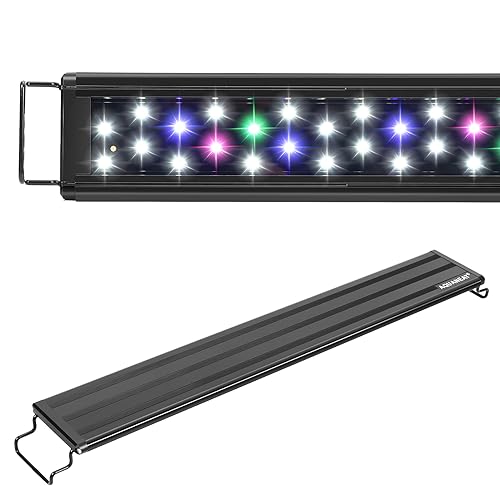
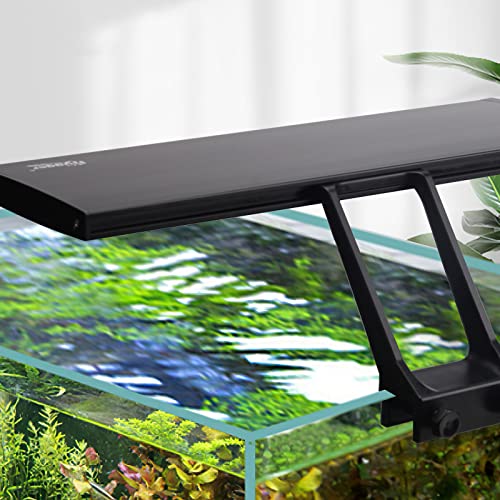
For serious planted tanks, the Fluval Plant 3.0 is the light reviewers name most often; for automated, set-and-forget cycles the Finnex Planted+ 24/7 is a long-time favorite; for budget-minded buyers with easy plants the Hygger models are the usual value pick; and for larger tanks the Current USA Satellite Plus Pro is another option. The right light depends on tank size, depth, and what you keep, because more light is not always better.
Our top picks

As an Amazon Associate we earn from qualifying purchases at no extra cost to you.
Aquarium Lights at a Glance
| Model | Best for | Key stated features | Limits |
|---|---|---|---|
| Fluval Plant 3.0 | Planted tanks including demanding plants | Bluetooth app control, scheduling, IP67 water resistance, high output reported | Premium tier; easy to over-light; app criticized by one reviewer |
| Finnex Planted+ 24/7 HLC | Hobbyists wanting automatic day/night cycles | Built-in cycle with sunrise and sunset behavior | Presets can be bright; mid-to-premium tier |
| Hygger Advanced LED (such as 957) | Budget and shallow tanks | Built-in timer, sunrise and sunset ramps, ten dimming levels | Best for easy plants and tanks around 30 gallons or less |
| Current USA Satellite Plus Pro | Larger tanks wanting adjustable spread | Adjustable bracket options; add-on controller for effects | Controller sold separately; less coverage than the others |
| Chihiros WRGB series | Enthusiast planted tanks | Full-spectrum control, often with app | Mid-to-premium tier; mounting accessories may be needed |
Key Features Explained
Tank size and depth
Match the light’s length and spread to your tank. Choose a fixture designed for your tank length, with a bracket or legs that fit the rim, or hang it above the water. Deeper tanks lose light intensity with depth, so tall tanks need stronger fixtures, while shallow tanks can use gentler lights. Outlets often rate lights such as the Finnex for 20 to 125 gallon tanks and the Hygger for smaller ones, but follow the maker’s size guidance.
PAR and plant needs
PAR measures usable light for photosynthesis at a given depth. One roundup reports that the Fluval Plant 3.0 posted the highest PAR in a head-to-head with others. Low-light plants such as java fern and anubias need less, and demanding red stem plants need more and usually CO2 and fertilizer. Bright light without balanced nutrients and flow encourages algae, so adjust intensity gradually.
Color spectrum
Full-spectrum white with red, green and blue channels brings out fish colors and helps plant growth. Some lights allow customizing each channel via an app. If you want a natural look, choose a balanced spectrum and avoid saturated colors for long periods.
Controls and automation
Basic lights come with a manual switch; better models include timers, dimming, and sunrise and sunset ramps. A consistent daily schedule, commonly six to eight hours, is a typical starting point for planted tanks. Smart lights with Bluetooth or Wi-Fi give precise control, but apps vary in quality, and some reviewers find them clumsy.
Mounting and safety
Check that the fixture fits your rim width or has hanging kits. Aquarium lights are water-resistant to different degrees, so keep them dry unless the maker rates them as submersible. The Fluval Plant 3.0 lists an IP67 rating. Use drip loops, plug into a GFCI-protected outlet and ask an electrician if you are unsure about your outlets. Follow the manual if the light or driver gets warm.
Model Notes
Fluval Plant 3.0
The consistent top pick in 2026 roundups, praised for output and scheduling control. Drawbacks are the premium cost and a learning curve, since it is easy to run it too bright. Start at low intensity and increase slowly.
Finnex Planted+ 24/7 HLC
Reviewers like the automatic cycle that needs no programming. Some say the presets run bright, so adjust or shade floating plants as needed.
Hygger
Reviewers describe the Hygger line as the value choice, including a built-in timer and dimming. It suits shallow tanks with easy plants. One outlet ranks the Hygger Advanced LED as best overall for its natural cycle without an app, which shows how much opinions vary by priorities.
Current USA Satellite Plus Pro
An established option for larger tanks, with an adjustable spread. A controller is an add-on for lighting effects. Reviewers say the Finnex or Fluval may suit very demanding planted tanks better.
Pick X If …
| Pick this | If |
|---|---|
| Fluval Plant 3.0 | You grow demanding plants and want app-level control |
| Finnex Planted+ 24/7 | You want a natural day/night cycle with minimal setup |
| Hygger | You keep easy plants in a tank up to roughly 30 gallons on a budget |
| Current USA Satellite Plus Pro | You have a larger tank and want flexible mounting |
| Chihiros WRGB | You like fine-tuning the spectrum |
Budget Tiers
Budget: basic LED strips and Hygger-style timers for easy plants and fish-only tanks. Mid-range: Finnex and Current USA lights with automation. Premium: Fluval Plant 3.0 and Chihiros-style app-controlled units for high-demand plants.
Care Notes
- Keep the fixture away from splashes and wipe condensation from the lens.
- Do not exceed the maker’s mounting weight or distance guidance.
- Reduce light period if algae appears, and check nutrients and flow.
- Replace lights that flicker or have damaged cords, and unplug before cleaning.
- For reef tanks, use lights designed for corals and follow the coral keeper’s guidance.
Alternatives
- Stock hood lights: fine for fish-only tanks and low-light plants.
- Clip-on lamps: useful for nano tanks.
- Reef-specific LED fixtures: for saltwater tanks with corals.
Matching a Light to Your Tank in Practice
Fish-only and low-tech planted tanks
If you keep fish with a few hardy plants such as anubias, java fern and cryptocoryne, you do not need a high-output fixture. A modest LED with a timer is usually enough, and a lower intensity keeps algae in check. Budget lights in the Hygger style fit this case, and reviewers say they work well on shallow tanks around 30 gallons or less. Reduce the period to about six hours at first and extend it slowly only if plants need it.
Medium-tech planted tanks
Tanks with stem plants, a carpet or colorful foreground plants benefit from more intensity and a steady supply of nutrients. The Finnex Planted+ 24/7 and Current USA Satellite Plus Pro both aim at this middle zone. Reviewers suggest raising intensity in small steps and watching for algae on glass, leaf edges and hardscape. Floating plants can shade a tank that proves too bright.
High-tech planted tanks
Dense, demanding aquascapes with red plants call for strong light, reliable CO2 and consistent fertilizing. The Fluval Plant 3.0 and the Chihiros WRGB family are the lights most often named for this work. These units can overpower a small or shallow tank, so keep them dimmed when starting and raise output gradually. If your plants need that level of light, the other parts of the system must keep pace.
Tall tanks and shallow tanks
Light weakens as it passes through water. A 24 inch high tank may need a stronger fixture or a lower mounting point than a 12 inch tank. Hanging a light from a rack lets you adjust the distance, while rim-mounted legs fix it at the top of the glass. Check the maker’s guidance for tank depth before buying.
Light color and the look of your fish
A higher color temperature looks bluer and crisper, while a lower one looks warmer. Many hobbyists pick a mid-range white for planted tanks and add color channels to bring out reds and blues in fish. Because tastes vary, lights with adjustable channels let you fine-tune the look without swapping fixtures.
Reading product claims
Lumens, watts and PAR figures are not directly comparable between brands, since makers measure at different distances and settings. Look for a stated tank-size range, a described spectrum and any notes on depth. Independent PAR readings from reviewers, such as the head-to-head that put the Fluval Plant 3.0 ahead, are useful context but depend on the water depth and setup used.
Frequently Asked Questions
How many hours a day should an aquarium light be on?
Six to eight hours is a common starting point for planted tanks. Shorten the period if algae grows, and keep a consistent schedule using a timer.
Do fish need a light?
Fish benefit from a regular day and night rhythm. A light also lets you see them, but it does not need to be intense for fish-only tanks.
What light do live plants need?
It depends on the plant. Anubias and java fern grow under modest light, while carpeting and red plants need more, with CO2 and fertilizer. Match the fixture to the species.
Can aquarium lights cause algae?
Yes, excess light or long photoperiods with unbalanced nutrients encourage algae. Reduce intensity and duration first.
Are app-controlled lights worth it?
They give precise control, which suits advanced planted tanks. Some users find the apps clumsy, so a simple built-in cycle may suit you better.
Can I use any LED light over a tank?
Use fixtures designed for aquarium use, with water-resistance ratings that suit your setup. Ordinary household lamps are not designed for damp conditions.