Key takeaways
- Prepare the subfloor. It should be clean, flat and dry, with moisture tested as the maker requires.
- Acclimatise tiles. Let boxes sit in the space before installation, as directed.
- Follow the layout direction. Arrows on the backing show pile direction for monolithic or quarter-turn layouts.
- Keep spares. Store extra tiles from the same dye lot for future replacements.
- Vacuum regularly. Frequent vacuuming with a suitable machine keeps soil from grinding into the fibre.
- Clean spills quickly. Use cleaning products approved by the maker to preserve warranties.
- Use entry matting. Walk-off mats reduce the soil and moisture that reach the carpet.
For busy offices, retail and hospitality spaces, modular carpet tiles from Interface, Shaw Contract, Mohawk Group, Tarkett (including Desso) and Milliken are the usual shortlist, with the right pick depending on traffic level, backing type, moisture exposure and sustainability requirements. Choose a tile with a commercial-grade face fibre and a stable backing for heavy foot traffic, and choose a cushioned or hospitality-grade tile where comfort and sound absorption matter more.
Our top picks

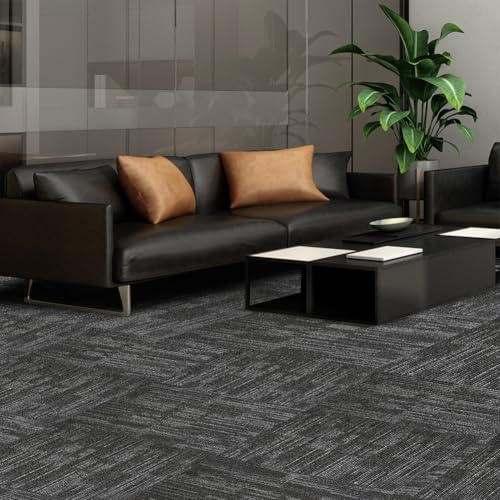

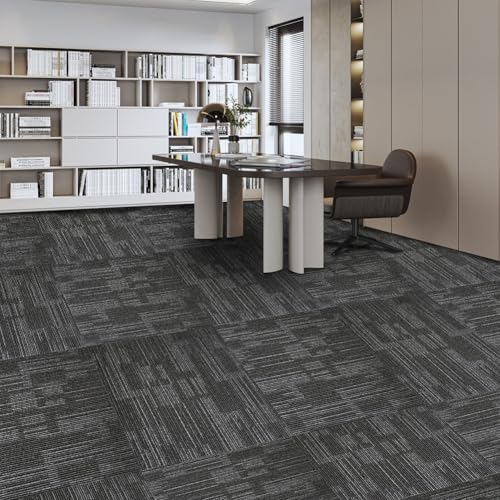
As an Amazon Associate we earn from qualifying purchases at no extra cost to you.
Commercial Carpet Tile Makers at a Glance
| Maker | Best for | Key stated features | Limits |
|---|---|---|---|
| Interface | Offices and design-led spaces | The maker lists a wide range of modular and plank formats and publishes environmental product declarations for many lines | Premium tier; specification sheets vary by collection |
| Shaw Contract | Offices, education, healthcare | Maker lists tile backings including a PVC-free option in some lines and a range of patterns | Lines differ by backing; match the exact product to the project |
| Mohawk Group | Commercial offices and hospitality | Maker lists a broad set of tiles with various backing systems | Specification depends on collection; check warranty terms |
| Tarkett / Desso | Healthcare, education, public spaces | Maker lists tiles with its Ecobase backing and recycling programmes | Availability of collections varies by region |
| Milliken | Corporate, hospitality and education | Maker lists patterned tiles in large formats and environmental product declarations | Premium tier; designs lean toward statement looks |
| Mannington Commercial | Offices and institutional spaces | Maker lists a range of tile and plank collections | Check backing, size and warranty for each line |
What Defines a Commercial Carpet Tile
Face fibre and construction
Commercial tiles typically use nylon or similar solution-dyed fibres in loop, cut-pile or textured constructions. Loop pile and patterned designs hide wear and soil better than plain cut-pile. Makers describe nylon as resilient under traffic, while polyester and other fibres appear in lower-cost lines.
Backing
The backing determines stability, moisture resistance and recyclability. Makers describe bitumen, PVC, polyurethane and PVC-free systems. A stable backing keeps tiles from curling and shifting, and some backings are designed to resist moisture. Choose a backing that suits the subfloor and any moisture risk, and follow the manufacturer’s installation guidance.
Tile size
Common formats include square tiles around 50 by 50 centimetres or 24 by 24 inches, and longer plank formats. Planks create a wood-like look and allow random patterns, while square tiles suit classic layouts and are easy to replace. Larger sizes reduce seams but can be harder to handle.
Installation method
Tiles may be adhered with full-spread adhesive, tackifier, or peel-and-stick systems. Release adhesives allow tiles to be lifted individually, which supports easy replacement and changing layouts. The right adhesive depends on the subfloor, and the maker usually specifies which products are approved.
Fire and slip ratings
Commercial buildings must meet fire-performance and slip requirements set by local codes. Makers publish test results such as radiant panel and smoke density ratings. Confirm requirements with the building authority, an architect or a flooring professional, because rules differ by region and building type.
Indoor air quality and sustainability
Many makers publish certifications for low emissions, such as the Carpet and Rug Institute’s Green Label Plus, and environmental product declarations. Look for these documents if your project has green-building goals, and use the maker’s own paperwork instead of generic claims.
Acoustics and comfort
Carpet tiles absorb sound and soften footfall. Cushioned backings add comfort for standing staff and reduce noise further. If a space has a lot of rolling traffic such as carts or office chairs, a firmer backing is a better fit.
Matching Tile to Space
| Space | Look for | Why |
|---|---|---|
| Open-plan office | Textured loop or patterned tile, firm backing | Hides wear and handles rolling chairs |
| Corridor or entrance | Tight loop construction, dark or mottled colourway | Withstands heavy foot traffic and soil |
| Hospitality | Patterned tile, cushioned backing | Hides stains and softens noise |
| Classroom | Durable nylon, easy-clean backing | High traffic and frequent cleaning |
| Healthcare | Moisture-resistant backing, cleanable surface | Hygiene and infection-control requirements |
| Pet-friendly spaces | Loop pile, solution-dyed fibre, moisture-resistant backing | Easier to clean after accidents; individual tiles can be replaced |
Pick X If… Decision Table
| Pick this if you… | Choose | Why |
|---|---|---|
| Want a wide design selection and published environmental data | Interface | Large range and documentation |
| Need a PVC-free option for a school or hospital | Shaw Contract or Tarkett lines with the maker’s PVC-free backings | Backing choice matches policy |
| Want bold patterns for hospitality | Milliken | Pattern-driven collections |
| Need an all-round commercial tile | Mohawk Group | Broad catalogue across traffic levels |
| Expect frequent spills or accidents | Moisture-resistant backing with loop pile | Easier maintenance and tile-by-tile replacement |
| Plan to change layouts often | Release adhesive with modular tiles | Lift and replace with less waste |
Installation and Maintenance Notes
- Prepare the subfloor. It should be clean, flat and dry, with moisture tested as the maker requires.
- Acclimatise tiles. Let boxes sit in the space before installation, as directed.
- Follow the layout direction. Arrows on the backing show pile direction for monolithic or quarter-turn layouts.
- Keep spares. Store extra tiles from the same dye lot for future replacements.
- Vacuum regularly. Frequent vacuuming with a suitable machine keeps soil from grinding into the fibre.
- Clean spills quickly. Use cleaning products approved by the maker to preserve warranties.
- Use entry matting. Walk-off mats reduce the soil and moisture that reach the carpet.
Budget Tiers
Budget
Entry-level commercial tiles use lighter face weights and simpler backings. They suit low-traffic rooms, storage areas and short-term fit-outs.
Mid-range
Mid-range tiles from the major makers offer solution-dyed nylon, stable backings and broad design options. They are the usual choice for offices, classrooms and retail.
Premium
Premium collections add designer patterns, cushioned backings, extensive environmental documentation and extended warranties. They suit hospitality, headquarters and projects with strong design briefs.
Alternatives
- Broadloom carpet. Fewer seams and a seamless look, but replacement is harder than swapping a tile.
- Luxury vinyl tile or plank. Water-resistant and easy to clean, though less sound-absorbing.
- Rubber flooring. Durable and slip-resistant for gyms and utility areas.
- Polished concrete with rugs. Low maintenance, with area rugs adding warmth and acoustic control.
Specification Checklist Before Ordering
Ask each supplier for the product data sheet, the installation guide and the warranty document for the exact colourway you plan to buy. Compare face weight, pile construction, backing type, tile dimensions, and the stated fire and emissions test results. Request a sample tile and lay it in the space under real lighting, because colour and pattern can look different on site than in a catalogue. Order a small overage for cuts and future repairs, and keep records of the dye lot. Confirm who is responsible for subfloor preparation, because moisture or unevenness is a frequent cause of installation problems and may affect warranty coverage.
Questions to put to a supplier
- Which backing does this exact line use, and is it approved for my subfloor?
- Which adhesive or release system does the maker specify?
- What traffic level is the product designed for, according to the maker?
- Is there a take-back or recycling programme for old tiles?
- What does the warranty exclude, and what cleaning products does it require?
Common mistakes
Buyers sometimes choose a residential-grade tile for a commercial space, skip moisture testing on a concrete slab, or overlook the pile direction and end up with visible pattern breaks. Others pick a very light colour in an entrance where soil is constant. A pattern that disguises wear, a darker or mottled colour near doors, and walk-off mats at entrances usually keep a floor looking presentable for longer.
Finally, think about the life of the floor. Modular tiles let you rotate worn high-traffic tiles with those from low-traffic corners, which can stretch the useful life of an installation. Keep a record of the product name, colour code and dye lot, and store spare tiles flat in a dry room. When a refurbishment arrives, ask the maker whether a take-back programme exists, since some makers collect used tiles for recycling.
Frequently Asked Questions
What size carpet tile is best for offices?
Square tiles around 50 by 50 centimetres or 24 by 24 inches are the common standard. Plank formats add a different look but need careful layout planning.
How long do commercial carpet tiles last?
Lifespan depends on traffic, maintenance and product quality. Makers publish warranty terms that give an indication of expected performance under specified conditions.
Can carpet tiles be installed over concrete?
Yes, with proper preparation. The slab should be clean, flat and tested for moisture as the maker requires, and the correct adhesive or release system should be used.
Are carpet tiles suitable for homes with pets?
Some owners use them because a stained tile can be replaced individually. Choose a moisture-resistant backing and a pattern that hides soil, and clean accidents promptly.
Do carpet tiles meet fire codes?
Many commercial tiles are tested for fire performance, but requirements vary by building type and region. Ask your supplier for the test data and check with the local building authority.
What is a PVC-free backing?
It is a backing made without polyvinyl chloride, often from polyolefin or similar materials. Some makers promote these for sustainability or institutional policies, so check each product’s data sheet.