Key takeaways
- Introduce the crate slowly. Leave the door open, feed meals nearby and reward calm visits.
- Never use the crate as punishment. That tends to build negative associations.
- Limit crate time. Puppies and senior dogs need frequent breaks, and no dog should be confined for long stretches.
- Remove collars with tags or hanging items. Many vets suggest this to prevent snagging inside a crate.
- Check regularly. Inspect for bent bars, loose welds, worn hinges and sharp edges.
- Keep the room temperature safe. Avoid heaters, direct sun and enclosed cars.
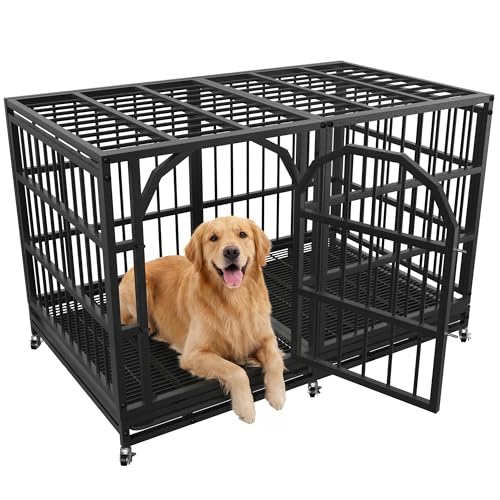
For dogs that panic in a crate, a heavy-duty, fully enclosed crate such as the Impact Collapsible High Anxiety Crate or the Gunner Kennel suits owners of escape-prone dogs, while a softer wire or plastic crate with a cover suits mild nervousness and dogs that mainly need a den-like space. Crates do not treat anxiety, so the right product is the one that keeps a worried dog physically safe while a trainer or veterinarian works on the underlying problem.
Our top picks



As an Amazon Associate we earn from qualifying purchases at no extra cost to you.
Read This First: Crates and Separation Anxiety
Veterinary behaviourists and trainer groups generally warn that confining a dog with true separation anxiety or confinement distress can lead to injury, such as broken teeth, bent bars or cut paws, and can make the panic worse. A strong crate is a safety tool, not a cure. If your dog drools heavily, destroys the crate, injures itself or howls whenever it is left, speak with your veterinarian or a certified behaviour professional before relying on crate confinement. Crate training should be gradual, positive and never used as punishment.
Crates at a Glance
| Crate | Best for | Key stated features | Limits |
|---|---|---|---|
| Impact Collapsible High Anxiety Crate | Strong escape artists that need a portable heavy-duty option | The maker describes aluminium construction, a folding design and escape-resistant door hardware | Premium tier; the heavy-duty build is not light to carry |
| Gunner Kennel (G1 line) | Strong dogs and travel in vehicles | The maker lists a rotationally moulded shell, insulated walls and crash-test claims for certain sizes | Premium tier, heavy, not collapsible |
| Ruff Land Kennel | Owners wanting a rugged plastic-shell crate | Maker lists a one-piece moulded body with ventilation and a secure door | Premium tier; fixed size |
| Variocage | Car travel and secure transport | Maker lists a metal build designed to fit vehicles and options for size configuration | Premium tier |
| Double-door heavy-gauge wire crate (MidWest iCrate, Frisco and similar) | Mildly anxious dogs at home, budget buyers | Folding wire, two doors, tray, divider panels in many models | Determined chewers can bend or escape; fabric covers can be pulled in |
| Hard-sided airline-style kennel (Petmate Sky Kennel and similar) | Dogs that prefer a closed den, travel and vet visits | Plastic shell with metal door; maker lists airline-travel compliance for some models | Door and latch are weak points for strong dogs; limited airflow in warm weather |
Features That Matter for an Anxious Dog
Door and latch design
Escape attempts usually focus on the door. Look for slide-bolt or multi-point latching systems rather than simple single clips. Makers of high-anxiety crates highlight latches that a dog cannot nose open or bend, and reviewers frequently cite door hardware as the main difference between budget and premium crates.
Material and bar spacing
Aluminium, steel and thick moulded plastic resist chewing better than light wire. Thin wire can bend, creating gaps or sharp edges. Where a maker lists bar gauge or spacing, check that the dog cannot catch a paw or jaw in the gaps.
Ventilation
Closed, den-like designs can feel safer to some dogs, but airflow matters. Dogs under stress pant and overheat quickly. Choose designs with ventilation panels and avoid placing any crate in direct sun or an unventilated vehicle.
Size
The crate should be big enough for the dog to stand, turn around and lie down comfortably. Oversized crates may reduce the sense of a den, and undersized ones increase distress. Measure your dog from nose to base of tail and from floor to top of head, then compare with the sizes the maker lists.
Weight and portability
Heavy builds resist being pushed around, which is helpful for strong dogs, but they are tiring to move. Collapsible designs trade a little rigidity for convenience.
Interior comfort
A thin, chew-proof mat, a worn T-shirt with your scent and a safe chew toy approved by your vet can make the crate more welcoming. Avoid loose bedding that a dog might chew and swallow.
Budget Tiers
Budget
Standard folding wire crates are the usual budget pick. They suit puppies, calm adult dogs and mild nerves, and they offer visibility and ventilation. They are not designed for dogs that attack the door.
Mid-range
Heavier-gauge wire crates and sturdier hard-sided kennels sit in the middle. They can handle moderate stress behaviour, though reviewers report that serious escape artists can still defeat many of them.
Premium
Premium crates from Impact, Gunner, Ruff Land and Variocage focus on strong metals or thick moulded shells, with secure latches. They cost more and weigh more, but they are the ones makers target at escape-prone dogs.
Pick X If… Decision Table
| Pick this if your dog… | Choose | Why |
|---|---|---|
| Has bent or broken out of wire crates | Impact, Gunner or similar heavy-duty | Stronger materials and latches |
| Is mildly nervous and likes a den | Wire crate with a breathable cover | Cosy, ventilated and affordable |
| Travels often in a car | Gunner, Variocage or Ruff Land | Built for vehicle transport; check the maker’s size and fit guide |
| Is anxious about vet visits | Hard-sided kennel with top opening | Easy to load and unload; many are airline-style |
| Is still a puppy | Double-door wire crate with divider | Grows with the dog |
| Shows self-injury or destroys crates when alone | Consult a vet or behaviourist before buying | Confinement may worsen true separation anxiety |
Setup and Care Notes
- Introduce the crate slowly. Leave the door open, feed meals nearby and reward calm visits.
- Never use the crate as punishment. That tends to build negative associations.
- Limit crate time. Puppies and senior dogs need frequent breaks, and no dog should be confined for long stretches.
- Remove collars with tags or hanging items. Many vets suggest this to prevent snagging inside a crate.
- Check regularly. Inspect for bent bars, loose welds, worn hinges and sharp edges.
- Keep the room temperature safe. Avoid heaters, direct sun and enclosed cars.
Alternatives to a Crate
- Exercise pen or dog-proofed room. Some anxious dogs cope better with room to move than with a tight enclosure.
- Behaviour support. A certified trainer or veterinary behaviourist can design a gradual plan, and a vet may discuss medication or supplements where appropriate.
- Calming aids. Pheromone diffusers, snuffle mats and puzzle feeders may help some dogs; results vary, and they are not a substitute for professional care.
- Dog sitter or daycare. If the problem is being alone, reducing alone time can help while you train.
Building a Positive Crate Routine
A good crate cannot replace a good routine. Start with short, calm sessions while you are at home, feed meals near or inside the crate, and reward your dog for settling. Increase time slowly, and watch for stress signals such as heavy panting, drooling, pacing, frantic scratching and refusal to eat treats. If those signals appear, end the session calmly and go back a step. A certified trainer or veterinary behaviourist can create a plan that suits your dog.
Exercise and enrichment first
A tired, mentally satisfied dog usually copes better with confinement. A walk, sniffing time and a food puzzle before crate time can lower arousal. Choose chews and toys that your veterinarian considers safe for your dog, and remove anything that could be swallowed.
Placement
Place the crate where the dog can see family activity at first, then move it to a quieter spot if the dog prefers it. Keep it away from drafts, direct sun and heating vents. In a vehicle, secure the crate according to the maker’s instructions so it cannot slide or tip.
Signs to stop and call a professional
Broken nails, bleeding gums, a damaged crate door, soiling from panic or extreme vocalising are signs the dog is not coping. Stop crating, keep the dog safe, and contact your veterinarian. A heavy-duty crate may prevent escape, but it can also allow a panicking dog to injure itself more severely.
Frequently Asked Questions
Will a stronger crate fix my dog’s anxiety?
No. A stronger crate only reduces the chance of escape and injury. Anxiety is addressed through training, routine, and sometimes veterinary care.
Should I cover the crate?
A breathable cover can make a crate feel like a den for some dogs. Others become more distressed, so watch your dog’s reaction and make sure airflow is not restricted.
How do I know if the crate is too small?
Your dog should be able to stand without hunching, turn around and lie out comfortably. If your dog cannot do these, move up to the next size the maker lists.
Are heavy-duty crates safe for dogs that chew the bars?
They are designed to resist damage, but safety still depends on supervision and the dog’s behaviour. If a dog is hurting itself, stop using confinement and speak with your veterinarian.
Can I leave an anxious dog in a crate all day?
Long confinement is not appropriate for any dog. Adult dogs need breaks for toileting, exercise and company, and puppies need even more frequent breaks.
Is a crate useful for car travel?
Some crates are built and sold for vehicle use, and makers list fit and tie-down details for those models. Check the maker’s guidance and your vehicle’s layout, and never leave a dog in a parked car.