The best insulated dog house for most owners is a double-wall or foam-insulated model sized snugly to the dog, with a raised floor, an offset or flapped doorway and a removable roof for cleaning; plastic igloo-style houses suit mild climates and budgets, while wood or insulated-panel cabins suit colder winters. An insulated house reduces wind and holds in the dog’s own body warmth, but it is not a substitute for bringing a dog indoors in dangerous cold. This guide compares well-known product lines by what the makers state and by the trade-offs that matter in use.
Our top picks
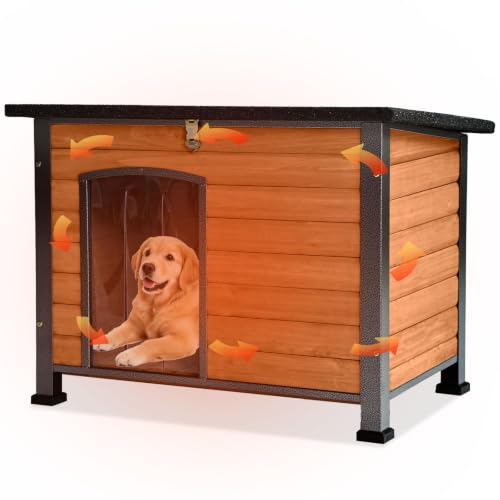


 Fancyango Large Dog House for Medium to
- 🐾【Sturdy & Weatherproof】: Made from high-quality PP material,…
- 🐾【Easy Setup & Hassle-Free Cleaning】: Our dog house…
- 🐾【Three Colors for Choose】: Available in three colors,…
As an Amazon Associate we earn from qualifying purchases at no extra cost to you.
At a Glance: Insulated Dog Houses Compared
| Option | Best for | Key stated feature | Limit |
|---|---|---|---|
| Petmate Indigo | Mild to cool climates, budget buyers | The maker describes a molded plastic house with a foam-insulated construction and a raised floor design | Less insulation than thick-walled cabins; lighter, so may need anchoring in wind |
| Petmate Dogloo | Mild climates, small to medium dogs | Igloo-shaped plastic house with ventilation | Plastic walls conduct cold unless insulated; check the model’s stated insulation |
| ASL Solutions Insulated Dog Palace | Cold climates, medium to large dogs | The maker lists thick polyethylene walls with foam insulation and a bottom floor | Premium tier; heavy; limited styling |
| Precision Pet Outback Log Cabin | Owners wanting a wood look | The maker describes a wood-composite or wood structure with raised floor and shingled roof | Wood needs weatherproof care; check the stated insulation for the model |
| Insulated wood cabin from independent builders | Harsh winters, large dogs | Custom thickness, door options and sizing | Quality varies; premium tier |
| K&H outdoor heated pad | Add-on for existing houses in cold weather | The maker lists a thermostatically controlled heated pad rated for outdoor use | Electrical safety; chew risk; use only as the manual states |
What Insulation Actually Does
A dog house works by trapping the heat the dog gives off. Foam, double-wall plastic and thick wood slow heat loss, and a small interior space warms faster than a large one. A house that is too big wastes warmth, while one that is too small restricts movement. Experts commonly suggest the dog should be able to stand, turn around and lie down comfortably, with the interior only slightly larger than that. Many makers publish interior dimensions and recommended dog weight ranges, and a buyer should measure the dog’s height at the shoulder and nose-to-rump length and compare against the maker’s chart.
Material Choices
Molded plastic
Plastic houses are light, weatherproof and easy to rinse. Those with foam-insulated walls do better in the cold than hollow shells. They can heat up in direct summer sun, so shade and ventilation are essential. Moving them is easy, but they can blow around, so anchor or weight them.
Wood and wood composite
Wood offers natural insulation and a more traditional look. Look for pressure-treated or sealed lumber, elevated floors that stay off wet ground, and roofs that overhang the walls. Untreated wood absorbs moisture and may rot. Avoid treatments that are unsafe for chewing dogs; ask the maker about the finish.
Insulated panel or foam-core houses
Heavy-duty options such as the ASL Solutions line use thicker insulated walls and are made for kennel and farm use. They tend to be heavy and sit at a premium tier, but they are the most-cited choice for owners in long, cold winters.
Features Worth Paying For
- Raised floor: keeps the dog off cold, wet ground.
- Offset or flap door: blocks wind and rain from blowing straight in. A door flap should be flexible so the dog can pass without injury.
- Removable roof or hinged lid: makes cleaning easier and allows access to a sick or injured dog.
- Ventilation: small vents reduce moisture and odor. Without airflow, condensation can make the house damp.
- Sloped roof: sheds rain and snow.
- Chew resistance: puppies may gnaw plastic edges and wooden trim.
Heating Add-Ons: Be Conservative
Electric heated pads and small heaters are marketed for dog houses. If you use one, choose a product the maker states is designed for outdoor pet use, follow the manual exactly, and keep cords protected from chewing. Never run an unrated space heater or a household heating pad in a dog house. If you are unsure about the wiring, outlet or extension cord, ask a licensed electrician. Heating features, auto shut-off and safety certifications should be treated as present only when the maker clearly lists them. Self-warming mats that reflect body heat, with no electricity, are the lower-risk alternative.
Sizing and Placement Notes
- Measure your dog: standing height, nose to base of tail, and width of the shoulders.
- Choose an opening tall enough for the dog to enter without crouching painfully.
- Place the house on a level, dry spot with the door facing away from prevailing winds.
- Keep it shaded in summer and out of drainage paths.
- Add dry straw or a washable, water-resistant bed. Avoid blankets that stay damp, and replace bedding often.
Who Should Not Rely on a Dog House
Puppies, senior dogs, short-coated breeds and small dogs are at greater risk in cold. Many humane societies advise bringing dogs indoors when temperatures drop sharply. If you notice shivering, lethargy or reluctance to move, take the dog inside and contact a veterinarian.
Pick X If: Decision Table
| Pick this | If you… |
|---|---|
| Foam-insulated plastic house | live in a mild to cool climate and want a budget-friendly, easy-clean house |
| Heavy insulated polyethylene or panel house | face long, cold winters with a medium to large dog |
| Wood cabin with raised floor | want a traditional look and can maintain the finish |
| Basic house plus a self-warming mat | want extra warmth without electricity |
| Heated pad rated for outdoor use | can supply a safe outdoor outlet and will protect the cord |
Budget Tiers
- Budget: molded plastic houses and basic wood kits; suited to mild climates.
- Mid-range: foam-insulated plastic and better wood cabins with raised floors and offset doors.
- Premium: thick insulated panel houses and custom-built cabins.
Alternatives to Consider
- Insulated kennel pad or cot with a windbreak: works for short outdoor stays.
- Indoor crate or room: the safest choice during extreme cold.
- Garage or shed space with a bed: only if safe from fumes, chemicals and temperature extremes.
Care and Seasonal Use
Insulated dog houses need seasonal attention. In winter, keep the entry clear of snow and ice, check that bedding is dry, and make sure the dog has access to unfrozen water nearby. In summer, insulation also reduces heat gain, but the house still needs shade and airflow, and dogs should never be confined in a closed house on a hot day. Many plastic houses can be hosed down, while wood houses should be brushed out and inspected for rot or loose fasteners.
Inspect the structure each season. Look for cracked plastic, chewed edges, splintered wood, loose roof fasteners and gaps at the seams. Replace worn parts before they hurt the dog. Rodents and insects may nest in unused houses, so clean the interior before the dog returns to it after storage.
Think about your dog’s coat and behavior too. Thick-coated northern breeds may prefer a cooler, roomy house, while short-coated or low-body-fat dogs may need additional shelter and indoor time. Some dogs avoid enclosed spaces altogether and prefer a raised platform with a windbreak. Watch how your dog uses the house over a week, and adjust placement, bedding and door position as needed. If a dog avoids the house, do not force it; a vet or trainer can help find a better setup.
Assembly and anchoring deserve a note as well. Lightweight plastic houses can shift or tip in strong wind, so many owners weight them with sandbags under the floor or stake them as the maker allows. Wood cabins should sit on blocks or a pad so the floor stays dry. Leave space between the house and any fence so the dog cannot use the roof to climb over.
Frequently Asked Questions
What size insulated dog house do I need?
The dog should be able to stand, turn and lie down, with a little extra room but not much. Use the maker’s interior dimensions and recommended weight range, and compare them with your dog’s height and length.
Is an igloo-style dog house warm enough for winter?
It depends on the model’s insulation and on your climate. Models with foam-insulated walls and an offset door do better than thin shells, but in severe cold even insulated houses are not enough on their own.
Can I put a heater in a dog house?
Only use a product the maker states is made for outdoor pet use, and follow the manual. Do not use household space heaters or heating pads. Ask an electrician if you are unsure about the outlet and cord setup.
What bedding is best in an outdoor dog house?
Many owners use dry straw, which resists moisture, or a water-resistant washable bed. Avoid damp blankets and replace bedding regularly.
Where should I place the dog house?
Choose level, well-drained ground, sheltered from wind, with shade in summer. Face the opening away from prevailing wind and keep the floor raised above the ground.
At what temperature should dogs not stay outside?
There is no single figure that fits every dog. Small, short-coated, young and old dogs are more at risk, and many humane groups advise bringing dogs indoors in severe cold. Ask your vet for guidance for your dog’s breed and age.