Key takeaways
- Short coats (Labrador, Boxer): A mid-range blower on low or medium speed is generally enough.
- Double coats (Husky, Golden Retriever, German Shepherd): Higher airflow helps remove water and loose undercoat. A professional-style dryer saves time.
- Long or curly coats (Poodle, Doodle): Combine airflow with brushing so the coat dries straight and does not mat.
- Small or toy breeds: Use the lowest setting or a hand-held dryer. Full-power blowers can frighten or injure small dogs.
- Senior or health-compromised dogs: Ask your vet about drying methods, and limit time under the dryer.
A single-motor portable blower such as the XPOWER B-4 or the Metro Air Force Commander suits most home groomers, a heavier unit such as the Double K K-9 II or B-Air Fido Max 2 suits owners of thick-coated or large dogs, and a stand dryer suits busy grooming setups. The main trade-off is airflow against noise, so pick the most powerful dryer you will actually use in a space where your dog stays calm.
Our top picks



As an Amazon Associate we earn from qualifying purchases at no extra cost to you.
High Velocity Dog Dryers at a Glance
| Dryer | Best for | Key features | Limits |
|---|---|---|---|
| XPOWER B-4 and similar B-series | Home use, medium to large dogs | The maker positions these as compact, lightweight blowers with variable speed on many models | Louder than quiet appliances, hose and nozzle accessories vary |
| Metro Air Force Commander | Frequent home groomers, mixed coats | The maker describes a heated or unheated blower aimed at pet drying, with included nozzles | Heavier unit, heated air requires care around skin |
| Double K K-9 II | Large, thick-coated breeds, small grooming businesses | Built as a professional-style dryer, durable motor and variable speed | Heavy, larger footprint, premium budget |
| B-Air Fido Max 2 | Multi-dog homes, bigger dogs | The maker lists multi-speed or high-output blowers with a long hose | Loud, bulky, not meant for small dogs at full power |
| Hand-held pet hair dryer | Small dogs, spot drying, nervous dogs | Lower noise and lower airflow, simple handling | Slow on thick coats |
How High Velocity Dryers Work
A high velocity dryer uses a strong motor to push a concentrated stream of air through a hose and nozzle. Instead of relying on heat, it blows water off the coat. This is why many groomers prefer unheated or low-heat airflow, since it reduces the risk of overheating skin. Airflow is typically described in cubic feet per minute and speed in miles per hour, but measurement methods differ between makers, so compare numbers with caution.
Blowing water out of the undercoat is faster than towel drying, and it helps remove loose hair from double-coated breeds. Reviewers often point out that the technique matters as much as the machine: work in sections, keep the nozzle moving, and avoid holding it close to one spot.
What to Look For
Airflow and speed control
More power dries faster but can frighten some dogs. Variable speed gives you control, letting you start low and increase gradually. Dryers with only one speed can be too forceful for small or sensitive dogs.
Heat or no heat
Some dryers have a heating element. Heat can speed drying but increases the risk of discomfort or burns if misused. Many groomers prefer unheated air. If you choose a heated model, follow the manual for distance and duration, keep the dryer moving, and stop if the dog shows distress. Contact your vet or groomer if you have concerns about your dog’s skin.
Noise
High velocity dryers are loud. Many dogs dislike the noise, so introduce it gradually with treats and short sessions. Ear protection is advisable for you, and consider dog ear covers designed for grooming. Do not point the nozzle directly into ears, eyes, nose or face.
Hose and nozzles
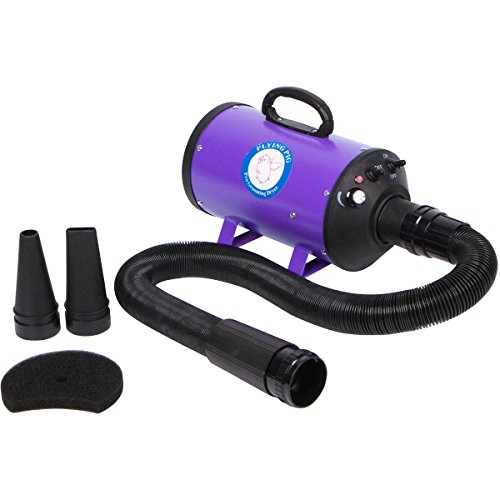
A flexible hose lets you move around the dog, and flat or round nozzles shape the airflow. A longer hose is helpful for large dogs. Check that nozzles fit securely and are easy to change. Some makers include several attachments, and others sell them separately.
Weight and portability
Heavier professional units are stable but harder to carry. Lightweight blowers are easier to store and move but can tip or slide on the floor. Consider a stand or a dryer holder if you groom regularly.
Durability and support
Professional-oriented brands such as Double K and Metro commonly offer longer service lives and parts. Home-oriented models may have shorter warranties. Read the warranty terms and look at what service the maker provides before buying.
Budget Tiers
Budget
Compact blowers and hand-held pet dryers are the entry point. They work for small dogs and short coats but can be slow on thick fur. Expect more noise per unit of airflow and fewer controls.
Mid-range
Mid-range blowers, including models like the XPOWER B-series and the Metro Air Force line, offer variable speed and decent hose lengths. They suit most homes and are the best balance for owners who groom regularly.
Premium
Professional-grade units from Double K and B-Air carry stronger motors and sturdier construction. They are best for large or double-coated dogs, multi-dog households or small grooming businesses, and they cost the most.
Fit by Coat and Size
- Short coats (Labrador, Boxer): A mid-range blower on low or medium speed is generally enough.
- Double coats (Husky, Golden Retriever, German Shepherd): Higher airflow helps remove water and loose undercoat. A professional-style dryer saves time.
- Long or curly coats (Poodle, Doodle): Combine airflow with brushing so the coat dries straight and does not mat.
- Small or toy breeds: Use the lowest setting or a hand-held dryer. Full-power blowers can frighten or injure small dogs.
- Senior or health-compromised dogs: Ask your vet about drying methods, and limit time under the dryer.
Safety and Care
- Keep the nozzle moving and at a safe distance from skin. Follow the manual.
- Avoid ears, eyes and nose. Use a lower setting around the face or use a towel.
- Do not use a heated dryer unattended or in a way the manufacturer does not allow.
- Keep the cord away from water, and use only outlets that suit the dryer. If you are unsure about your wiring, consult a licensed electrician.
- Clean filters and intake screens as directed to prevent overheating and keep airflow strong.
- Stop if your dog is panicking, panting heavily or showing signs of stress.
Pick X If… Decision Table
| Pick this | If you |
|---|---|
| XPOWER B-series | Want a lightweight, widely used blower for home grooming |
| Metro Air Force Commander | Groom often and want a well-known pet blower with accessories |
| Double K K-9 II | Have a large or thick-coated dog and want a durable, professional-style machine |
| B-Air Fido Max 2 | Dry multiple or large dogs and need strong airflow |
| Hand-held pet dryer | Have a small or noise-sensitive dog and need gentle, low airflow |
Alternatives
- Absorbent towels or microfiber drying coats: Quiet and low-cost, good for short coats and a first step before blow drying.
- Professional groomer: If you groom rarely or your dog is anxious, a groomer’s equipment and experience may be the easier option.
- Cage or stand dryers: These are used in professional settings and require supervision. They are not recommended for unsupervised home use.
Before You Buy: A Short Checklist
Decide where you will dry the dog, because the noise and the spray of water suit a bathroom, garage or grooming area better than a living room. Check the length of the hose against the size of your dog and the distance from the outlet. Look at how nozzles attach and whether replacements are sold separately. Read the warranty and find out whether parts such as filters and hoses are available. Introduce the dryer to your dog gradually with the machine off, then on low in another part of the room, rewarding calm behavior. If your dog has skin problems, ask your veterinarian or groomer which drying method is suitable before using any dryer at home.
Frequently Asked Questions
Is a high velocity dryer better than a regular hair dryer for dogs?
A high velocity dryer moves much more air and removes water faster, which reduces the need for heat. Human hair dryers use more heat and less airflow, which can be uncomfortable or risky for a dog’s skin. Many groomers prefer pet-specific dryers for this reason.
Will the noise hurt my dog?
These dryers are loud, and noise can frighten dogs. Introduce the dryer slowly, keep sessions short, and consider ear protection made for dogs. If your dog is very anxious, talk to a groomer or veterinarian.
Should I use heat?
Heat can speed drying but increases risk if used improperly. Many groomers use unheated or low-heat airflow. If your dryer has heat, follow the manufacturer’s instructions and keep the nozzle moving.
Can I use a high velocity dryer on a puppy or small dog?
Use the lowest setting and keep the nozzle at a safe distance, or choose a hand-held pet dryer. Full-power blowers can overwhelm small dogs. Ask your vet or groomer for guidance.
How long does it take to dry a large dog?
It depends on the dryer, the coat and how well you towel dry first. A thick double coat can take longer than a short coat. Work in sections and stop for breaks if your dog gets restless.
How do I clean a dog dryer?
Unplug the unit, then clean the intake filter or screen and wipe the housing as the manual directs. Dust and hair reduce airflow and can cause overheating, so clean after each use or on the schedule the maker lists.