For large dogs, a rigid or thick-walled hard-sided pool suits owners who want something that survives claws and daily use, a foldable PVC pool suits people who need to store it, and an inflatable kiddie pool suits an occasional splash if the dog is gentle on it. Whatever you choose, the pool should be big enough for your dog to stand and turn around, with walls low enough to step over safely.
Our top picks
 Peteast Dog Pool for Large Dogs
- Upgraded Design & Larger Space:The dog pools for…
- Innovative drainage system for easy cleaning: The Peteast…
- Enhanced durability and safety: Peteast pet pools are…
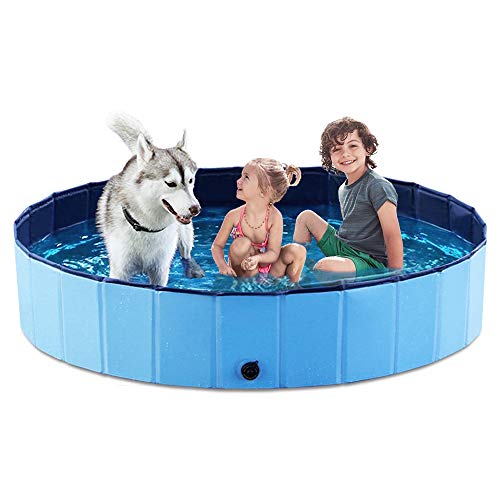 Jasonwell Foldable Dog Pet Bath Pool Collapsible
- Portable and Foldable Dog Pool: easy to store…
- Simple to Set Up and Drain: No need…
- Slip Resistant & Durable & Paws Friendly: made…
| Product | Key specs | |
|---|---|---|
 Cycayit Dog Pool 114.2" for Large Dogs | Check price | |
| Peteast Dog Pool for Large Dogs | Upgraded Design & Larger Space:The dog pools for… Innovative drainage system for easy cleaning: The Peteast… Enhanced durability and safety: Peteast pet pools are… | Check price |
| Jasonwell Foldable Dog Pet Bath Pool Collapsible | Portable and Foldable Dog Pool: easy to store… Simple to Set Up and Drain: No need… Slip Resistant & Durable & Paws Friendly: made… | Check price |
 Jasonwell Foldable Dog Pet Bath Pool Collapsible | Portable and Foldable Dog Pool: easy to store… Simple to Set Up and Drain: No need… Slip Resistant & Durable & Paws Friendly: made… | Check price |
As an Amazon Associate we earn from qualifying purchases at no extra cost to you.
Dog Pools for Large Dogs at a Glance
| Type / example | Best for | Key features | Limits |
|---|---|---|---|
| Foldable PVC pool (Jasonwell and similar) | Most large-dog households | Makers describe collapsible walls over a PVC layer, a drain plug, and several diameters | Walls can scratch or puncture under sharp claws, may slump if poorly supported |
| Inflatable kiddie pool (Intex, Bestway) | Occasional use, gentle dogs, budget buyers | Air-filled walls, wide range of sizes, light to store | Claws can puncture, needs inflation, less stable when a large dog climbs in |
| Rigid plastic shell pool | Daily use, active diggers, outdoor setups | Molded hard plastic, no inflation, simple to rinse | Bulky to store, may crack in cold weather |
| Livestock stock tank (Rubbermaid and similar) | Extra-large breeds, permanent spot | Heavy-duty polyethylene or steel, deep, built for farm use | Tall sides make entry hard for some dogs, needs a ramp or step |
| Splash pad or sprinkler mat | Dogs that dislike deep water | Shallow, flat design with spraying water | Does not allow swimming or full soaking |
What to Look For
Size
Size is the most important detail for large breeds. Measure your dog from nose to base of tail and check shoulder height. Pools described by diameter should be wider than your dog’s length so the dog can turn without crowding. Makers list sizes in inches or feet, and many foldable pools run from small to extra-large. Choose the largest size that fits your yard and your storage space.
Wall height and entry
Low walls help older dogs and those with joint issues step in and out. Tall walls are better at holding water but can be hard to climb. If you choose a stock tank or deep pool, add a stable ramp or sturdy step with a non-slip surface.
Material and durability
Thicker PVC resists claw damage better, but no soft pool is claw-proof. Reviewers frequently report that large dogs, especially those that dig at the water, can puncture thinner materials. Hard plastic and livestock tanks are less vulnerable. Keep nails trimmed, and consider placing a mat or tarp beneath any pool to protect it from sharp rocks.
Drain plug and cleaning
A drain plug saves effort when emptying. Stagnant water can grow algae and attract mosquitoes, so empty and rinse the pool after use and let it dry. Wipe the surface with mild soap and water when needed, and avoid cleaners that could leave a residue your dog may drink or lick.
Slip resistance
A smooth, slippery floor can make a large dog nervous or cause a fall. Some makers describe textured or ridged bottoms. A rubber mat beneath the pool can help hold it in place, and a non-slip liner inside may help for older dogs.
Budget Tiers
Budget
Inflatable kiddie pools from brands like Intex and Bestway are the entry point. They are light and easy to store, and fine for gentle dogs. Expect to replace them if your dog is rough, and be ready to patch punctures with a repair kit.
Mid-range
Foldable PVC dog pools are the most common mid-range option. They have no inflation step, fold flat and usually include a drain plug. They are a good fit for owners who want a pool they can set up in minutes and put away at the end of the season.
Premium
Heavy-duty rigid pools and stock tanks cost more but last longer. They are suited to daily use, multi-dog households and extra-large breeds. Consider the weight, delivery and where it will sit permanently, because moving a filled tank is not practical.
Safety Notes
- Supervise: Never leave a dog alone in or near water, even in a shallow pool.
- Heat: Water left in the sun can get warm. Provide shade and fresh drinking water, and watch for signs of overheating such as heavy panting, drooling or weakness. Contact your veterinarian if you are worried.
- Breed and health: Some dogs, especially short-nosed breeds, older dogs and those with joint or heart conditions, need extra care around water. Ask your vet if you are unsure.
- Water quality: Change water often and avoid letting dogs drink from a pool that has been sitting. Do not add chemicals unless the pool maker and your vet say it is safe.
- Children: Keep the pool away from unsupervised toddlers and follow local rules on water containers.
Placement and Setup
Choose a flat, shaded area without sharp stones. Clear the ground, lay a ground cover or foam mat if possible, and fill gradually. Large dogs entering a half-set pool can cause it to shift, so keep the first few fills shallow. For rigid pools, position them where you can drain the water onto lawn or drainage rather than a patio. Remember that a large pool filled with water is heavy, and grass beneath it may yellow if left in place.
If you have a dog that digs, set the pool on a patio or on a firm surface to reduce edge damage. For dogs that hate getting wet, start with a shallow splash pad and let the dog explore on its own terms with treats and praise.
Pick X If… Decision Table
| Pick this | If you |
|---|---|
| Foldable PVC pool | Want a balance of price, storage and size for a large dog |
| Inflatable kiddie pool | Need the lowest-cost option and your dog is gentle on it |
| Rigid shell pool | Have a digger or a daily swimmer and have room to store it |
| Stock tank with ramp | Own an extra-large breed or several dogs and want a long-lasting setup |
| Splash pad | Have a dog that dislikes deep water or want something simple for hot days |
Alternatives
- Sprinkler or hose play: Many dogs enjoy a gentle spray without standing water. It uses less setup and has fewer drowning concerns.
- Cooling mat or wet towel: For dogs that do not like swimming, a cooling mat or damp towel in a shaded spot can be an alternative on warm days.
- Supervised lake or dog-friendly beach visits: A pool is not a replacement for open water if your dog loves to swim, but check local rules, water conditions and algae warnings before going.
Before You Buy: A Short Checklist
Measure your dog and your yard, then compare both with the maker’s stated diameter and wall height. Think about storage: a foldable pool needs a shelf, while a rigid shell needs a garage corner. Consider your hose and water supply, because a large pool takes a long time to fill and the water is heavy. Check whether local water restrictions affect how often you can refill it. If your dog is older or has joint problems, ask your veterinarian whether swimming or wading is suitable and how long sessions should last. Keep a towel and shade nearby, and rinse your dog after use if the water has been sitting, since algae and insects can build up.
Frequently Asked Questions
What size dog pool does a large dog need?
Choose one wider than your dog’s body length so the dog can stand and turn. Makers list diameters for each size, and many large breeds do better in the biggest option that fits your space. Measure your dog before buying.
Will my dog’s claws puncture a foldable pool?
They can, especially with thinner materials and active dogs. Keep nails trimmed, put a mat under the pool, and pick a thicker material or a rigid pool if your dog is rough on equipment.
How often should I change the water?
Empty and rinse the pool after each use or at least daily when it is in regular use. Standing water can become dirty or attract insects, so let the pool dry between uses.
Can my dog drink the pool water?
Many dogs will try. Keep fresh drinking water nearby and change pool water often. Do not add chemicals unless the manufacturer and your vet say it is safe.
My dog is afraid of water. How can I introduce the pool?
Start with a very shallow layer, use treats and praise, and let the dog explore without pressure. A splash pad is a gentler first step for some dogs. If fear persists, do not force it; a trainer or your vet can offer guidance.
Are inflatable pools safe for large dogs?
They can work for gentle dogs but are more likely to puncture and are less stable when a heavy dog climbs in. Supervise use, inspect for leaks, and move to a sturdier option if the pool keeps failing.