Key takeaways
- Use dog-safe ingredients only. Avoid onion, garlic, grapes, raisins, xylitol and other ingredients that veterinarians flag as toxic to dogs. Ask your veterinarian if you are unsure about an ingredient.
- Skip heavy salt, sugar and seasoning. Plain meat or vegetables are generally better for dogs.
- Follow safe-handling rules for raw meat. Wash hands, boards and surfaces, and keep raw meat away from other food.
- Cut evenly. Uniform slices dry evenly, and thicker pieces may stay moist in the center.
- Check dryness before storing. Treats should be dry or leathery according to the recipe; moisture left inside can promote mold. Store in airtight containers and refrigerate or freeze as guidance suggests for meat treats.
- Introduce new treats slowly, and watch for allergies or upset stomachs. Speak with your veterinarian about calories, especially for dogs on special diets.
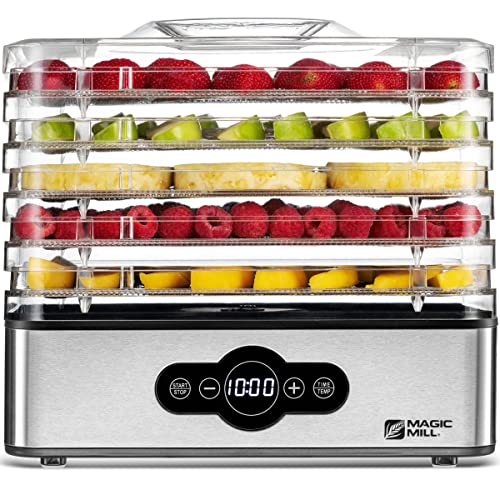
For homemade dog treats, a dehydrator with an adjustable thermostat and a rear- or side-mounted fan, such as an Excalibur or a Cosori or Nesco model, suits most buyers, with larger tray-count units better for batch jerky and compact stackable units better for occasional use. What matters most is controllable temperature, even airflow and easy-to-clean trays, because meat-based treats need careful handling to be safe for your dog.
Dehydrating dog treats means removing moisture so the food keeps longer without preservatives. That makes it popular for sweet potato chews, chicken or beef jerky, liver bites and fruit-and-vegetable snacks. It also raises safety questions: raw meat needs proper preparation, and treats that are not dried enough can spoil. Always follow food-safety guidance from your veterinarian or a trusted source such as national food-safety agencies, and treat treats as a small part of the daily diet.
Our top picks



As an Amazon Associate we earn from qualifying purchases at no extra cost to you.
At a Glance: Dehydrator Options
| Model type | Best for | Key points | Limits |
|---|---|---|---|
| Excalibur (tray-based, rear fan) | Frequent batch jerky and large batches | The maker lists horizontal airflow, an adjustable thermostat and large square trays | Larger footprint; premium tier |
| Cosori stainless-steel tray models | Buyers who want a digital timer, steel trays and a mid-range tier | The maker lists digital temperature and time controls and stainless trays | Fewer trays than the biggest units; check temperature range for meat |
| Nesco Gardenmaster / Snackmaster | Budget-conscious buyers who want an expandable unit | The maker lists adjustable thermostat models with stackable trays | Top- or bottom-mounted fans can dry unevenly, requiring tray rotation |
| Presto and similar stackable round units | Occasional small batches of fruit and veg treats | Compact and simple | Often fixed or limited temperature control; not ideal for meat |
| Oven with a low setting | Trial use without a purchase | Works for some treats with propped door and racks | Not as even or efficient; some ovens cannot hold low temperatures |
Features That Matter for Dog Treats
Adjustable temperature
Food-safety guidance for meat jerky generally calls for heating meat to a safe internal temperature before or during drying, then drying at a steady temperature. Many food-safety sources suggest higher temperatures for meat than for fruit. Look for a unit that reaches the temperatures recommended by food-safety authorities, and use a thermometer to confirm results rather than trusting the dial alone. If a model has no thermostat, it can be fine for dried sweet potato or apple chips but is a poor match for meat.
Airflow design
Horizontal airflow from a rear- or side-mounted fan, as used in Excalibur-style designs, moves air across every tray evenly. Stackable units with a bottom or top fan can leave trays near the fan drying faster than the others, so you may need to rotate trays during the cycle. Even drying is important for treats that you want uniform in texture and moisture.
Tray material and cleaning
Meat fats and marinades can stick to trays. Stainless steel or removable plastic trays that are dishwasher-safe, if the maker states that, make cleaning far easier and reduce cross-contamination. Always wash trays thoroughly between batches, especially after raw meat.
Capacity
If you make a weekly batch of jerky for a large dog, a unit with several trays and a larger drying area saves time. For small dogs, occasional treats or a few chews, a compact unit is enough and takes up less cupboard space.
Timer and auto shut-off
A timer lets you leave the unit running without constant checking, and some models shut off automatically when the timer ends. Use these features only as the maker describes them, and do not leave the dehydrator unattended in a way that conflicts with the manual.
Noise and placement
Dehydrators run for hours. Many reviewers note fan noise and the smell of meat during drying, so place the unit in a well-ventilated area such as a kitchen with a hood or a utility room, away from pets that might knock it over.
Safety and Treat-Making Notes
- Use dog-safe ingredients only. Avoid onion, garlic, grapes, raisins, xylitol and other ingredients that veterinarians flag as toxic to dogs. Ask your veterinarian if you are unsure about an ingredient.
- Skip heavy salt, sugar and seasoning. Plain meat or vegetables are generally better for dogs.
- Follow safe-handling rules for raw meat. Wash hands, boards and surfaces, and keep raw meat away from other food.
- Cut evenly. Uniform slices dry evenly, and thicker pieces may stay moist in the center.
- Check dryness before storing. Treats should be dry or leathery according to the recipe; moisture left inside can promote mold. Store in airtight containers and refrigerate or freeze as guidance suggests for meat treats.
- Introduce new treats slowly, and watch for allergies or upset stomachs. Speak with your veterinarian about calories, especially for dogs on special diets.
Budget Tiers
| Tier | What you typically get | Trade-offs |
|---|---|---|
| Budget | Stackable round unit, limited or no thermostat | Fine for fruit and veg; less suited to meat; uneven drying |
| Mid-range | Digital controls, adjustable temperature, stainless or removable trays | Good balance of features; check the stated temperature range |
| Premium | Horizontal airflow, large square trays, sturdy build | Best for frequent batches; larger and heavier |
Pick X If… Decision Table
| Pick this | If your situation is |
|---|---|
| Excalibur | You make large batches of jerky regularly and want even drying |
| Cosori | You want digital controls, steel trays and a mid-range tier |
| Nesco | You want an expandable unit at a lower cost and don’t mind rotating trays |
| Compact stackable unit | You only make occasional fruit or vegetable chews |
| Oven method | You want to test whether homemade treats suit your dog before buying |
Alternatives
- Air fryers with a dehydrate setting. Some models include a low-temperature dehydrate mode that can handle small batches.
- Freeze-dried or ready-made single-ingredient treats. Many brands sell dried liver, chicken or sweet potato treats if you don’t want to make your own.
- Oven-baked treats. Baked biscuits with dog-safe ingredients are an option if you only need soft or crunchy treats and not jerky.
Cleaning, Storage and Everyday Use
Clean trays and the interior after every batch, particularly after meat. Soak sticky trays in warm soapy water, use a soft brush and let everything dry completely before the next use. Wipe the base and check the vents for dust and food residue, since blockages can reduce airflow. Unplug the unit before cleaning, and never immerse the motor base in water.
Plan batches around your dog’s needs. Small dogs need only a handful of treats per day, so a small batch can last a week or two when stored properly. Label containers with the date and ingredient, which helps if your dog develops an intolerance. Freeze meat treats in portions and thaw only what you need. Rotate flavors gradually, and introduce each new ingredient on its own so any reaction is easy to trace.
If you have several dogs, consider the sizes and chewing strength of each. Thinly sliced jerky can be brittle for large dogs but tough for puppies and seniors, who may need softer or smaller pieces. Always supervise a dog with a new chew, and discard any piece that becomes small enough to swallow whole if that could be a choking risk.
Think about where the machine lives, too. A dehydrator that is awkward to store tends to stay in the cupboard, so pick a size that fits your kitchen. Keep the power cord clear of counter edges and wet areas, set the unit on a stable, heat-tolerant surface with space around it for airflow, and keep it out of reach of curious pets and children while it runs.
Frequently Asked Questions
What temperature should I use for dog jerky?
Food-safety authorities generally advise heating raw meat to a safe internal temperature before or during drying, and many dehydrator makers publish meat-drying temperature guidance in their manuals. Follow the manual and a trusted food-safety source, and use a thermometer to confirm the result.
How long do homemade dehydrated treats last?
It depends on the ingredient and how dry the treat is. Fully dried vegetable chips store longer at room temperature in airtight containers, while meat treats are often kept in the refrigerator or freezer for safety. When in doubt, discard treats that smell off or show mold.
Can I use a regular oven instead?
Some ovens can hold a low temperature with the door slightly propped, which works for small batches. However, ovens can run hotter than the dial and dry less evenly, so a thermometer is helpful.
Which foods are best for dehydrating for dogs?
Plain sweet potato, apple slices without seeds or core, chicken breast, beef and liver are common choices. Always check that an ingredient is safe for dogs, and avoid anything seasoned, salted or sweetened.
Do I need a dehydrator with a fan at the back?
It isn’t required, but horizontal airflow dries trays more evenly. Units with a base fan work well if you rotate trays, so the choice comes down to budget and batch size.
How many treats can my dog eat?
Many veterinarians advise keeping treats to a small share of daily calories. Your veterinarian can give a specific figure for your dog’s size, age and health.