Key takeaways
- Pick the site first. Set the pool on a flat, clean surface without gravel, sticks, sharp paving edges, or nearby objects a dog could use to climb out. Put a ground mat beneath a foldable or inflatable model if the manufacturer allows it.
- Check the footprint. Leave space around the pool for safe entry, exit, and supervision. A 120 cm pool needs more than a 120 cm patch of yard once you account for the drain side and walking space.
- Fill shallowly at first. Start below your dog’s belly and let them approach at their own pace. A pool is not a substitute for supervision, and a dog should not be forced into the water. Keep a clear, low route out.
- Drain after use. Stagnant water can collect dirt, insects, and debris. Follow local guidance for disposal, especially if the water contains cleaning products; do not drain it toward foundations, storm drains, or areas where it could cause erosion.
- Clean and dry completely. Rinse off fur and dirt, use only a cleaner appropriate for the pool material, and follow its label. Let all folds, seams, and plugs dry before storage to reduce mildew and odor.
Best Dog Pools: Quick Picks by Yard, Dog Size, and Use
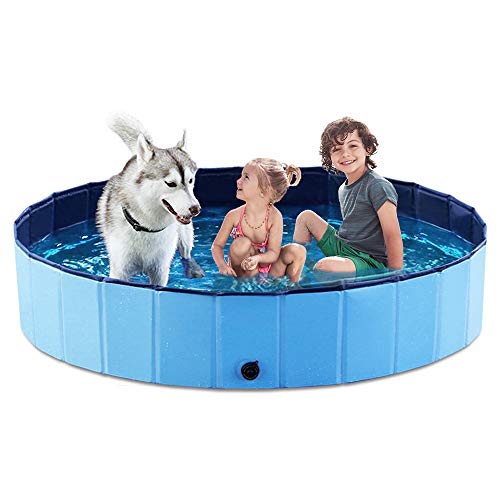
The best dog pools for most backyards are rigid-sided or foldable PVC pools sized so your dog can stand, turn, and lie down without pressing against the walls; choose a rigid model for frequent use, a foldable model for easy storage, and an inflatable pool only if your dog is calm around soft sides and supervised closely.
Pool dimensions, wall height, and drain placement matter more than a product’s “dog pool” label. The figures below are practical comparison ranges for common models, not specifications for every brand. Check the manufacturer’s measurements and weight limit before buying.
Our top picks


As an Amazon Associate we earn from qualifying purchases at no extra cost to you. Ratings are shown as listed on Amazon.
Foldable vs. Rigid vs. Inflatable
| Pool type | Typical size and weight | Claw resistance | Water depth | Drainage and storage | Best fit |
|---|---|---|---|---|---|
| Foldable PVC | About 80–160 cm across; roughly 2–6 kg | Moderate. Reinforced PVC is tougher than a thin liner, but sharp claws can still puncture or abrade it. | Often 20–30 cm; fill only to a comfortable level for your dog. | Commonly has a side drain; folds flat after cleaning and drying. | Small yards, occasional use, and owners who need compact storage. |
| Rigid plastic | About 90–150 cm across; roughly 3–12 kg | Good against punctures, though plastic can crack if dropped, stressed, or left in harsh weather. | Often 15–30 cm, depending on the basin shape. | Usually drained by tipping or siphoning; awkward to store unless nesting or stackable. | Frequent use, dogs that lean on pool walls, and homes with storage space. |
| Inflatable | About 90–150 cm across; roughly 2–5 kg before filling | Low to moderate. A single puncture can make the side collapse; repair patches may help if included. | Often 20–35 cm; soft walls may flex as water and dog weight press against them. | Typically drains through a plug; deflates small but needs thorough drying before storage. | Occasional, closely supervised use with a gentle dog and very limited storage. |
Capacity depends on the pool’s shape and fill line. As a rough planning estimate, a 120 cm round pool filled to 20 cm holds about 226 litres before allowing for the sloped sides and space displaced by a dog. A wide, shallow pool can use a surprising amount of water, so check local watering rules and choose a drain point that will not flood a patio or garden bed.
Choose by Your Dog and Your Yard
| Your situation | Good starting choice | What to prioritize |
|---|---|---|
| Small dog, balcony, or very limited storage | Foldable pool, around 80–100 cm across | Non-slip ground, low entry, and a drain that empties into a suitable area. |
| Medium dog, regular summer use | Foldable PVC or rigid pool, around 100–130 cm across | Enough floor space to turn around; reinforced sides if your dog paws at the water. |
| Large dog or two dogs sharing | Rigid pool, often 130–150 cm or larger | Usable interior floor area, stable walls, and a level surface with room to enter and exit. |
| Gentle dog, occasional use, minimal storage | Inflatable pool with a repair patch | Supervision, a claw check before each session, and a dry place to store it. |
| Rough play, digging, or frequent clawing | Rigid pool | Thick, smooth construction and a shaded location; avoid relying on an inflatable sidewall. |
For sizing, measure your dog from nose to rump while standing, then allow room to turn: a pool’s usable interior diameter should be at least that body length, and closer to 1.5 times the length is more comfortable for lounging. For two dogs, size for the dogs side by side rather than assuming one can simply share a single-dog pool. Measure the inside floor, not just the outside rim.
Which Type Wins on the Details?
Foldable pools: the storage-friendly middle ground
Foldable pools balance portability and structure. Their panels usually hold shape without inflation, and many have a drain plug near the base. They work well when a rigid basin is too bulky but an inflatable one seems vulnerable. The common wear points are the bottom panel, folded creases, and seams. Dragging the pool across concrete or storing it damp can shorten its life, so lift it rather than pulling it and let it dry fully before folding.
Rigid pools: best for repeated use and paw pressure
A rigid pool has no air chambers or flexible seams to puncture, making it a sensible pick for dogs that paw, lean, or splash vigorously. The trade-off is storage: even an empty basin takes up floor space, and a full one is too heavy to move. Drain it where the water can disperse safely, then rinse away dirt and fur. Inspect for cracks, rough edges, or sun damage before each season.
Inflatable pools: compact, but least forgiving
An inflatable pool is easy to pack away, but its soft walls are the weak point. Keep nails trimmed, remove collars or tags that could snag, and do not let dogs bite or climb on the rim. A patch kit can address small punctures, but a damaged seam or repeated leaks may make repair impractical. Do not leave an inflated pool in direct sun for long periods; heat can increase internal air pressure.
Setup, Water, and Upkeep
- Pick the site first. Set the pool on a flat, clean surface without gravel, sticks, sharp paving edges, or nearby objects a dog could use to climb out. Put a ground mat beneath a foldable or inflatable model if the manufacturer allows it.
- Check the footprint. Leave space around the pool for safe entry, exit, and supervision. A 120 cm pool needs more than a 120 cm patch of yard once you account for the drain side and walking space.
- Fill shallowly at first. Start below your dog’s belly and let them approach at their own pace. A pool is not a substitute for supervision, and a dog should not be forced into the water. Keep a clear, low route out.
- Drain after use. Stagnant water can collect dirt, insects, and debris. Follow local guidance for disposal, especially if the water contains cleaning products; do not drain it toward foundations, storm drains, or areas where it could cause erosion.
- Clean and dry completely. Rinse off fur and dirt, use only a cleaner appropriate for the pool material, and follow its label. Let all folds, seams, and plugs dry before storage to reduce mildew and odor.
For frequent use, the ongoing effort is less about the pool’s purchase price and more about filling, draining, rinsing, and drying it after sessions. A drain plug that is reachable when the pool is full can save effort, but check that it seals reliably and that the hose or outlet will direct water where you want it.
What to Check Before Buying
- Interior measurements: confirm usable floor diameter or length and width, not only the advertised outer size.
- Wall height: enough to contain splashing, but not so high that your dog struggles to step over it.
- Material and seams: look for reinforced panels or a thicker basin, while remembering no soft pool is claw-proof.
- Drain location: a low, accessible drain is useful; verify whether a hose connection is included or sold separately.
- Setup space: consider the filled footprint, nearby drainage, shade, and room to supervise—not just where the empty pool will be stored.
Prices vary by size, material, and construction, but basic foldable and inflatable pools are generally in the lower-to-middle market range, while larger rigid models can cost more and take up more space. For a dog that will use a pool often or push against its walls, a well-sized rigid or reinforced foldable model is usually a better long-term choice than selecting the cheapest option.