Key takeaways
- Portable generator powering a refrigerator, lights, and chargers: Choose a 12/3 SJTW cord, usually 25–50 feet long, rated for at least 15 or 20 amps.
- Higher-load tools or several appliances: Choose a 10/3 cord rated for 30 amps, preferably 25–50 feet rather than 100 feet.
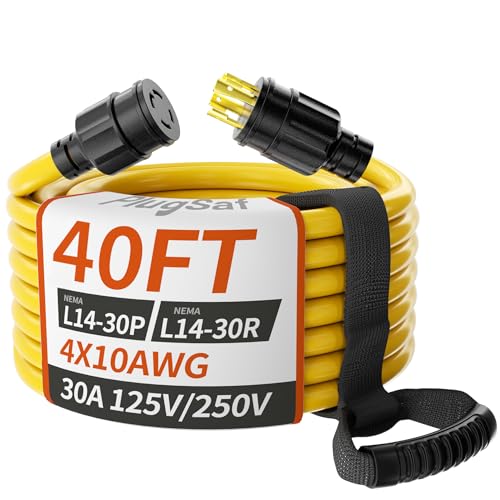
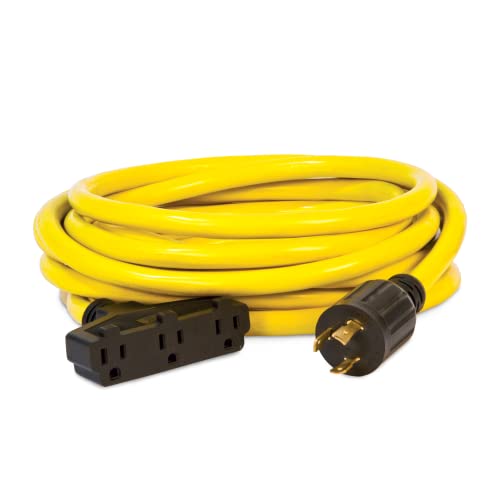
- Generator with a 30-amp twist-lock outlet: Use a purpose-built L5-30 extension cord with matching connectors, not a household cord with an improvised adapter.
- Cold-weather or year-round outdoor use: Look for an SJEOW or similar cold-flexible, oil-resistant jacket.
- Occasional emergency backup on a budget: A 12/3 SJTW cord from an established electrical-cord manufacturer such as Southwire or Coleman Cable is usually the sensible middle ground.
The best extension cords for generators are outdoor-rated 10/3 or 12/3 cords with a 125-volt, 20- or 30-amp rating, sized to the generator’s running wattage and kept as short as practical.
Quick picks by generator setup
- Portable generator powering a refrigerator, lights, and chargers: Choose a 12/3 SJTW cord, usually 25–50 feet long, rated for at least 15 or 20 amps.
- Higher-load tools or several appliances: Choose a 10/3 cord rated for 30 amps, preferably 25–50 feet rather than 100 feet.
- Generator with a 30-amp twist-lock outlet: Use a purpose-built L5-30 extension cord with matching connectors, not a household cord with an improvised adapter.
- Cold-weather or year-round outdoor use: Look for an SJEOW or similar cold-flexible, oil-resistant jacket.
- Occasional emergency backup on a budget: A 12/3 SJTW cord from an established electrical-cord manufacturer such as Southwire or Coleman Cable is usually the sensible middle ground.
What matters most when choosing a generator extension cord
1. Gauge: lower number means thicker copper
Wire gauge controls how much current the cord can carry and how much voltage it loses along its length. A 10-gauge conductor is thicker than a 12-gauge conductor, and a 12-gauge conductor is thicker than a 14-gauge conductor.
Our top picks


As an Amazon Associate we earn from qualifying purchases at no extra cost to you. Ratings are shown as listed on Amazon.
For generator use, 14/3 cords are best reserved for small loads such as lights or chargers. A 12/3 cord is the practical general-purpose choice for many portable generators. A 10/3 cord is preferable for sustained loads near 20–30 amps, long runs, refrigerators combined with other equipment, or demanding tools.
Do not select a cord solely because its plug fits. The cord, generator receptacle, connected equipment, and circuit protection must all be compatible. The smallest-rated component sets the safe limit.
2. Length: longer is not automatically better
Long cords add resistance. That resistance creates voltage drop, heat, and poorer motor performance, particularly when a refrigerator, freezer, pump, or power tool starts. A 25-foot cord is generally easier to manage and electrically preferable to a 100-foot cord when both reach the load.
If you need more reach, use a thicker cord rather than connecting multiple cords end to end. Never coil a loaded cord tightly; the trapped heat can damage the jacket and conductors.
3. Wattage and amperage rating
To convert a 120-volt load into approximate current, divide watts by volts:
Amps = watts ÷ 120
For example, a refrigerator drawing 700 watts while running uses about 5.8 amps. Add 300 watts of lighting and 100 watts of chargers, and the running load is approximately 9.2 amps. Startup demand can be substantially higher, so a 12/3, 20-amp outdoor cord gives more practical headroom than a light-duty 16-gauge cord.
Remember that a generator’s “starting” or “surge” wattage is not its continuous output. Base the cord choice on the generator outlet’s amperage and the combined running and startup demands of the equipment connected to that outlet.
4. Jacket material and outdoor rating
Look for a cord marked for outdoor use, commonly with an SJTW, SJEOW, or comparable designation. The letters describe the jacket and insulation properties, including service level, thermoplastic or elastomer construction, oil resistance, and weather flexibility.
- SJTW: A common outdoor thermoplastic jacket suitable for general residential generator use. It may become stiffer in cold weather.
- SJEOW: A more flexible elastomer-style option with better resistance to oil, weather, and temperature extremes. It is useful for frequent outdoor work.
- Indoor-rated cords: Avoid them for generators, even if they have the correct plug shape. Indoor jackets are not designed for rain, sunlight, abrasion, or outdoor temperature swings.
Choose cords with molded plugs, strain relief, and visible certification markings from a recognized testing organization such as UL or ETL. These details usually matter more than decorative features or unusually low prices.
Head-to-head comparison of useful cord sizes
| Cord type | Typical rating | Best practical length | Approximate maximum at 120 V | Best use |
|---|---|---|---|---|
| 14/3 outdoor | 15 A | 25–50 ft | 1,800 W | Lights, chargers, small electronics |
| 12/3 outdoor | 15–20 A | 25–75 ft | 1,800–2,400 W | General generator loads and appliances |
| 10/3 outdoor | 20–30 A, depending on connector and cord label | 25–50 ft | 2,400–3,600 W | Higher loads, tools, and 30-amp generator outlets |
| 10/4 twist-lock | Usually 30 A at 125/250 V | 25–50 ft | Use the cord and generator label | Compatible 30-amp generator inlet or transfer equipment |
These are selection figures, not permission to exceed the individual cord’s printed rating. A 12/3 cord labeled 15 amps must be treated as a 15-amp cord, even if similar 12-gauge products carry a 20-amp rating.
Best choice for each buying situation
| Your situation | Recommended specification | Why |
|---|---|---|
| Lowest reasonable cost and occasional use | 12/3 SJTW, 25 or 50 ft, 15–20 A | Good capacity without paying for an oversized heavy cord |
| Frequent storms or regular outdoor projects | 10/3 SJEOW, 25–50 ft, molded plugs | Thicker conductors and a more durable, flexible jacket |
| Long distance to a detached workspace | 10/3, shortest workable length, with load reduced if needed | Thicker wire limits voltage drop better than a long 12/3 cord |
| Small inverter generator and electronics | 12/3 outdoor cord, 25–50 ft | Appropriate capacity while remaining manageable |
| Generator’s 30-amp L5-30 receptacle | Matching L5-30 twist-lock cord, typically 10/3 | Prevents loose connections and preserves the outlet’s intended rating |
How to size a cord before buying
- List every intended load. Record running watts and startup watts for refrigerators, freezers, pumps, fans, heaters, and tools.
- Separate circuits where possible. Avoid putting a high-startup motor and several other major loads on one cord.
- Calculate running current. Divide the combined running watts by 120. A 2,000-watt load is about 16.7 amps.
- Allow starting headroom. If the connected equipment approaches the cord’s rating, move to a heavier gauge or reduce the simultaneous load.
- Measure the actual route. Keep the generator outdoors, away from doors and windows, and never run a cord through a doorway where it can be pinched.
For example, a 1,500-watt combined load equals 12.5 amps at 120 volts. A 50-foot 12/3 outdoor cord rated at 15 or 20 amps is a reasonable match. If the load rises to 2,300 watts, current reaches about 19.2 amps; a clearly labeled 20-amp 12/3 cord may be suitable if startup demand is modest, but a 10/3 cord provides a better margin.
Ownership details that affect safety and lifespan
The plug ends and the first few inches of jacket usually wear out before the copper itself. Inspect those areas for looseness, discoloration, cuts, flattened sections, or exposed wire. Replace a damaged cord rather than repairing it with tape.
After use, unplug the cord by gripping the plug, not pulling the cable. Wipe off mud and moisture, let it dry fully, and store it loosely coiled in a dry place. Keep cords away from fuel, hot exhaust, standing water, sharp edges, vehicles, and pet chewing. A cord cover may protect a route from foot traffic, but it does not make an indoor cord suitable for outdoor generator use.
Do not connect a generator to a wall outlet with a “suicide cord.” That can energize utility lines and create lethal backfeed. For whole-home power, use a properly installed transfer switch or interlock and have the arrangement evaluated by a qualified electrician. Also operate the generator outdoors, far from openings, because carbon monoxide can accumulate indoors even when the generator seems well ventilated.
Bottom line
For most portable-generator owners, the best extension cord is a short, outdoor-rated 12/3 cord with a clearly printed 15- or 20-amp rating. Move to 10/3 when the load is higher, the run is longer, or the generator uses a 30-amp outlet. Choose an SJEOW-style jacket for repeated outdoor work or cold conditions, and prioritize correct connectors, certification markings, and safe routing over extra length or a bargain price.