Key takeaways
- For foam: Roll the plug into a narrow, smooth cylinder, reach over your head to gently pull the outer ear up and back, then insert it as directed by the manufacturer. Hold it in place while it expands. A properly fitted plug should sit securely, not protrude substantially, and reduce sound similarly in both ears.
- For reusable tips: Try the included sizes one at a time. Insert gently and check that the plug stays in place when you turn your head, speak and open your jaw. If the seal breaks easily or the fit hurts, change size or design rather than forcing it.
- At the venue: Put plugs in before entering the loud area. Keep them in consistently; repeatedly removing them for conversation interrupts protection. If the music still feels uncomfortably loud, move farther from speakers or to a quieter area.
Best Earplugs for Concerts: Choose by Fit, Filter and Show Length
The best earplugs for concerts are reusable silicone or elastomer earplugs with a well-fitting acoustic filter if you want music to sound more balanced; foam plugs are usually the better low-cost choice when maximum, simple noise reduction matters more than fidelity. The right pick depends on fit, the protection rating on the exact package, and how long you’ll wear them—not on a single “best” decibel number.
Concert earplugs compared
Noise Reduction Rating (NRR) is a laboratory rating used in the United States, not a guarantee of how much sound will be reduced in your ears. Real-world protection depends heavily on fit and insertion. Acoustic-filter products may instead list an attenuation figure or frequency-response data; those figures aren’t automatically interchangeable with NRR. Check the product’s current packaging and instructions, since ratings and versions can vary.
Our top picks


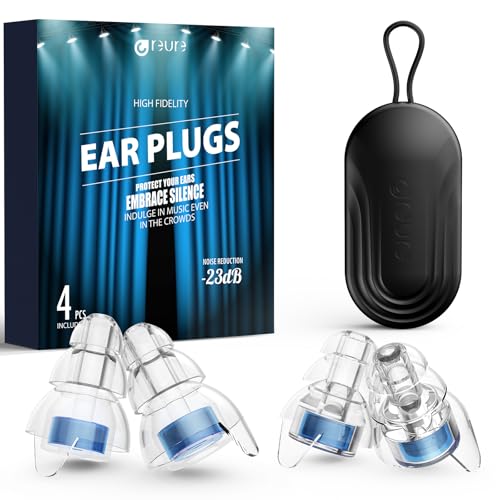

As an Amazon Associate we earn from qualifying purchases at no extra cost to you. Ratings are shown as listed on Amazon.
| Type or example | Material and design | Published rating or range | Best fit for | Main trade-off |
|---|---|---|---|---|
| Disposable foam earplugs | Compressible polyurethane or similar foam; typically one pair per use | Many U.S. models list NRR values around 25–33 dB; verify the specific package | Budget protection, backups, or people who prefer a strong sound reduction | Can make music sound less clear; correct roll-and-insert technique is essential |
| Etymotic ER20XS | Reusable stemmed earplug with acoustic filter and interchangeable eartips | Manufacturer-listed NRR: 13 dB | Listeners who want a familiar, filtered earplug design at a moderate price | Lower listed NRR than many foam plugs; fit still determines practical protection |
| Loop Experience 2 | Reusable silicone-style earplug with an acoustic channel and multiple tip sizes | Manufacturer-listed SNR: 17 dB; SNR is not the same rating system as NRR | Frequent showgoers who value a compact, reusable fit | Different ears may need different tips; the listed SNR cannot be directly ranked against NRR |
| Custom-molded filtered plugs | Made from an impression of the wearer’s ears; filter options vary | Varies by maker and filter; request the exact attenuation data | People who attend shows often or struggle to keep universal tips seated | Higher upfront cost and a professional fitting; molds may need replacement if fit changes |
These examples illustrate different designs, not a claim that one rating system is superior. Confirm the current model, included tip sizes and rating before buying. For any earplug, don’t assume a lower listed number is automatically inadequate or a higher one guarantees safety: seal, exposure level and how long you’re exposed all matter.
Pick by your concert situation
| Your situation | Starting choice | Why it may suit you | What to check |
|---|---|---|---|
| First show, tight budget, occasional use | Packaged foam plugs with a clearly stated rating | Low cost and easy to keep as a spare pair | Practice insertion at home; a plug that sits shallow may provide much less protection |
| You want vocals and instruments to sound less muffled | Reusable filtered plugs | Designed to reduce sound while retaining more tonal balance than ordinary foam | Try different included tip sizes and check that the plug stays sealed when you talk or move |
| You attend shows regularly and universal tips won’t stay put | Custom-molded filtered plugs | A personalized shape can address recurring fit problems | Ask an audiologist or qualified provider about impressions, filter options and refitting |
| Long festival day with several stages | Comfortable reusable filters, plus correctly rated foam backups | A secure comfortable pair is more likely to stay in for the whole event | Carry a clean case; move away from loudspeaker stacks and take quieter breaks |
Foam versus filtered silicone: the practical difference
Choose foam when simplicity and cost lead
Foam plugs expand to fill the ear canal and can offer substantial attenuation when inserted correctly. They’re inexpensive and useful as a backup, but the sound may feel less open, especially for conversation or music. Don’t cut them or force them into the ear. Follow the package directions, and discard single-use plugs when dirty, damaged or no longer able to expand properly.
Choose filtered plugs when balance and repeat use matter
Reusable filtered plugs use a sound path or filter intended to reduce sound more evenly than a basic foam plug. They can make music easier to follow, but “high fidelity” doesn’t mean sound is unchanged or that the plug blocks every frequency equally. Silicone is common for the eartips; the filter housing may be made from another material. Comfort depends on the whole design, not just the word “silicone.”
For long shows, the best material is the one that seals comfortably without pressure or slipping. A tip that is too small may leak; one that is too large may become sore. Start with the maker’s smallest recommended fit check, then test the seal in a quiet place. Don’t push a plug deeply enough to cause pain.
Check the fit before the first show
- For foam: Roll the plug into a narrow, smooth cylinder, reach over your head to gently pull the outer ear up and back, then insert it as directed by the manufacturer. Hold it in place while it expands. A properly fitted plug should sit securely, not protrude substantially, and reduce sound similarly in both ears.
- For reusable tips: Try the included sizes one at a time. Insert gently and check that the plug stays in place when you turn your head, speak and open your jaw. If the seal breaks easily or the fit hurts, change size or design rather than forcing it.
- At the venue: Put plugs in before entering the loud area. Keep them in consistently; repeatedly removing them for conversation interrupts protection. If the music still feels uncomfortably loud, move farther from speakers or to a quieter area.
Ownership: cleaning, wear and cost per show
Reusable plugs need routine care. Follow the manufacturer’s cleaning instructions; many removable silicone tips can be washed with mild soap and water, while filter components may need to stay dry. Let parts dry fully before storing them in a clean case. Replace tips that tear, stretch, harden or no longer hold a seal. Filters and custom molds also have their own replacement guidance.
Foam is a recurring consumable. A simple comparison helps: if a reusable pair costs $30–$60 and you attend 12 shows a year, the purchase works out to about $2.50–$5 per show in the first year, before replacements. A foam pack may cost roughly $5–$15, but cost per show depends on how many pairs it contains and whether you use fresh plugs for each event. These are broad market ranges, not fixed prices.
Common mistakes include buying by NRR alone, using a damaged plug, sharing earplugs, storing dirty reusable tips loose in a pocket, and assuming filtered plugs make it safe to stand beside a loudspeaker. Earplugs reduce exposure; they don’t make loud sound harmless. If you have ear pain, persistent ringing, drainage, or difficulty finding a comfortable fit, stop using the product and consult a qualified healthcare professional or audiologist.