Key takeaways
- Radio listening (medium volume): draws 70-100mA
- Flashlight on high: draws 150-250mA
- Phone charging via USB out: draws 500-1000mA
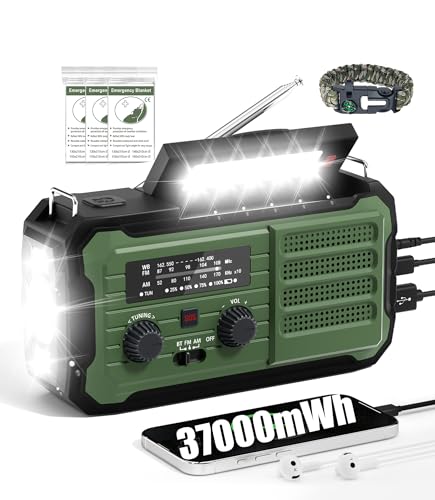
The best emergency radios with solar for most outages are the Midland ER310 and Eton Sidekick, because they combine the fastest solar top-up, a 2,000mAh+ rechargeable battery with NOAA weather band reception, and a durable water-resistant build; budget hand-crank models like the FosPower Emergency Solar Hand Crank Radio and Kaito KA500 work for short outages but charge significantly slower and rely more on crank and USB power.
Our top picks



As an Amazon Associate we earn from qualifying purchases at no extra cost to you. Ratings are shown as listed on Amazon.
Best Emergency Radios With Solar Compared
Not all solar emergency radios charge at the same rate. Panel size, battery chemistry, and whether the radio can charge via USB-C in addition to solar determines if it will actually stay powered during a multi-day outage. Here is how the most widely available models compare on the specs that matter for staying powered anywhere.
| Model | Battery Capacity | Solar Panel | Solar Charging Rate (Direct Sun) | Radio Bands | Weight | IP Rating & Build |
|---|---|---|---|---|---|---|
| Midland ER310 | 2,600mAh Li-ion (replaceable) | 0.6W mono-crystalline | ~120-150mAh per hour / 18-22 hrs for full charge | AM/FM, NOAA 7-channel + SAME alerts | 15.9 oz (450g) | IPX4, rubberized ABS housing |
| Eton Sidekick / American Red Cross Sidekick | 2,000mAh Li-ion + 3x AAA backup | 0.5W mono-crystalline | ~100-130mAh per hour / 15-18 hrs for full charge | AM/FM, NOAA 7-channel + SAME, Bluetooth | 12.3 oz (349g) | IPX4, aluminum + ABS |
| Kaito KA500 Voyager | 800mAh Li-ion + 3x AA backup | 0.3W amorphous | ~50-70mAh per hour / 12-14 hrs for full charge | AM/FM/SW, NOAA 7-channel | 15.2 oz (430g) | No official IP rating, ABS + rubber bumper |
| FosPower 2000mAh Emergency Radio | 2,000mAh Li-ion | 0.4W mono-crystalline | ~80-100mAh per hour / 20-25 hrs for full charge | AM/FM, NOAA 7-channel | 11.6 oz (330g) | IPX3, compact ABS |
| RunningSnail MD-090P | 4,000mAh Li-ion | 0.5W mono-crystalline | ~90-110mAh per hour / 36-44 hrs for full charge | AM/FM, NOAA 7-channel | 14.1 oz (400g) | IPX3, ABS with larger solar panel lid |
Solar charging on its own is slow on every model. Even the best 0.5-0.6W panels only add about 1 hour of radio listening or 10-15 minutes of phone charging per hour in direct midday sun. The practical takeaway: solar is for maintenance charging and extending runtime, not for fully recharging a dead battery quickly. For a full charge, USB-C or micro-USB from a power bank or wall outlet is 8-10x faster.
Which Solar Emergency Radio Should You Choose?
Choose based on outage length, where you will use it, and whether you need it to charge other devices.
| Your Situation | Best Fit | Why |
|---|---|---|
| Multi-day home outage, want NOAA alerts while you sleep | Midland ER310 or Eton Sidekick | SAME alert programming wakes the radio only for your county, largest usable battery, loudest speaker and brightest flashlight |
| Bug-out bag or car kit where weight and size matter | FosPower 2000mAh or Eton Sidekick | Under 13 oz, slim enough for a glove box, still has NOAA and USB phone output |
| Need to charge a phone multiple times without power | RunningSnail MD-090P | 4,000mAh capacity can provide 1 full phone charge, but needs pre-charging via USB before the outage |
| Off-grid cabin, camping, or international shortwave listening | Kaito KA500 | Only model here with shortwave bands, plus AA battery fallback when Li-ion ages |
| Tightest budget for occasional use | FosPower or RunningSnail-type hand-crank radios | General market range $25-$40 delivers basic AM/FM/NOAA, flashlight and hand crank if you accept slower solar |
How Solar Charging Speed and Battery Capacity Work Together
Real-World Runtime Calculation
Manufacturers list battery capacity in mAh, but runtime depends on what you are powering. Use this to estimate before you buy.
- Radio listening (medium volume): draws 70-100mA
- Flashlight on high: draws 150-250mA
- Phone charging via USB out: draws 500-1000mA
Worked example with a 2,600mAh battery like the Midland ER310:
2,600mAh / 85mA (radio draw) = ~30 hours of continuous radio. At 4 hours of listening per day, that is about 7 days without any recharge. If you use the flashlight for 2 hours per night at 200mA, that subtracts 400mAh per night, reducing total radio time to about 4-5 days.
Solar recovery: On a sunny day, 4 hours of direct sun on a 0.6W panel adds roughly 500-600mAh. That replaces about 6-7 hours of radio listening or about 30-40% of a phone’s battery. On an overcast day, expect 20-30% of that rate. This is why pre-charging the radio to 100% via USB before storm season matters more than panel wattage alone.
Why Battery Type Matters More Than Size
Most modern solar emergency radios use a replaceable 18650 Li-ion cell (2,000-2,600mAh) or a built-in Li-ion pouch (4,000mAh). Look for:
- Replaceable 18650: You can swap in a fresh cell after 300-500 cycles when capacity drops to 70-80%. Models like the Midland ER310 and Kaito KA500 allow this without tools.
- Built-in pouch: Higher initial capacity but when it degrades you must replace the whole radio or have it serviced.
- AA/AAA fallback: Critical for longevity. Kaito and Eton models run on standard alkaline batteries if the rechargeable dies in storage.
- USB-C input: Charges the radio from any power bank in 3-4 hours. Micro-USB models charge slower and cables are harder to find in 2026.
NOAA Weather Band Reception: What Actually Makes a Difference
All radios listed receive the 7 NOAA Weather Radio frequencies (162.400 – 162.550 MHz), but reception quality and alert usefulness vary.
- SAME technology: Found on Midland ER310 and Eton Sidekick. You program your county’s 6-digit SAME code and the radio stays silent until an alert for your area is issued, then auto-alarm. Without SAME, any alert within 40-60 miles will trigger an alarm, including distant warnings.
- Telescoping antenna length: A 24-30 inch steel whip like on the Midland and Kaito pulls in NOAA from 30-40 miles. Short 8-inch rubber antennas on compact models often need to be near a window for the same signal.
- Alert modes: The best models offer voice, siren, and flashing LED alerts plus a way to disable the siren at night. Check that the NOAA band has a dedicated volume control.
If you live more than 25 miles from the nearest NOAA transmitter, prioritize a model with an external antenna jack or a long whip and SAME. Check coverage at weather.gov/nwr to find your transmitter and signal strength.
Durability and Ownership Realities
Solar emergency radios fail in predictable places. Knowing what wears first helps you keep one ready for years.
- Hand crank: The first part to fail. Plastic gears strip if you crank faster than 2 rotations per second. Use steady, moderate force. One minute of cranking typically yields 5-8 minutes of radio at medium volume or 2-3 minutes of flashlight, not a full charge.
- Solar panel haze: Panels on ABS lids can cloud from UV and dust after 2-3 years, cutting output by 15-25%. Wipe with a damp microfiber cloth, never with alcohol or abrasive cleaners. Store out of direct window sun when not in use to slow UV aging.
- Battery maintenance: Li-ion self-discharges 2-3% per month. If stored full and unused for 6-9 months, voltage can drop low enough to damage the cell. Top up via USB every 3-4 months and store at 40-70% charge if you will not use it for a season.
- Water resistance: IPX3 means it survives light spray; IPX4 survives splashing from any direction. Neither survives submersion. The rubber port covers must be fully seated to maintain the rating; a missing flap is the most common reason for water damage.
- Common mistakes: Leaving the radio on a hot dashboard degrades the battery twice as fast. Using the USB output to constantly power a phone while solar charging creates heat that shortens battery life. And relying solely on solar without ever testing NOAA reception means you may not get the alert when you need it.
General market ranges in 2026: compact solar hand-crank radios $25-$45, mid-size 2,000-2,600mAh models with SAME and better solar $50-$75, large 4,000mAh+ models with expanded charging hubs $60-$90. Prices vary by retailer and features like Bluetooth or shortwave.
Setup Before You Need It
A new radio should be set up in 10 minutes, not during a storm.
- Charge fully via USB-C, then test solar: place in direct sun for 1 hour and confirm the charging indicator advances.
- Program NOAA SAME for your county. Look up the 6-digit code from the National Weather Service and set it in the menu, then run a weekly test alert.
- Extend the antenna fully and scan all 7 NOAA channels. Save the strongest channel. Try it in the room where you will keep the radio overnight.
- Test hand crank, flashlight, and USB phone output with your actual phone cable. Confirm which port is input vs. output.
- Label the battery type and purchase date on the bottom with tape so you know when to replace the cell in 3-4 years.
Frequently Asked Questions
Can solar alone keep the radio running indefinitely?
No. In sustained sun, solar extends runtime but cannot keep up with heavy phone charging or 24-hour radio use. Think of solar as a trickle charger that buys you hours, while USB and crank are your primary recharge methods during extended outages.
How long do emergency radio batteries last?
A Li-ion 18650 cell typically holds 80% capacity after 300-500 full charges, which is 3-5 years of occasional emergency use if you top it up quarterly. Alkaline AA/AAA backups should be replaced yearly even if unused due to leakage risk.
Do I need shortwave on an emergency radio?
For most U.S. users, no. NOAA, AM, and FM cover local emergency information. Shortwave on models like the Kaito KA500 is useful for long-distance news when camping off-grid or abroad, but it adds complexity and drains the battery faster.