Key takeaways
- Ordering by “Wrangler” alone: generation and body style are essential, especially for 2018 vehicles and rear mats.
- Ignoring the rear seat configuration: two-door, Unlimited and 4xe layouts can require different pieces.
- Assuming all trim names change the floor: many trim differences do not alter the front footwell, while body style and generation do.
- Leaving an extra mat beneath the liner: stacking mats can create pedal clearance and retention problems.
- Using tire shine on the top surface: a glossy dressing can make footwear slide and collect dust.
- Choosing maximum height without checking the doors: an over-tall edge can fold, curl or prevent proper seating.
Best All Weather Floor Mats for Jeep Wrangler
The best all weather floor mats for a Jeep Wrangler are model-year-specific molded liners: choose a JL liner for most 2018–2026 Wranglers, a JK liner for 2007–2018 models, and an older-generation mat for TJ or YJ Jeeps rather than relying on a “universal” set.
For most owners, WeatherTech FloorLiner is the strongest choice for maximum carpet coverage and easy removal, while Husky Liners Weatherbeater is the better value-oriented option. Mopar all-weather mats make the most sense when you want factory-style fit and retention, and a flexible rubber mat is often preferable for a frequently used trail Jeep where fast rinsing matters more than a tailored appearance.
Our top picks

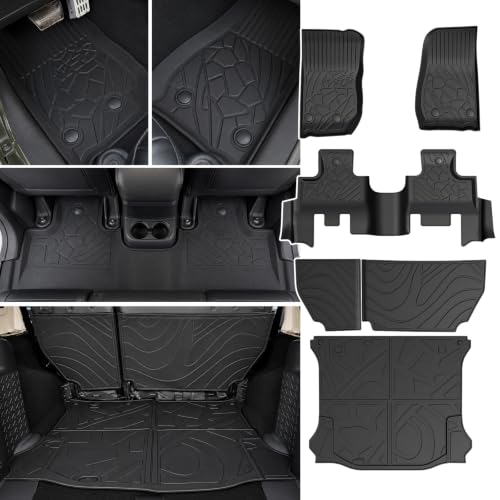


As an Amazon Associate we earn from qualifying purchases at no extra cost to you. Ratings are shown as listed on Amazon.
Quick picks by Wrangler situation
| Wrangler owner or priority | Best type or pick | Why it fits the situation | Typical market range |
|---|---|---|---|
| Maximum carpet protection | WeatherTech FloorLiner | Deep molded channels, tall side walls and broad footwell coverage | $150–$220 per vehicle set |
| Lower-cost molded coverage | Husky Liners Weatherbeater | Flexible molded construction and removable one-piece sections | $110–$180 per set |
| Factory-style fit | Mopar all-weather mats | Designed around Jeep retention points and original cabin geometry | $120–$200 per set |
| Heavy mud, sand and frequent rinsing | Deep-groove rubber or thermoplastic liners | Simple surfaces tolerate repeated washing and abrasive debris | $80–$180 per set |
| Older TJ or YJ Wrangler | Generation-specific flat or molded mats | Older floors vary substantially; JL and JK mats will not substitute | $60–$160 per set |
Fitment by Wrangler model year
JL Wrangler: 2018–2026
The JL generation began in 2018 and is available in two-door and four-door Unlimited versions. Front mats may share a basic shape across some JL trims, but rear-floor geometry differs between the two-door and Unlimited. A four-door mat set should be labeled for Wrangler Unlimited, not merely “Wrangler JL.”
Check the listing for your body style, whether the Jeep has factory carpet, and whether it is a 4xe plug-in hybrid. The 4xe’s battery and raised rear-floor arrangement can affect rear and cargo-area compatibility. Rubicon, Sport, Sahara, Willys and High Altitude trims generally do not require different front liners solely because of trim name, but installed accessories, factory subwoofer placement and cargo configurations can change rear coverage.
JK Wrangler: 2007–2018
The JK was sold as a two-door Wrangler and four-door Wrangler Unlimited. A two-door JK rear mat is not interchangeable with an Unlimited rear mat. The 2018 model year is a particular trap: some 2018 Jeeps are JKs and others are JL models, so identify the generation from the vehicle, VIN information or the exact interior and dashboard design before ordering.
JK mats should use the correct factory retention system where applicable. A liner that shifts toward the accelerator pedal is not acceptable, even if its outline looks close. Never trim a driver-side mat until you have confirmed that it cannot interfere with the pedals or their mounting points.
TJ and YJ: older Wranglers
TJ models are commonly associated with 1997–2006, while YJ models generally cover 1987–1995. These Jeeps have more variation in floor contours, drain plugs and seat mounting than newer Wranglers. A flat rubber mat with measured coverage can be more dependable than a purportedly universal molded liner, particularly in a modified Jeep with aftermarket seats, roll-cage changes or removed carpet.
Head-to-head: what separates the main options
WeatherTech FloorLiner
WeatherTech’s molded FloorLiner design is aimed at maximum containment. Its raised perimeter and molded channels direct water and loose debris away from the carpet, and the material is easier to wipe or hose than carpet-backed mats. It is a strong choice for commuting in rain, winter road salt and regular family use.
The trade-off is stiffness and price. A rigid liner may sit less naturally in a Jeep with unusual carpet, aftermarket insulation or a damaged floor. Deep channels also need to be emptied rather than merely vacuumed. Confirm whether the quoted set includes only the front row or the front and rear rows; Wrangler packages vary.
Husky Liners Weatherbeater
Weatherbeater liners use a more flexible molded construction and are often priced below premium rigid liners. That flexibility can help the mat settle into a slightly imperfect floor, while the raised edges and textured surface provide useful protection for wet shoes and muddy boots.
They can show scuffing sooner in high-abrasion use, especially when sand is repeatedly ground under the driver’s heel. Inspect the heel area and retaining points periodically. For many owners, however, the lower purchase price makes replacement less painful when the Jeep is used as a work or trail vehicle.
Mopar all-weather mats
Mopar mats are the natural choice for owners who prioritize factory appearance and compatibility with Jeep’s original retention points. They typically have a less “bathtub-like” appearance than the tallest aftermarket liners, which can make them easier to remove and reinstall.
They may not provide the same maximum vertical wall height or side-kick coverage as a deep aftermarket liner. If your main problem is snowmelt or muddy water reaching the carpet beside the pedals, compare the actual wall height and edge coverage rather than choosing by brand alone.
Material, coverage and cleaning comparison
| Mat construction | Typical wall height | Approximate weight per vehicle set | Best use | Main compromise |
|---|---|---|---|---|
| Thin universal rubber | 10–25 mm | 6–12 lb | Basic dirt and occasional rain | More movement and uncovered carpet edges |
| Heavy-duty molded rubber | 20–35 mm | 10–18 lb | Frequent mud, sand and work use | Heavier and less tailored-looking |
| Molded thermoplastic liner | 35–60 mm | 8–16 lb | Snow, spills and maximum carpet coverage | Higher cost; may need careful seating |
| Carpet-backed all-weather mat | 15–30 mm | 8–15 lb | Quieter daily driving and mixed conditions | Slower drying after saturation |
These figures are useful buying targets rather than guarantees for a particular set. A taller wall is valuable only if it remains below the door sill, does not block seat travel and allows the door to close without compression. Look for a textured heel pad, molded anti-slip backing, drainage channels and a retention system that matches the Wrangler floor.
How to clean Wrangler liners without shortening their life
- Remove the mats from the Jeep. Do not hose them in place, because water can remain beneath the liner and keep the carpet damp.
- Empty loose grit first. Turn the mat over and tap it gently. Grinding sand into the surface while scrubbing accelerates wear.
- Rinse with cool or lukewarm water. A moderate hose stream removes mud from channels without forcing debris into seams or textured areas.
- Use mild soap and a soft brush. Avoid petroleum-based dressings, which can leave the surface slick and may reduce traction.
- Dry both sides completely. Stand the mats vertically or place them in a shaded, ventilated area before reinstalling.
- Check the floor underneath. Wipe trapped moisture from the carpet and inspect drain plugs, retention points and the driver’s heel area.
For winter salt, rinse more often than you think necessary. Saltwater can remain concentrated in the lowest channels even when the top surface looks clean. For beach sand, vacuum the vehicle floor after removing the mats rather than pushing sand toward the seat rails.
Common buying and ownership mistakes
- Ordering by “Wrangler” alone: generation and body style are essential, especially for 2018 vehicles and rear mats.
- Ignoring the rear seat configuration: two-door, Unlimited and 4xe layouts can require different pieces.
- Assuming all trim names change the floor: many trim differences do not alter the front footwell, while body style and generation do.
- Leaving an extra mat beneath the liner: stacking mats can create pedal clearance and retention problems.
- Using tire shine on the top surface: a glossy dressing can make footwear slide and collect dust.
- Choosing maximum height without checking the doors: an over-tall edge can fold, curl or prevent proper seating.
Final buying recommendation
Choose a full-coverage thermoplastic liner if your Wrangler sees snow, frequent rain, children, pets or muddy footwear. WeatherTech FloorLiner is the strongest premium pick when containment and cleanability matter most. Choose Husky Weatherbeater when you want similar molded protection at a generally lower market price. Choose Mopar when factory fit, appearance and original retention points outweigh maximum side-wall height.
Before paying, verify five details: JK or JL generation, two-door or Unlimited body style, model year, 4xe or conventional drivetrain, and whether the package includes the rows you actually need. That short fitment check is more important than choosing between two reputable liner brands.