Key takeaways
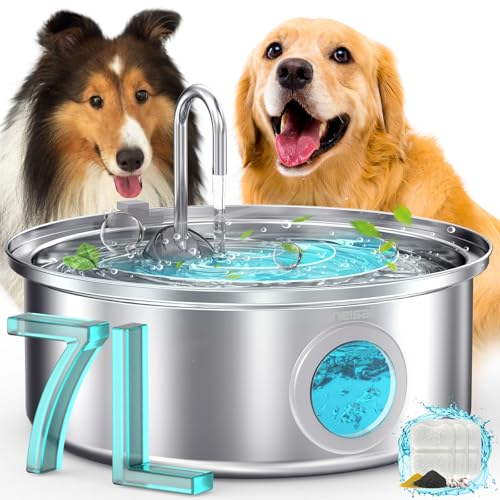
- Best for several dogs or heavy drinkers: a 7–9 litre, wide-reservoir fountain with a low, open drinking surface and a quiet submersible pump.
- Best for a small home: a 2–3 litre fountain with a compact footprint and a visible water-level window.
- Best for easier cleaning: a stainless-steel-top model with a pump that comes apart without tools.
- Best for power interruptions or travel: a cordless fountain with a rechargeable battery, provided you accept a smaller tank and more frequent charging.
- Best value over time: a basic gravity-fed or continuously circulating fountain using widely available filter sizes, rather than a proprietary smart model.
The best dog water fountains for most multi-pet homes are a high-capacity stainless-steel or BPA-free plastic fountain with a replaceable carbon filter, an easily removable pump, and a flow setting your pets will actually use; choose capacity and cleaning access before app features.
Our top picks


As an Amazon Associate we earn from qualifying purchases at no extra cost to you. Ratings are shown as listed on Amazon.
Quick picks by household
- Best for several dogs or heavy drinkers: a 7–9 litre, wide-reservoir fountain with a low, open drinking surface and a quiet submersible pump.
- Best for a small home: a 2–3 litre fountain with a compact footprint and a visible water-level window.
- Best for easier cleaning: a stainless-steel-top model with a pump that comes apart without tools.
- Best for power interruptions or travel: a cordless fountain with a rechargeable battery, provided you accept a smaller tank and more frequent charging.
- Best value over time: a basic gravity-fed or continuously circulating fountain using widely available filter sizes, rather than a proprietary smart model.
What matters most when comparing dog fountains
Reservoir capacity is about refill frequency, not just size
A fountain’s advertised capacity is usually the maximum tank volume. The usable amount is lower because the pump needs water above its intake, and some water is discarded with each cleaning. A multi-pet household should generally start with at least 4–5 litres; two large dogs or pets that drink heavily may be better served by 7 litres or more.
As a rough planning figure, a dog may drink around 40–60 millilitres of water per kilogram of body weight per day, although weather, food type, activity and individual needs change that amount. Two 25-kilogram dogs could therefore consume approximately 2–3 litres daily before evaporation and splashing. A 7-litre reservoir may provide two days of practical capacity, not a full week.
Do not use a large tank as a reason to postpone cleaning. Fresh water still needs regular replacement, particularly in a warm room or a home with multiple pets.
Pump noise and water-flow style
Noise is usually caused by the pump vibrating against the tank, running with too little water, or drawing in air. Look for a pump rated below roughly 30 dB if the manufacturer provides a measurement, but treat decibel figures as useful only when measured under stated conditions. A rubber pump mount and a heavy base often matter as much as the number.
- Free-falling stream: attractive to dogs that prefer moving water, but it can splash and may be louder.
- Top bubbler: creates gentle movement with less splashing and is often easier for short-muzzled or cautious pets.
- Open basin: lets several pets drink at once and keeps water available if the pump stops, but hair and debris are more exposed.
- Adjustable flow: the most flexible option for a mixed household; begin low and increase it only if your dogs show interest.
Filter cost can outweigh the purchase price
Most circulating fountains use a combination of activated carbon, a foam pre-filter and a mesh or non-woven filter. Carbon can reduce odours and some tastes; it does not make unsafe water safe, and it cannot replace cleaning.
Before buying, check whether replacement filters are sold in multipacks and whether the pump foam is washable. A typical filter may need replacement every two to four weeks, depending on the number of pets and the amount of hair. If a three-filter pack costs $10–$20 and lasts three months, annual filter cost is approximately $40–$80. A proprietary cartridge costing $15 and lasting one month could cost about $180 per year.
Head-to-head comparison of common fountain types
| Fountain type | Typical capacity | Noise expectation | Cleaning access | Best use | Typical market range |
|---|---|---|---|---|---|
| Compact plastic bubbler | 2–3 L | Very quiet when full; audible if water drops | Usually good, but pump cavity may be narrow | One small or medium dog; limited floor space | $25–$55 |
| Stainless-steel-top circulating fountain | 3–5 L | Quiet to moderate | Good if the top and pump cover lift off separately | One or two dogs; easier odour and stain control | $45–$100 |
| Large multi-pet fountain | 6–9 L | Quiet to moderate; vibration depends on base design | Variable; choose a wide tank and accessible pump | Multiple dogs, heavy drinkers or frequent refill avoidance | $60–$150 |
| Cordless rechargeable fountain | 2–4 L | Often quiet in battery mode | Can be more involved because of sealed electronics | Homes needing flexible placement or backup operation | $70–$180 |
| Gravity-fed water station | 3–10 L | Silent | Simple tank and bowl; no pump cavity | Budget buyers and pets that do not need moving water | $20–$80 |
Materials: stainless steel versus plastic
Stainless steel resists odours and is less likely to retain scratches than softer plastic. It is a good choice where several pets share one drinking surface, but the steel insert does not make the entire fountain stainless steel: the reservoir, pump and underside may still be plastic.
BPA-free plastic keeps the price and weight down and allows transparent water-level markings. Its drawbacks are fine scratches, which can make residue harder to remove, and a greater tendency to show slime or mineral film. Replace a visibly scratched drinking surface rather than trying to polish it smooth.
Ceramic fountains can be stable and attractive but are heavy and vulnerable to chips or cracks. Whichever material you choose, avoid detergents with strong fragrance and rinse thoroughly; a lingering scent can discourage a dog from drinking.
Durability and ownership realities
The pump is usually the first functional part to suffer. Hair, food particles and mineral deposits restrict the impeller, making the pump noisy or weak. Foam pre-filters help, but they require rinsing several times a week in homes with shedding dogs.
Other common wear points include the silicone suction feet, the pump’s power cable, plastic clips and the small impeller cover. A fountain with a replaceable pump is easier to own than one that must be discarded when its motor fails. Keep the product manual or photograph the pump label so you can find the correct replacement.
Smart fountains can add water-level alerts, schedules or app notifications, but they also introduce wireless setup, sealed battery components and sometimes more expensive consumables. These features are useful only if they solve a problem in your home. They do not remove the need to inspect the water.
Setup and cleaning routine that prevents most problems
- Rinse every part before first use. Manufacturing dust and carbon particles can otherwise enter the first tank.
- Soak or rinse the filter as directed. Many carbon filters need rinsing until the water runs clear.
- Fill above the pump’s minimum line. Running dry causes noise and can shorten pump life.
- Place the fountain on a waterproof mat. This catches splash and makes it easier to notice leaks.
- Refresh the water daily or every other day. Empty and rinse rather than repeatedly topping up old water.
- Wash the bowl and tank several times weekly. Use a soft brush around seams and corners.
- Disassemble the pump weekly. Remove the cover and impeller if the design permits, then brush away hair and mineral scale.
- Replace the filter on schedule. A filter that looks clean may already be saturated with odour and debris.
For a busy two-dog home, a simple ownership calculation is useful: if a fountain needs two filters monthly at $5 each, annual filters cost $120. Add a replacement pump every one to two years and the cheapest purchase price may not be the cheapest choice. A model with standard filters, a washable pre-filter and a replaceable pump often wins over several years.
Final buying checklist
- Choose capacity based on the number and size of dogs, not the advertised maximum alone.
- Prefer a wide drinking area if multiple pets may drink together.
- Confirm that the pump can be removed and opened for cleaning.
- Check the ongoing price and availability of filters before purchasing.
- Select a stainless-steel drinking surface if odour, scratching or residue is a concern.
- Look for adjustable flow and a pump with a stable rubber mount.
- Make sure the cable, battery or charging port can be kept away from chewing pets and splashing.
A fountain is a convenience and may encourage some dogs to drink, but it should not be used to investigate a sudden change in thirst or urination. If your dog’s drinking habits change noticeably, consult a veterinarian.