Key takeaways
- Open steel bowl: Usually the easiest assembly. Attach the legs, install the drain or screen, and place it on a level noncombustible surface.
- Cast iron: Often fewer parts, but positioning is difficult because of the weight. Assemble close to the final location and do not lift a large pit alone.
- Smokeless model: Assembly may include a base, inner burn chamber, ash pan, and spark screen. Confirm that every airflow opening remains unobstructed.
- Gas fire pit: Usually requires more careful connection and leak checking. Use only the fuel type and regulator specified by the manufacturer.
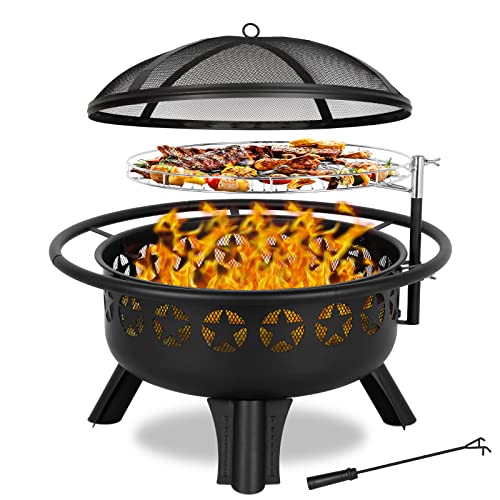
The best fire pits for backyard use are usually stainless-steel smokeless models for clean, frequent entertaining, heavy-gauge carbon-steel pits for high heat and durability, and cast-iron pits for maximum heat retention in a compact space.
Our top picks
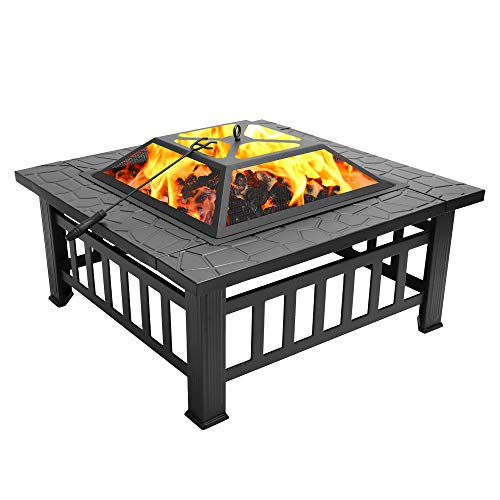
As an Amazon Associate we earn from qualifying purchases at no extra cost to you. Ratings are shown as listed on Amazon.
Quick picks by backyard situation
| Situation | Best choice | Useful target specification | Typical price range in 2026 |
|---|---|---|---|
| Small patio or occasional use | Compact stainless-steel smokeless pit | 19–22 inches wide; 20–35 lb | $150–$350 |
| Regular family gatherings | Mid-size steel or stainless-steel pit | 24–27 inches wide; 30–60 lb | $250–$650 |
| Maximum heat and long service life | Heavy-gauge carbon-steel pit | 24–30 inches wide; 50–100 lb | $400–$1,000 |
| Cold climate or slow-burning hardwood | Cast-iron fire pit | 24–30 inches wide; 60–120 lb | $250–$800 |
| Low smoke is the top priority | Double-wall smokeless design | Secondary-air holes; removable ash pan preferred | $200–$700 |
Steel, cast iron, or smokeless: what is the real difference?
Steel fire pits: the practical all-rounder
“Steel” covers several very different products. Thin painted steel is inexpensive and light, but it can warp, discolor, and rust after repeated heating. Heavy-gauge carbon steel is a more durable choice: it tolerates large hardwood logs, produces strong radiant heat, and can develop a protective dark patina when maintained correctly.
Carbon steel heats relatively quickly and cools faster than cast iron. That makes it easier to move after a gathering, although it also means the pit will not remain warm as long once the fire is out. Many steel bowls have a simpler design than smokeless models, so they are easier to light and clean, but they may send more smoke toward nearby seating.
Cast iron: high heat retention, high weight
Cast iron is the heat-storage specialist. Once fully heated, it radiates warmth steadily and continues releasing heat after the flames diminish. This is useful on cool evenings when people sit close to the fire, but cast iron takes longer to heat and is substantially harder to move.
Its main ownership risk is moisture. Bare or poorly protected cast iron can develop surface rust quickly, and trapped water may cause cracking during freeze-thaw cycles. A cast-iron pit needs thorough drying, occasional seasoning or protective oil, and sheltered storage. Choose it when the pit will stay in one location rather than when portability matters.
Smokeless designs: less smoke, not zero smoke
A smokeless fire pit uses a double-wall body. Air enters low in the outer wall, warms as it rises, and exits through upper vents to help burn smoke particles. This secondary combustion can noticeably reduce smoke after the fire is hot, particularly with dry hardwood.
Smokeless pits generally produce strong heat, but they are more sensitive to fuel and airflow. Damp logs, oversized pieces, an overfilled basket, or restricted bottom vents can create smoke despite the design. They also concentrate heat beneath the unit, so a manufacturer-approved heat shield or noncombustible surface may be necessary on patios and decks.
Best fire pits for backyard use by need
Best for a small patio: compact stainless-steel smokeless pit
For a balcony-sized terrace, small paved patio, or household that hosts two to four people, look for a 19- to 22-inch model with a stable base and a removable ash pan. Stainless steel resists weather better than ordinary painted steel, while the smaller diameter limits fuel consumption and heat spread.
Allow a clear area of at least 6 feet around the pit where local rules require it, and check the manual for minimum clearance from walls, fences, umbrellas, and overhead branches. A compact pit can still produce intense downward heat, so never assume that a stone patio is automatically protected.
Best for gatherings: 24- to 27-inch steel or stainless-steel model
A mid-size pit is the most versatile choice for four to eight people. A 24-inch fire bowl usually provides enough room for a useful bed of coals without consuming excessive wood. A 27-inch smokeless model offers more flame area, but it may weigh 40 pounds or more and require two people to relocate safely.
Established products such as the Solo Stove Yukon line and Breeo X Series illustrate two different approaches: large stainless-steel smokeless construction in the former, and robust corten or carbon-steel construction in the latter. Compare the current dimensions, accessory compatibility, and maintenance instructions rather than relying on the brand name alone.
Best for intense heat: heavy carbon-steel fire pit
Choose a heavy carbon-steel pit if you burn substantial hardwood, want broad radiant heat, and value longevity over easy portability. Thick steel withstands repeated heating better than lightweight decorative bowls, provided it has drainage and is allowed to dry.
These pits are often not truly smokeless. Their advantage is a large, open flame and uncomplicated airflow. They are also easier to repair or refinish than a multi-wall design: surface rust can usually be brushed away, dried, and treated according to the manufacturer’s instructions.
Best for a fixed seating area: cast iron
A cast-iron pit suits a permanent stone or concrete fire area where two or more adults can place it securely. Its weight reduces the chance of accidental movement, and its retained heat makes it comfortable for longer evenings. Avoid it if you need to carry the pit across grass, store it indoors after every use, or live where winter moisture is difficult to control.
Size the pit to the space, not just the number of guests
Measure the intended location before shopping. A 27-inch bowl is not a 27-inch installation footprint: legs, handles, spark screens, and heat shields can add several inches. A practical planning calculation is:
Required clear zone = pit diameter + twice the required safety clearance.
For a 24-inch pit with a 36-inch clearance on each side, the minimum horizontal zone is 24 + 36 + 36 = 96 inches, or 8 feet. Local fire codes may require more. On a 10-by-12-foot patio, that leaves limited space for chairs and walkways, so a 19- to 22-inch pit may be a better fit.
Assembly and setup: where convenience differences appear
- Open steel bowl: Usually the easiest assembly. Attach the legs, install the drain or screen, and place it on a level noncombustible surface.
- Cast iron: Often fewer parts, but positioning is difficult because of the weight. Assemble close to the final location and do not lift a large pit alone.
- Smokeless model: Assembly may include a base, inner burn chamber, ash pan, and spark screen. Confirm that every airflow opening remains unobstructed.
- Gas fire pit: Usually requires more careful connection and leak checking. Use only the fuel type and regulator specified by the manufacturer.
Before the first fire, remove packaging, check that drain holes are open, and confirm that the base sits level. Burn only the recommended fuel. Dry hardwood generally gives better heat and less smoke than wet logs, construction scraps, or painted wood.
Ownership costs and maintenance people overlook
Wood consumption is a meaningful difference between designs. Suppose a mid-size pit uses 8 pounds of dry firewood per evening and firewood costs $0.35 per pound. The fuel cost is 8 × $0.35 = $2.80 per use, or about $56 over 20 gatherings. A larger, less efficient open pit may use 12 pounds, increasing the same-season cost to $84. Smokeless combustion can reduce visible smoke, but it does not always reduce fuel use because owners often burn hotter fires.
The first parts to wear are commonly the spark screen, removable ash pan, painted finish, and feet or base where water collects. Stainless steel can discolor from heat without being damaged. Carbon steel may rust if covered while damp. Cast iron can crack if cold water is poured onto a hot surface.
- Let ash cool completely before removal; embers can remain hot for many hours.
- Empty ash before it blocks lower airflow or drainage holes.
- Keep the pit covered only when it is fully dry.
- Use a fitted heat shield when required for wood, composite, or other vulnerable surfaces.
- Inspect legs, welds, handles, screens, and air vents at the start of each season.
- Keep pets away from the hot pit, ash, sparks, and firewood. Metal surfaces can remain dangerously hot after flames disappear.
Final buying decision
Pick a compact stainless-steel smokeless pit when space and reduced smoke matter most. Pick a heavy carbon-steel pit for the strongest open-fire experience and frequent hardwood use. Pick cast iron for permanent placement and long-lasting radiant heat. Whichever material you choose, prioritize correct sizing, drainage, replaceable high-wear parts, and a safe noncombustible installation area over decorative features.