Key takeaways
- Small rooms and tight hallways: Choose a mid-wheel-drive model such as the Quantum Rehab Edge 3 Stretto, with a narrow frame and very small turning footprint.
- Mixed indoor and outdoor use: Consider a Permobil M3 or similar mid-wheel model with active suspension, seat functions, and programmable driving controls.
- Uneven paths and frequent outdoor travel: A rear-wheel-drive model such as the Permobil F5 Corpus is generally more stable over longer outdoor routes, although it needs more turning space.
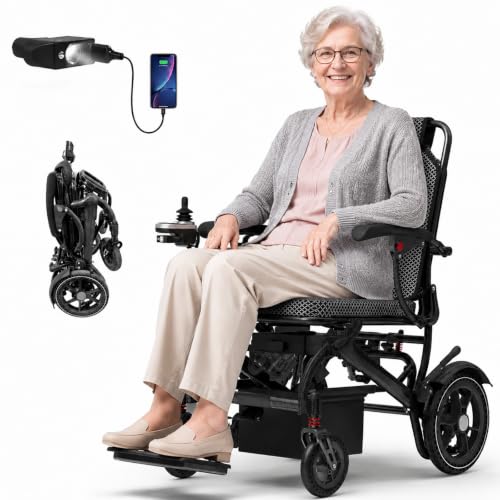
- Occasional trips in a car: A folding power wheelchair such as the Pride Jazzy Passport is easier to transport than a full-size rehab chair, but gives up suspension and adjustment range.
- Simple powered mobility for indoor and paved use: The WHILL Model C2 offers compact maneuverability and removable front-drive units, but it is not a substitute for a high-performance outdoor wheelchair.
The best power wheelchairs depend on where you will drive: a compact mid-wheel chair is usually strongest indoors, a suspended rear-wheel-drive chair handles outdoor ground better, and a folding travel model wins when car transport matters most.
Our top picks


As an Amazon Associate we earn from qualifying purchases at no extra cost to you. Ratings are shown as listed on Amazon.
Quick picks by mobility need
- Small rooms and tight hallways: Choose a mid-wheel-drive model such as the Quantum Rehab Edge 3 Stretto, with a narrow frame and very small turning footprint.
- Mixed indoor and outdoor use: Consider a Permobil M3 or similar mid-wheel model with active suspension, seat functions, and programmable driving controls.
- Uneven paths and frequent outdoor travel: A rear-wheel-drive model such as the Permobil F5 Corpus is generally more stable over longer outdoor routes, although it needs more turning space.
- Occasional trips in a car: A folding power wheelchair such as the Pride Jazzy Passport is easier to transport than a full-size rehab chair, but gives up suspension and adjustment range.
- Simple powered mobility for indoor and paved use: The WHILL Model C2 offers compact maneuverability and removable front-drive units, but it is not a substitute for a high-performance outdoor wheelchair.
Best power wheelchairs compared
The figures below are representative published specifications and can change with batteries, seat systems, options, and regional configuration. Confirm the exact configuration with a dealer before ordering.
| Model or type | Typical width | Turning radius | Range | Weight capacity | Best use |
|---|---|---|---|---|---|
| Quantum Rehab Edge 3 Stretto | About 23.5 in | About 20.5 in | Up to about 13.5 mi | Up to 300 lb | Tight indoor spaces and paved outdoor routes |
| Permobil M3 Corpus | About 24–25 in | About 20–22 in | Up to about 15 mi | About 300 lb | Everyday indoor/outdoor use with advanced seating |
| Permobil F5 Corpus | About 25–26 in | About 28–30 in | Up to about 15 mi | About 300 lb | Longer outdoor routes and uneven surfaces |
| Pride Jazzy Passport folding type | About 24 in | About 25–26 in | Up to about 11 mi | 300 lb | Car travel and occasional powered mobility |
| WHILL Model C2 | About 23 in | About 30.7 in | Up to about 11.8 mi | About 300 lb | Indoor use, sidewalks, and maintained paths |
Head-to-head: what matters more than the range number?
Indoor maneuverability
Turning radius is often more important than top speed inside a home. A mid-wheel-drive chair places the drive wheels near the user’s center of mass, allowing the chair to pivot efficiently. This helps with kitchen corners, elevators, and narrow corridors. Measure the narrowest doorway and the clear space beside the bed, not just the room’s overall size.
A chair listed as 23.5 inches wide may still need several additional inches for armrests, joystick clearance, and safe hand positioning. If a doorway is 24 inches wide, do not assume a 23.5-inch chair will pass comfortably. Ask for the chair’s widest configured dimension.
Outdoor stability and suspension
Rear-wheel-drive power chairs generally track more naturally at speed and can feel steadier on longer outdoor routes. Their trade-off is a larger turning circle. Mid-wheel chairs turn tightly but may require more careful driving over slopes, thresholds, and abrupt changes in surface.
Suspension is valuable when the route includes cracked sidewalks, grass, compact gravel, or driveway transitions. It does not make every chair suitable for mud, deep sand, standing water, or steep slopes. Check the manufacturer’s limits for grade, curb height, and surface conditions, and avoid treating a published maximum as a recommended everyday target.
Portability and total weight
Folding models are usually the practical choice for frequent car transport. However, “folding” does not always mean lightweight enough for one person to lift. Separate the listed chair weight from the battery weight and determine whether the battery is removable.
A full-size rehab chair may weigh several hundred pounds with batteries and seating equipment. It can offer better suspension, positioning, and durability, but may require a ramp, vehicle lift, or accessible van. A folding chair may weigh roughly 50–70 pounds before accessories, yet have a firmer seat, less adjustable support, and lower tolerance for rough ground.
Decision matrix
| Your situation | Prioritize | Most suitable category | Likely compromise |
|---|---|---|---|
| Small apartment, frequent tight turns | Width, turning radius, compact controls | Narrow mid-wheel chair | Less outdoor stability than a large rear-wheel chair |
| Daily neighborhood travel | Suspension, ground clearance, service support | Full-size mid- or rear-wheel chair | Higher weight and transport cost |
| Several car trips each month | Foldability, battery removal, lifting points | Folding travel chair | Reduced seating adjustment and range |
| Higher body weight or heavy daily use | Capacity margin, frame width, motor rating | Heavy-duty power chair | Greater size, weight, and price |
| New powered-chair user | Predictable controls, speed settings, local training | Programmable joystick chair | Requires learning and periodic adjustment |
Controls and seating: the overlooked buying decision
A standard joystick is not automatically the right control. Depending on ability and posture, a dealer may be able to configure a compact joystick, attendant control, alternative switch array, head control, or proportional control system. The control should be reachable without leaning, and the chair should slow predictably when the joystick is released.
Seat width and depth need enough room for comfort without allowing excessive sliding. Measure hip width while wearing typical clothing, then leave modest clearance on each side; do not simply choose the widest seat available. Seat height affects transfers and table clearance, while tilt, recline, elevating leg rests, and seat elevation can significantly increase overall weight and cost.
For complex seating or changes in posture, arrange an assessment with an occupational therapist, physical therapist, or qualified seating specialist. General product specifications cannot determine the safest configuration for an individual.
Range: use a realistic calculation
Manufacturers usually quote maximum range under controlled conditions. Cold weather, hills, soft surfaces, heavy loads, frequent stops, tire pressure, and battery age can all reduce usable distance. A practical planning method is to treat the quoted figure as a ceiling and keep a reserve.
For example, if a chair is advertised at 15 miles and you plan a 6-mile round trip, that uses 40% of the published range: 6 ÷ 15 × 100 = 40%. That may appear comfortable, but hills and battery aging can change the result. For a regular route, choose a chair with more range than the bare minimum and identify charging access at the destination.
Ownership realities and maintenance
- Batteries wear first: Lead-acid batteries often need replacement sooner than the chair itself. Lithium options may reduce weight but cost more and require compatible charging equipment.
- Keep connectors dry: Wipe dirt from charging ports and joystick connections, but do not spray water directly into electronics.
- Inspect tires and casters: Worn tread, loose caster forks, and low pneumatic pressure can reduce range and make steering unpredictable.
- Watch moving seating parts: Recline mechanisms, leg-rest motors, and lift actuators need periodic inspection, especially when exposed to grit or pet hair.
- Do not overload accessories: Bags, oxygen equipment, and extra cushions add weight and can affect balance. Confirm accessory limits with the manufacturer.
- Budget for service: General market pricing ranges from roughly $2,000–$5,000 for basic or folding models to $8,000–$20,000 or more for complex rehab chairs with powered seating and custom controls, before any applicable coverage or modifications.
How to choose your final model
- Measure every doorway, elevator, ramp, and storage location.
- Map your normal route and note slopes, thresholds, gravel, grass, and charging points.
- Choose a weight capacity with meaningful margin rather than matching your body weight exactly.
- Compare the fully configured chair weight, not only the base model.
- Test the joystick position, braking response, transfer height, and visibility from the seat.
- Ask who will provide repairs, battery replacement, programming, and seating adjustments after purchase.
The best power wheelchair is the one that fits the home, supports the intended route, and can be serviced locally. If portability is the priority, accept the limitations of a folding model; if comfort, positioning, and outdoor durability matter most, the larger suspended chair is usually the better long-term choice.